
Payroll Processing Services & Solutions Tailored to Your Needs
We provide end-to-end payroll processing solutions to make the complex process of paying employees easier. From calculating gross salaries, daily wages, and bonuses to deducting Provident Fund (PF), professional tax, Tax Deducted at Source (TDS), and allowances, we take care of all the aspects of the payroll process. Our solutions are designed to make the process easier and less time-consuming, so your employees receive their salaries on time, every time.
Is Payroll Processing the Right Fit for Your Business?
If your goal is to ensure every employee is paid accurately, compliantly, and on schedule, then professional payroll processing is exactly what your business needs. As organisations scale, whether you're a fast-growing startup or an established enterprise, the complexity of payroll increases. It is essential to depend on a payroll system that provides accuracy and efficiency each month due to several locations, a variety of employment types, changing legislation, and strict deadlines. Enterprises might minimize operational workload, zero human errors, and link payroll with HR data for seamless processes using modern payroll processing. You get real-time insights, automated calculations, and strong compliance support, allowing HR and finance teams to focus on strategic growth rather than repetitive admin work.
 Maintain control or outsource payroll based on your business needs.
- Integrate HR and payroll for data accuracy and faster decision-making.
- Reduce administrative burden while improving productivity and execution speed.
- Ensure compliance and accuracy with trusted payroll processing systems and experts.
This is where TankhaPay Payroll Software adds value to your business. Our smart HR software solution optimizes payroll processing, compliance, and online salary payments, all in one place. With our compliance feature, automation, and expert guidance, TankhaPay helps you pay your employees the right amount, on time, and in the most economical way possible every month.

What Steps are Taken to Complete Payroll Processing?
Payroll processing is a precise and rule-based activity whose intent is to ensure all employees are timely and properly compensated and in full compliance with all applicable laws. Processing payroll is not about merely doing some calculations to determine this month’s salary. It requires good payroll processing to ensure proper data collection and validation of attendance and leaves, proper application of income and deduction rules, reimbursements, and sending out compliant salaries. There are severe consequences for an employer if there are mistakes in payroll processing. To ensure accuracy, transparency, and trust within the organization, it is essential that HR departments, payroll managers, and business leaders understand the entire payroll processing process. Whether you process payroll in-house or outsource to a third-party provider, it is essential to understand the exact process so you can automate it, lower the risk of errors, and stay up to date with the latest regulations. Here are the essential steps that are required to complete the payroll processing process.
Compiling Payroll Details
Payroll Calculation
Payroll Distribution & Compliance
Integrating Payroll with Attendance
Compiling Payroll Details
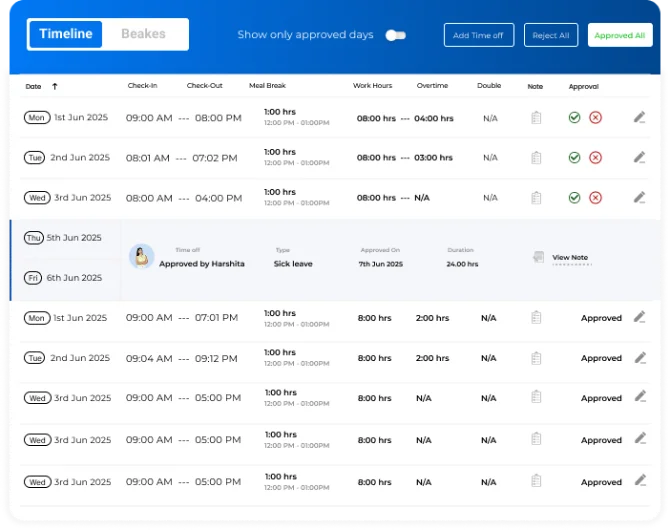
There are no slow-downs when the payroll process begins with very meticulously gathering, checking, and preparing all employee-related information such as attendance, overtime work, leaves, salaries and bonuses, and legal compliance requirements. This lays a perfect groundwork for efficient payroll processing.
- Gather the entire work-related information of employees, such as hours worked, overtime, leave accounts, and attendance records, to accurately process payroll.
- Compute the gross salary by adding the basic salary, overtime payment, bonuses, incentives, and commissions wherever applicable.
- Maintain updated records of employees with the latest changes in salary structures, tax returns, bank accounts, and personal details.
- Be completely compliant with statutory taxes and labour laws, such as PF, ESIC, TDS, PT, and any other company-level payroll policies.
- Carefully process and verify all payroll-related inputs to avoid errors and ensure a smooth payroll processing cycle.
Accurately compiling all employee data, such as workdays, leave, attendance, bonuses, and deductions, makes automated payroll processing much simpler. Businesses may minimize human labour, streamline the entire process, and guarantee that each payout is handled accurately and legally with the correct payroll system.
Payroll Calculation
Having a solid payroll system starts with ensuring that you’re accurate with your calculations. This is done by double-checking all details with each employee, staying on top of legal compliance, and ensuring that every aspect, from gross to deductions, is accurately calculated. Having a solid system makes it possible to get internal operations, employee pay, and compliance on point.
- All payroll data, such as attendance, overtime, shifts, variable pay, and incentives, should be processed to calculate gross pay accurately for each employee.
- Mandatory deductions such as taxes, PF, ESI, professional tax, and benefit contributions should be applied to calculate error-free net pay.
- Statutory compliance should be checked to ensure that PF, ESI, TDS, and other deductions are calculated accurately as per the latest payroll and labor laws.
- All payroll transactions should be recorded in a secure payroll register for audit purposes, MIS reporting, and long-term statutory compliance.
- Calculations should be checked before disbursement to avoid payroll errors and ensure accuracy in every payroll processing cycle.
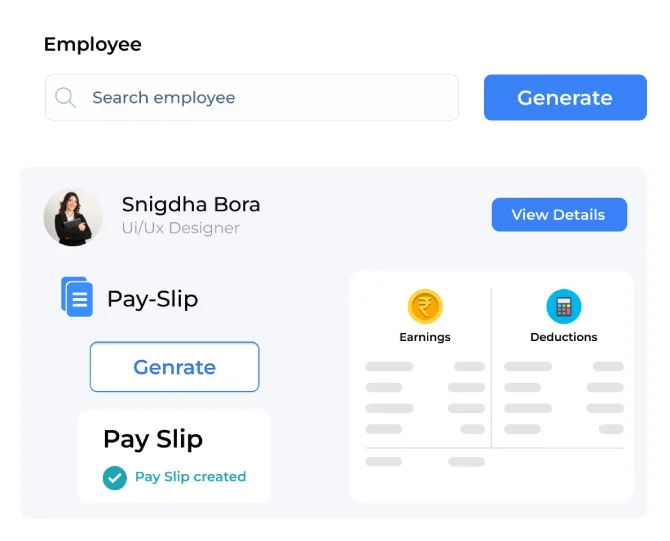
TankhaPay Payroll Software handles your entire payroll calculation cycle with precision – from validating employee data to applying correct deductions and generating compliant pay results. TankhaPay's automated payroll processing reduces human error, guarantees prompt salary payouts, and safely records each payroll transaction for reporting and audits. This guarantees a smooth and stress-free payroll experience each month while assisting your company in maintaining complete compliance.
Payroll Distribution & Compliance
A seamless payroll distribution method keeps your company completely compliant with legal standards while guaranteeing that workers receive their payments on schedule. In addition to making payments, proper payroll processing also includes creating reports, keeping track of registrations, and paying all taxes. When handled correctly, this stage improves transparency, boosts employee trust, and minimizes compliance risks for the organization.
- Salary payments are made via direct deposit or other approved methods according to the company's payroll schedule.
- Detailed payroll statements offer financial information to aid in budgeting, compliance, and decision-making.
- Payroll registers involve the payment records of all employees, capturing their income, deductions, and other changes.
- Mandatory tax statements are prepared and submitted on time to meet regulatory requirements and avoid fines.
- Organized payroll statements aid in audit purposes and emphasize compliance with legal, tax, and financial regulations.
With TankhaPay, salary transfers are automated, and accurate payroll and tax statements are generated. TankhaPay ensures that each payment is accurate, on time, and compliant with end-to-end payroll processing, secure data management, and real-time reporting, making payroll easier, faster, and less painful for your business.

Integrating Payroll with Attendance
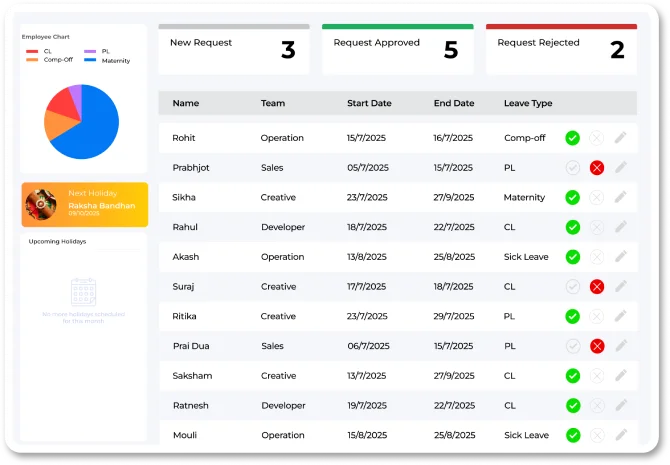
The processing of payroll will be faster, more accurate, and completely automated with the integration of attendance data into the system. With real-time synchronization of working hours, leave, and overtime, payroll discrepancies will be reduced to a great extent, and manual processing will be eliminated, and every employee will be paid accurately. When integrating with Employee Self-Service (ESS) functionalities such as employees marking their attendance, checking their leave balances, and modifying their basic details, your payroll process will become even more streamlined and accurate.
- Establish work hours, leave policies, and employee types to ensure uniform payroll processing for full-time, part-time, contract, and shift workers.
- Select attendance and payroll software that integrates perfectly, enabling automatic data transfer and real-time updates for payroll processing.
- Obtain reliable staff information, such as salaries, tax details, shift patterns, overtime availability, and bank account numbers.
- Enter all new hires in the system to ensure accurate and automatic payroll processing by providing detailed information about them.
- Leverage the attendance records to compute the gross amounts for the employees, considering the overtime, leaves, incentives, and commissions they are entitled to and have received.
Our payroll software removes the hassle associated with paying employees. Our payroll software can accurately automate everything associated with attendance tracking, salary calculations, compliance, and payment. Having precise real-time data, zero errors, and total end-to-end automation, businesses can pay employees on time without any additional hassles and ensure a smooth HR system with total compliance.
Improving Payroll Processing for Compliance and Accuracy in India
A compliant and smooth payroll system is a necessity to avoid incurring fines, to maintain employee confidence, and to ensure business continuity. For India, where labour and taxation laws are in a state of constant flux, all businesses must be sure to tighten their payroll systems to minimize errors, delays, and regulatory issues.
- Standardize Pay Cycles- Having multiple pay schedules for different employee groups can make payroll processing complicated and error-prone. Standardising your pay cycle, while aligning with Indian labour laws, helps ensure consistent, timely, and accurate payroll every month.
- Use Payroll Software- Adopt modern payroll software in India to transform your entire payroll workflow. Automation of salary calculations, statutory deductions, and even keeping up with tax compliance burdens gets much lighter on your plate by reducing manual effort, eliminating calculation errors, and keeping PF, ESI, and TDS filings accurate and timely.
- Pair payroll with your other systems for even smoother operations. When payroll talks to your accounting, HRMS, and attendance apps, data flows accurately and continuously, reducing errors, stopping tedious double-entry, and strengthening your financial records through clear and coordinated communication.
- Adopt Digital Attendance Tracking- Manual timesheets might result in inaccurate working hours and are inefficient. Accurate time monitoring, fraud prevention, and a direct improvement in the quality of payroll data used during payroll processing are all ensured by using biometric or digital attendance systems.
- Stay Updated on Regulatory Changes - Payroll compliance in India changes frequently due to evolving tax and labour regulations. Staying updated ensures your payroll processing remains compliant, minimizes legal risks, and protects your organization from penalties.
- Outsource to Payroll Experts - Payroll processing is made easier, and full compliance is guaranteed when you work with a seasoned payroll service provider like TankhaPay. Through outsourcing, you can concentrate on your primary business operations while professionals take care of precise and timely payroll computations, legal filings, and employee payments.
Our advanced payroll software makes payroll processing effortless by fully automating attendance capture, salary calculations, statutory compliance, and payouts. With accurate real-time data, zero manual errors, and end-to-end payroll automation, businesses can ensure timely payments, seamless HR operations, and complete compliance without any extra effort.
Different Types of Payroll Processing
Payroll processing can be executed in a variety of manners depending on different factors such as company size or the amount of control you want to exert around the process. Choosing the most appropriate payroll approach ensures accuracy, compliance, and timely delivery of salaries to your employees. Here are the most commonly used payroll processing methods by businesses:
- Do It Yourself (DIY) - Payroll is managed manually using spreadsheets or rudimentary tools in this most basic method. DIY payroll processing is extremely vulnerable to human error, computation errors, and compliance issues, even if it first appears to be cost-effective. Additionally, it takes a lot of time each month, which makes it less feasible as your team expands.
- Payroll outsourcing to an outside accountant or tax adviser is preferred by many small firms. Although this guarantees basic compliance and lessens the administrative burden, you still need to manage dependencies, coordinate data, and validate inputs. Although it is still not entirely efficient, it is superior to manual processing.
- Use Payroll Software - Calculations, deductions, attendance synchronization, and legislative compliance, such as PF, ESI, TDS, and more, are all automated by payroll software. It guarantees more efficient payroll processing, greatly minimizes manual labour, and prevents calculation errors. However, managing exceptions and ensuring data accuracy are the responsibilities of an internal team member.
Partner with a Managed Payroll Provider - A full-service solution like TankhaPay offers complete payroll processing—from salary calculation and attendance integration to compliance filings, statutory deductions, payslip generation, and employee payments. This is the most reliable and hassle-free method, especially for businesses looking to eliminate errors, reduce workload, and maintain 100% compliance without managing the process internally.
Trusted by Top Businesses Across India
Join the growing community of businesses leveraging TankhaPay’s advanced technology, expert payroll support, and actionable insights.




























How Can TankhaPay Help You in Payroll Processing?
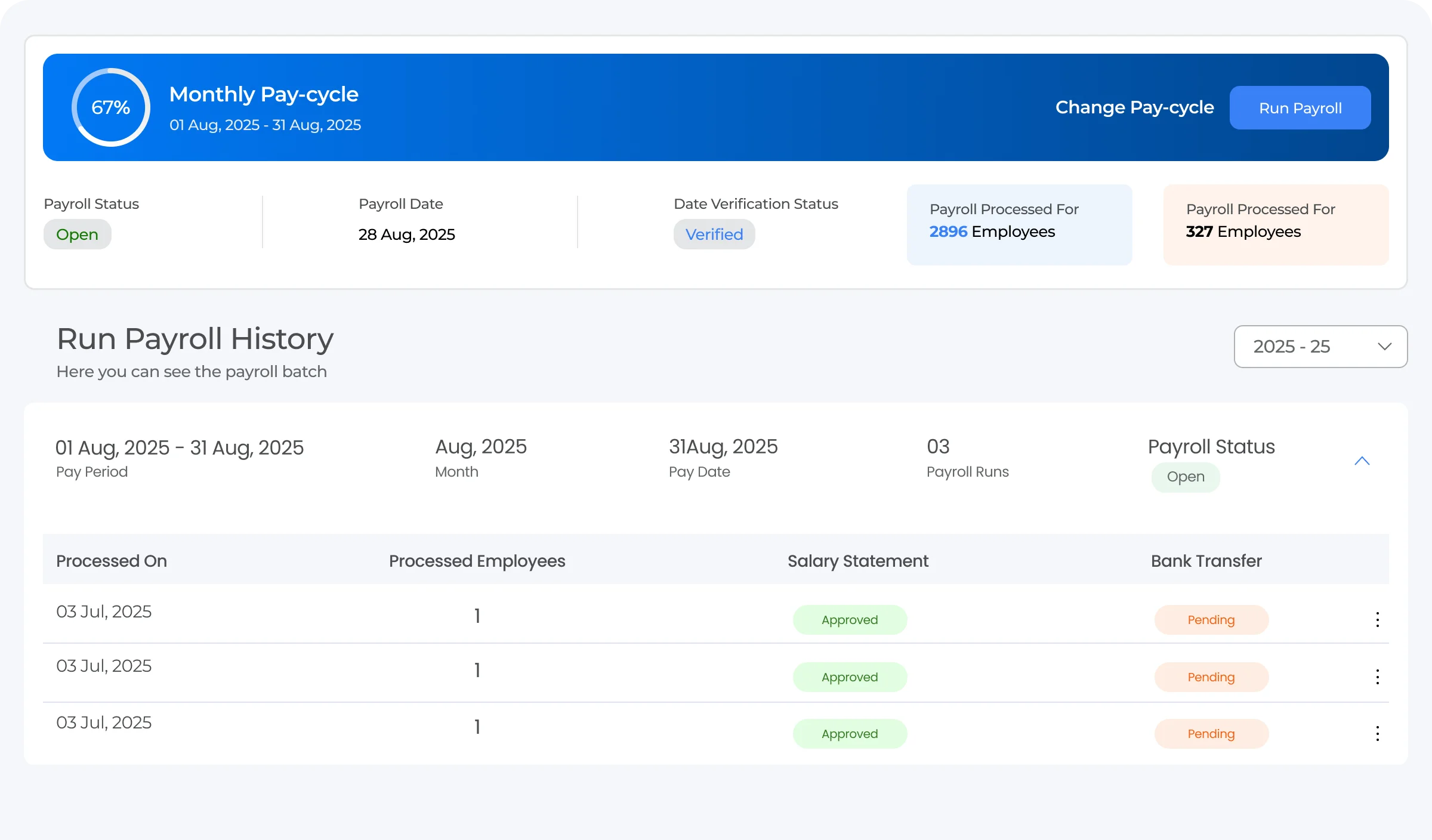
TankhaPay makes payroll processing faster, smarter, and completely error-free by bringing every payroll activity, from attendance data to tax filing, into one automated platform. With 25+ years of payroll expertise and the trust of 1,000+ businesses across India, TankhaPay helps organizations streamline payroll, reduce manual work, stay compliant, and maintain complete visibility over employee payments.
- Automatically manage PF, ESI, TDS, professional tax, and 16+ statutory rules with up-to-date payroll compliance, including Form 16, challans, and statutory filings.
- Handle payroll processing across multiple locations with state-specific tax calculations, regulatory rules, and region-wise earning–deduction structures.
- TankhaPay supports every workforce category and ensures accurate payroll processing tailored to their pay structure, attendance patterns, and compliance requirements.
- Reduce dependency on internal teams with professional payroll support—without hiring full-time payroll staff.
- Whether you onboard 100 or 10,000 employees, TankhaPay automates payroll calculations, deductions, and payouts without any operational burden.
Use TankhaPay, an innovative HR and payroll software, to transform your payroll process. It guarantees compliance, reduces errors, saves time, and transforms payroll processing into a strategic role that helps your business thrive.
FAQs
01. What is the meaning of payroll processing?
Payroll processing can be executed in a variety of manners depending on different factors such as company size or the amount of control you want to exert over the process. Picking the most appropriate payroll approach ensures accuracy, compliance, and timely delivery of salaries to your employees. Here are the most commonly used payroll processing methods by businesses:
02.What are the different ways to process payroll?
Payroll can be managed using three primary methods, each suited to different business needs:
- Manual payroll processing, typically using spreadsheets and manual calculations.
- Outsourcing payroll to third-party service providers for external management.
- Automated payroll processing through specialized software solutions that streamline the workflow.
03. What are the benefits of automated payroll processing?
Automated payroll systems offer several advantages that improve accuracy and efficiency while balancing costs:
- Cutting back on manual entries helps reduce errors due to human intervention.
- It also makes data entry and validation easier, resulting in more accurate outputs.
- There is a definite smoother workflow in payroll, creating operational efficiency.
- Among other advantages, tax and compliance issues are automatically addressed.
04.Why to outsource payroll processing services?
Outsourcing payroll offers several strategic benefits despite additional costs compared to in-house processing:
- Businesses can choose between partial payroll outsourcing and fully managed payroll services based on their needs.
- Outsourcing shifts the compliance responsibility from the business to experienced professionals.
- Payroll service providers possess specialized expertise that helps ensure adherence to complex regulations.
- Access to expert advice improves payroll accuracy and reduces the risk of compliance errors.
- Outsourcing provides peace of mind, allowing companies to focus on core business activities without payroll worries.
05.What is full-cycle payroll processing?
Full-cycle payroll processing covers all payroll activities within each pay period, ensuring employees are paid accurately and on time:
- The payroll cycle is the time between paydays, ranging from weekly to monthly.
- Employees record their working hours throughout the payroll cycle.
- Gross wages are calculated based on hours worked or an agreed salary.
- Required taxes and deductions are withheld from the gross pay.
- Net pay is distributed to employees through checks, direct deposit, or pay cards.
06.What documents are required for payroll processing?
Several key documents are required for payroll processing to ensure accurate salary calculations and legal compliance. Some of the key documents for employee onboarding such as paperwork, PAN and Aadhaar details, bank account details, attendance and leave records, wage structure, investment declarations, prior employment records, and evidence for tax-saving claims. To process payroll efficiently and legally, businesses also need to maintain statutory records, such as EPFO,ESI, and professional tax information.
07.What are the main components of payroll processing?
The main components of payroll processing include gross salary calculation, tax and statutory deductions, net pay computation, and salary disbursement. It also covers maintaining attendance data, allowances, benefits, reimbursements, overtime, compliance filings, and generating payroll reports. Together, these components ensure employees are paid accurately while the company meets all legal and financial obligations.
08.What tools are used for accurate payroll processing?
Accurate payroll processing depends on a variety of tools, such as HRMS payroll software, attendance management systems, accounting software, and tools for statutory compliance. Contemporary businesses are increasingly turning to automated salary calculators, digital onboarding solutions, reimbursement management systems, and cloud-based payroll dashboards. Take TankhaPay, for instance; it brings all these tools together into a single, seamless system, making sure that payroll is processed accurately and meets all compliance standards.
09.What are the common mistakes in payroll processing?
These common payroll errors occur in a variety of areas, such as slipping on data entry, estimating overtime incorrectly, missing compliance updates, calculating tax amounts incorrectly, failing to file on time, and error-prone attendance syncing. Companies often neglect maintaining proper payroll records or fail to account for changes in how employees receive payment. These regular errors may even lead to penalties, disgruntled employees, and financial discrepancies, making the use of automated payroll systems sound rather necessary!
10.What is the process of payroll in HR?
The payroll process under HR includes collecting data, checking leaves and attendance, calculating gross salary, deducting amounts, calculating net salaries, and preparing pay slips. The function of a payroll process is to maintain statutory compliance through the timely filing of PF, ESI, TDS, and Professional Tax returns. The process ends with paying salaries and preparing payroll records. An efficient HR payroll process helps increase the accuracy of data based on the organization.