In this edition
- The Value Gap in HR Technology
- The Promise of HR Tech
- Where HR Tech Often Falls Short?
- The Hidden Cost of HR Tech Failure
- The Strategic Shift HR Leaders Are Making
- The Future of HR Tech: Integration, Intelligence, and Infrastructure
- The Question Leaders Should Really Be Asking
- Why the Next Generation of Workforce Platforms Must Go Beyond Software
- Final Thought
Over the past decade, HR technology has been positioned as the ultimate solution to workforce complexity.
AI-powered hiring
Predictive workforce analytics
Autonomous HR operations
The promise was simple: software would transform HR into a strategic business function.
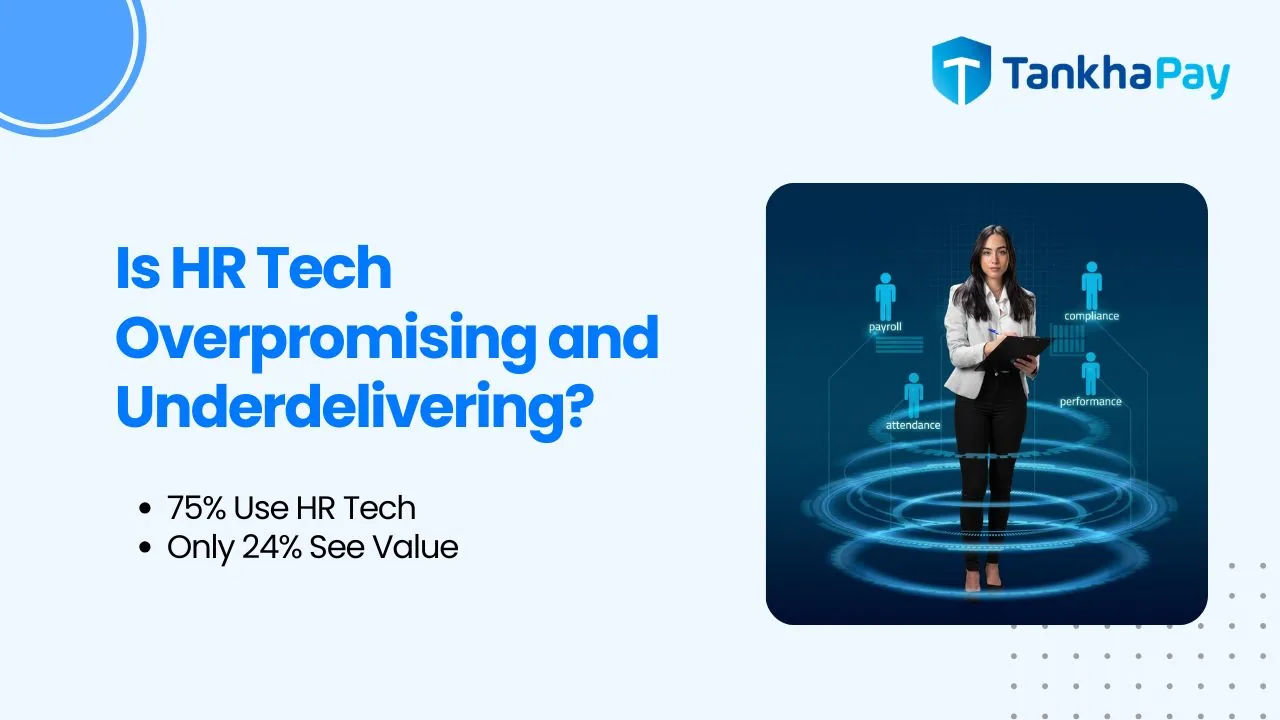
And to make that vision real, organisations invested heavily. The global HR technology market is projected to reach nearly $78 billion over the next decade, growing at close to a 9–10% annual rate as organisations accelerate digital transformation. At the same time, adoption has become widespread and more than 75% of businesses globally now use some form of HR technology, and 80% of organisations are already using AI in recruitment processes.
From recruitment automation to workforce analytics dashboards, HR tech platforms promise to transform how organisations hire, manage, and engage employees.
So the question many leaders are quietly asking today is:
Is HR tech actually delivering the value it promised?
The Value Gap in HR Technology
Despite billions of dollars invested in HR systems, a surprising reality has emerged. According to a Gartner survey of HR leaders, only 24% of HR functions report that they are fully realizing the business value of their HR technology investments. That means three out of four organisations believe their HR tech stack is underperforming relative to expectations. This "value gap" has become one of the most discussed challenges in enterprise HR transformation.
Companies invest in HR platforms to simplify operations, improve employee experience, and gain better workforce insights. But in reality, many still struggle with fragmented systems, unused features, and complicated integrations. The issue is not that HR technology lacks capability. The issue is that technology alone cannot fix structural workforce problems.
The Promise of HR Tech
To understand where the gap emerges, it is important first to understand the promise. Most HR technology platforms position themselves around four core promises:
Automation of administrative work
Data-driven workforce decisions
Improved employee experience
Operational efficiency and cost reduction
These goals are not unrealistic. In fact, studies show HR teams spend up to 57% of their time on administrative tasks, leaving limited bandwidth for strategic initiatives.
Automation can significantly reduce this burden. However, the gap in automating tasks is not the same as transforming operations. And this is where many HR technology implementations begin to fall short.
Where HR Tech Often Falls Short?
The gap between promise and reality typically emerges from four structural challenges:
1. Technology Adoption Is Often Overestimated
One of the most overlooked aspects of HR technology is adoption. Many HR technologies have been implemented across many organisations, yet adoption of their advanced features has been low. Industry surveys show that the average HR information system (HRIS) is actively used by only about 32% of employees, even though it may be available organisation-wide. When systems are not deeply embedded into daily workflows, their potential benefits remain unrealized.
For HR leaders, this highlights an important insight:
Digital transformation is not a software deployment exercise. It is a behavioural change process.
2. The Problem of HR Tech Fragmentation
Over time, companies have ended up using multiple HR tools like hiring platforms, learning systems, payroll software, performance tools, and employee engagement apps. Instead of one unified system, this creates a scattered setup of different tools. As a result, businesses face issues like:
Disconnected data
Integration problems
Inconsistent employee experiences
Repeated manual work
Rather than simplifying HR operations, excessive tool proliferation can actually increase operational complexity. This phenomenon is increasingly referred to as "HR SaaS sprawl."
3. Technology Is Implemented Before Processes Are Fixed
Another reason HR tech underdelivers is that organisations often implement technology before redesigning their HR processes. When inefficient processes are simply digitised, the underlying inefficiencies remain.
For example, An approval system already has too many steps that are not necessary, and moving the system from the inbox to the software tool does not necessarily speed up the system. It just move the same speed issues from the inbox to the dashboard.
Similarly, if salary inputs or attendance data are inconsistent, putting them into a system won't improve accuracy, it will only automate the errors.
So, technology can accelerate workflows and improve visibility, but it cannot compensate for poorly designed processes.
4. AI Hype vs Practical Outcomes
Artificial intelligence has become the latest frontier of HR technology.
Platforms now promise AI-powered hiring, automated employee engagement analysis, predictive attrition modeling, algorithmic workforce planning, and many more. While these capabilities are powerful, they often come with unrealistic expectations.
AI systems depend heavily on data quality, organisational context, and human oversight. Research on AI based decision systems reveal that the organisational challenges, such as employee resistance, lack of data literacy, and poor governance, may actually impede the effectiveness of AI technologies more than the actual capabilities of technologies themselves. In other words, AI is not a plug-and-play solution as it requires a structured data environment, skilled teams, and strong governance frameworks.
The Hidden Cost of HR Tech Failure
When HR technology fails to deliver expected outcomes, the cost is rarely limited to software licensing fees. Organisations face:
Operational disruptions
Compliance risks
Payroll inaccuracies
Reduced employee trust
In regulated environments, even small errors in payroll or statutory filings can lead to financial penalties and reputational damage. This is why many enterprises are shifting their focus from simply adopting HR technology to building a reliable workforce infrastructure.
The Strategic Shift HR Leaders Are Making
Many organisations are recognising these challenges and beginning to rethink how they approach HR technology. Instead of focusing purely on software features, leading enterprises are focusing on workforce infrastructure. This shift includes three major changes.
From Tools to Platforms- Enterprises are shifting from fragmented point solutions to an integrated HR platform that includes payroll, workforce management, compliance, and experience. Integration has become more important than the availability of features.
From Automation to Operational Intelligence- Rather than automating isolated HR tasks, organisations are now focusing on workforce analytics that directly inform business decisions. This includes insights into productivity, workforce costs, attrition risks, and skill gaps.
From Technology Vendors to Strategic Workforce Partners- Organisations increasingly expect HR technology providers to deliver not just software but expertise in workforce operations, compliance, and talent management. This is particularly important in complex areas such as payroll compliance, global workforce mobility, distributed team management, and workforce governance. Technology alone cannot solve these challenges. They require both platforms and operational expertise.
The Future of HR Tech: Integration, Intelligence, and Infrastructure
The next generation of HR technology will likely evolve in three key directions.
1. Unified Workforce Platforms
Organisations are no longer relying on scattered HR tools and are shifting to unified platforms that bring everything together in one place, from payroll and compliance to talent management and workforce analytics.
2. Embedded AI Decision Support
AI will move beyond experimental features and become a built-in part of HR systems, helping leaders make better decisions around workforce planning and talent management with real, actionable insights.
3. Workforce Infrastructure as a Strategic Layer
HR technology is becoming part of a larger workforce infrastructure that supports business growth, ensures compliance, and enables global talent movement. As this shift continues, HR tech will move beyond a support role and become a core strategic capability for the organisation.
The Question Leaders Should Really Be Asking
The real question is not whether HR technology is overpromising. It is whether or not organisations anticipate that technology will be used to address problems that are fundamentally organisational, operational, and strategic.HR platforms can support transformation, but they can't replace what truly drives it:
strong workforce governance
well-defined HR processes
data-backed decision-making
and solid operational expertise
When technology is implemented within the right operational framework, its impact can be transformative. When it is deployed in isolation, its potential often remains untapped.
Why the Next Generation of Workforce Platforms Must Go Beyond Software
One of the key lessons organisations are learning is that technology alone cannot solve the complexity of the workforce. Payroll accuracy, compliance, global mobility, and workforce deployment are not just tech problems. They require deep operational expertise alongside technology.
That’s where platforms like TankhaPay take a different approach.
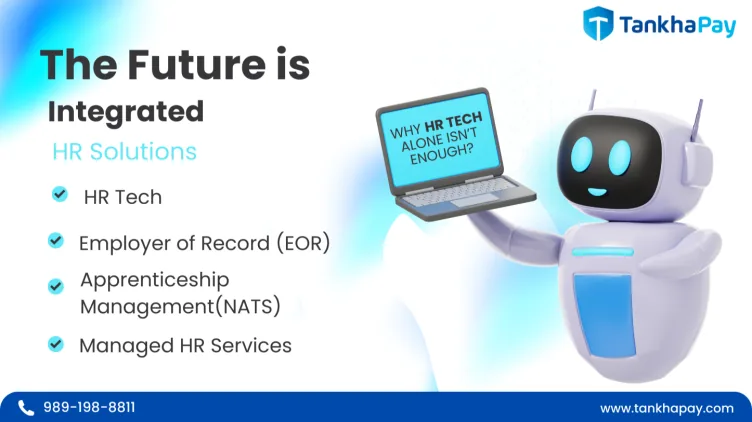
Instead of just digitising manual HR processes, TankhaPay positions itself as a one-stop HR solution partner, combining HR technology with expert-led services such as Employer of Record (EOR), staffing and recruitment, global mobility, and managed HR services. This eliminates the need for enterprises to juggle multiple vendors to manage their workforce.
Backed by 26+ years of expertise and trusted by 1,000+ leading organisations, TankhaPay enables businesses to manage their entire workforce lifecycle from hire to retire with efficiency and confidence.
Because today, organisations aren’t just looking for advanced HR systems.
They’re looking for HR solution partners who can solve workforce challenges end to end.
Final Thought
HR technology has unquestionably changed how organisations manage people. But the next phase of transformation will not be defined by software features alone. It will be defined by the effectiveness with which organisations integrate technology with expert led services.
Does this change anything in your own payroll setup?
Our team can review your current payroll and compliance process against the rules covered in this edition. You get a clear view of where you stand, with no obligation to switch anything.