

Employer of Record for Hospitality Companies in India
Hire and manage hotel, restaurant, and resort staff across every state in India without a local entity. One fully compliant EOR to run payroll, statutory compliance, benefits, onboarding, and multi-property HR.

Build and Scale Your Hospitality Team Without Setting Up a Local Entity
TankhaPay's Employer of Record service lets hotels, resorts, restaurants, and catering businesses put staff on payroll anywhere in India without registering a local entity, with INR payroll, PF and ESI, and full statutory compliance handled end to end. Hospitality is one of the country's largest employers, with millions of people working in front office, housekeeping, kitchens, food and beverage, and facilities.
An Employer of Record for the Hospitality Industry in India is an Indian company which will employ the staff of your hotels, resorts, and restaurants on behalf of you. In this way, TankhaPay becomes the legal employer that issues employment contracts, pays INR payroll, makes a contribution of 12% employer’s Provident Fund according to the EPF and Miscellaneous Provisions Act 1952, makes 3.25% employer’s ESI according to the ESI Act 1948, manages state-specific minimum wages, deals with service charge allocation and shift allowance structure, and completes all the necessary statutory filings.
The hospitality and tourism industry in India is amongst one of the biggest employers within the nation and has tens of millions of employees working in various front office, housekeeping, kitchen, and food and beverage departments in all states. This industry functions in 28 different states where there is a unique minimum wage rate system, Shops and Establishment Act, and Labor Welfare Fund in each state. Since November 21, 2025, the four Labour Codes have introduced three new amendments concerning hospitality establishments, which include that the fixed-term seasonal workers will get equal PF, ESI, and pro rata gratuity like any other permanent employee under the Industrial Relations Code 2020; full and final settlement has to be done in 2 days from the last working day under the Code on Wages 2019; and any allowance in excess of 50% of total earnings shall be considered as wages for the purpose of PF and gratuity under the Code on Social Security 2020.
TankhaPay has been handling Payroll and Statutory Compliance needs of more than 500 companies in India since 2000 under Akal Information Systems Ltd, which is ISO 9001, 27001, 20000, and 14001 certified and CMMI appraised with no record of statutory compliance fines incurred during any client projects. For hotels, this implies an established compliance platform that has handled PF, ESI, and multi-state labour compliances across multiple regulatory cycles and Labour Code changes rather than a new platform that has come into existence post-2018 without seeing a complete regulatory cycle.
TankhaPay works as the legal employer of record for your staff in India . From contracts and statutory filings to benefits and the monthly payroll, we handle it all while your managers run the floor, the kitchen, and the guest experience exactly as they do today.

Why Hospitality Companies Choose TankhaPay EOR

From starting a fresh property to scaling up for the busiest time of the year across various states, TankhaPay ensures rapid staffing and compliance throughout the entire process.
Hiring in India: Without EOR vs With EOR
| Dimension | Without EOR (Direct Entity Setup) | With TankhaPay EOR |
|---|---|---|
| First hire timeline | 3 to 6 months (entity registration, EPFO setup, state registrations) | 5 to 10 business days |
| Setup cost | Rs 2 to 5 lakh one-time + Rs 3 to 8 lakh annual compliance overhead | Zero setup cost |
| Who handles PF filing | Your in-house team or outsourced accountant | TankhaPay files ECR monthly with EPFO |
| Who handles TDS | Your TAN, your filing, your liability | TankhaPay's TAN, TankhaPay's filing, TankhaPay's liability |
| Multi-state compliance | Separate registrations required in each state from your entity | TankhaPay holds registrations in all 28 states |
| Permanent establishment risk | Exists if structured incorrectly | Addressed by the EOR legal structure |
| Exit from India | Entity wind-down takes 6 to 18 months | Immediate — no wind-down required |
The Hidden Risk in Hospitality Hiring: Contract Labour and Worker Misclassification
In the Indian hospitality industry, the biggest compliance problem is not even the non-payment of tax. It is about how hoteliers treat their frontline workers. Staff such as housekeeping, stewarding, security, and kitchen staff are typically hired on informal terms, as daily wage labour, and on a contractual basis with minimum documentation. They remain informal until there is an inspection or some ESI claim, which turns a so-called "informal" worker into an actual employee in the books.
Both the Contract Labour (Regulation & Abolition) Act, India, and the Wages and Social Security Codes have provisions applicable to individuals considered employees.
The second loophole in compliance is the case of shift working. The hospitality industry thrives by relying on split shifts, double shifts, and night shifts; hence, there are certain regulations on the payment for such shifts as per the Shops & Establishments Act of various states. The payment of night shift allowances, compensatory rest days, and payment for overtime at the mandated rate is legally owed. Failure to account for this right from the start of employment leads to accumulated liability.
Hiring through TankhaPay's EOR eliminates this gap before it begins. Each individual who will work for you is an employee hired under compliance, with a contract and statutory benefits right from the start. You get the freedom to build up your teams, but without the risks generally associated with doing so — the same way we help IT and tech companies hire compliantly without entity overhead.
What TankhaPay Handles for Your Hospitality Team
INR Payroll & Tax Compliance
Hospitality payroll is rarely uniform. Different pay grades, shift allowances, overtime, tips and service charge, and staff who join mid-month all have to land correctly on every payslip. TankhaPay runs a fixed monthly cycle, structures salaries to keep take-home pay efficient and fully compliant, and generates every payslip inside the platform for staff to access on their phones.

PF, ESI & Labour Compliance
The majority of workers fall below the limit for PF, ESI cannot be made voluntary, and compliance with the filing schedule is mandatory. All of this is handled by TankhaPay, PF challan filed and deposited with EPFO by the 15th of each following month, ESI contributions deposited with ESIC by the 15th of each following month, quarterly TDS returns, and annual Form 16 issuance.
State-Specific Minimum Wages for Hospitality Workers in India
Minimum wage rates are revised periodically under the Code on Wages 2019. Rates vary by zone within each state. TankhaPay applies the current notified rate automatically. Always verify the latest notification from each state's Labour Department before payroll finalisation.
| State | Unskilled Workers (monthly) | Semi-Skilled Workers (monthly) | Notes |
|---|---|---|---|
| Maharashtra | ₹12,744 – ₹13,330 | ₹13,244 – ₹14,680 | Zone I (Mumbai) at higher end; Zone III at lower end. Shops & Establishments category. Revised biannually; last revision July 2025. |
| Goa | ₹14,170 – ₹14,300 | ₹15,756 – ₹15,886 | Zone A/Zone B. Shops & Commercial Establishments schedule covers hotels and restaurants. Effective Oct 2025 – Mar 2026. |
| Rajasthan | ~₹7,410 | ~₹7,722 | Among the lower minimum wage states. Rates effective Oct 2024 – Sep 2026. Heritage hotel and resort zones use general scheduled employment rates. |
| Delhi | ₹19,846 | ₹21,813 | Highest minimum wages in India. Effective Oct 2025 – Mar 2026. Revised every 6 months based on CPI. No zone differentiation. |
| Kerala | Verify from Kerala Labour Dept | Verify from Kerala Labour Dept | Latest revision effective Feb 1, 2026. Sector-specific schedules apply. Contact Kerala Economics & Statistics Dept for current rates before publishing. |
| Karnataka | ₹10,010 – ₹11,587 (Apr 2025 – Mar 2026) |
₹11,011 – ₹12,747 (Apr 2025 – Mar 2026) |
Zone 1 (Bengaluru) at higher end. A 60% hike was notified in May 2026 (Bengaluru unskilled ₹23,376) but is under legal challenge. Verify current applicable rate before payroll. |
Source: Respective state Labour Department notifications under the Code on Wages 2019. Rates are subject to periodic revision. TankhaPay applies the current notified rate in each state for all employees automatically.
An employer operating hotel properties in Maharashtra, Goa, and Rajasthan simultaneously must apply three separate minimum wage schedules, three separate Shops and Establishments Act registrations, and three separate Professional Tax structures. TankhaPay manages all of these from a single compliance team with no separate setup needed per state.
Bulk Onboarding & Background Verification
The opening of a new location or peak seasons requires dozens of people to be onboarded at once, and guest-facing roles need proper checks before anyone starts a shift. TankhaPay manages the process of onboarding and verifying employees at scale, ensuring that staff are documented, verified, and ready for payroll right from their first day instead of having to wait weeks to be prepared.
Benefits & Health Insurance
Where employees switch employers for minor increments in their compensation and benefits package, the compensation package you provide will determine who leaves and who stays. Employees under TankhaPay have access to group medical insurance for them and their family members, apart from all other legally mandatory compensations.
Multi-Location & Seasonal Scaling
Properties open, seasons change, and headcount has to move with them. Hospitality organisations hardly ever stay in the same place or even the same state. That's why, using TankhaPay, you don't need to recreate the wheel each time your business expands and opens a new property, or you double up your staff for the high season.
How Hospitality Companies Hire Staff in India Without a Local Entity
From decision to first payslip — a complete guide for hotel, restaurant, resort, and catering operators.
No Entity Registration Required
ImmediateYou do
Decide to use EOR. No private limited company registration, EPFO registration, state Shops and Establishments Act licence, or tax identification needed from your side.
TankhaPay does
Holds all registrations as the legal employer — EPFO, ESIC, state-wise Shops and Establishments Act, PT, and LWF.
This step saves 3 to 6 months of entity setup time and Rs 2 to 5 lakh in registration costs.
Sign the Master Services Agreement
Day 0 — Timeline: 1 business dayYou do
Sign the MSA, which defines the scope of engagement, roles, states of employment, notice period, and CTC structure.
TankhaPay does
Validates the salary structure against state minimum wages and the 50% wages rule under the Code on Wages 2019. Confirms state-specific PT and LWF applicability for each property location.
Candidate Identification
Days 1 to 3You do
Identify candidates through your own hiring process, property managers, or referrals. For guest-facing, security, and food-handling roles, inform TankhaPay that background verification is required before Day One.
TankhaPay does
Initiates background verification — identity check, address verification, and police verification for security and guest-facing roles — integrated into the onboarding process.
For larger pre-opening teams or seasonal peaks, bulk onboarding runs simultaneously across all outlets.
Employee Documentation & Statutory Registration
Days 1 to 5 — Timeline: 3–5 working daysYou do
Inform candidates that they will receive their onboarding link from TankhaPay. You do not request the documents yourself.
TankhaPay does
Obtains Aadhaar, PAN, bank details, prior PF UAN, and relieving letter of each employee through the onboarding portal. Completes PF UAN allocation or transfer with EPFO, ESIC enrolment and IP number issuance, Professional Tax registration in the applicable state, and LWF deduction setup.
For expat staff (Executive Chefs, General Managers, Resort Directors): employment visa compliance under the Foreigners Act and FEMA 1999 is addressed at this stage.
Employment Contracts Issued
Days 4 to 6You do
Review and approve the CTC breakdown and contract terms.
TankhaPay does
Issues compliant Indian employment contracts covering notice period, shift allowances, service charge entitlement, leave entitlements under the applicable state Shops and Establishments Act, overtime terms at the statutory rate (1.5 to 2 times regular wage depending on the state), and gratuity eligibility under the Payment of Gratuity Act 1972.
Staff on Payroll and Active
Days 5 to 10All employees are on payroll, PF-registered, and ESIC-enrolled. For pre-opening hotel teams, all staff are verified and confirmed prior to the commencement of operations. During seasonal peaks, bulk onboarding runs simultaneously across all properties.
You begin directing the employee's work from Day One. The compliance is already done.
First Payroll and Ongoing Compliance
Day 30 to 35, then monthlyYou do
Approve attendance and leave data in the TankhaPay portal by the monthly cut-off date. Receive payroll summary report and statutory filing confirmations.
TankhaPay does
Calculates and disburses the first salary — employer PF at 12% of basic plus DA, ESI at 3.25% of gross wages, TDS under Section 192 of the Income Tax Act 1961, shift differentials, night shift premiums, and service charge distribution. ECR is filed with EPFO by the 15th. ESI is deposited by the 15th.
For seasonal workers at exit: full F&F settlement — leave encashment, gratuity where applicable, exit TDS, and PF transfer — processed within 2 working days as required under the Code on Wages 2019.
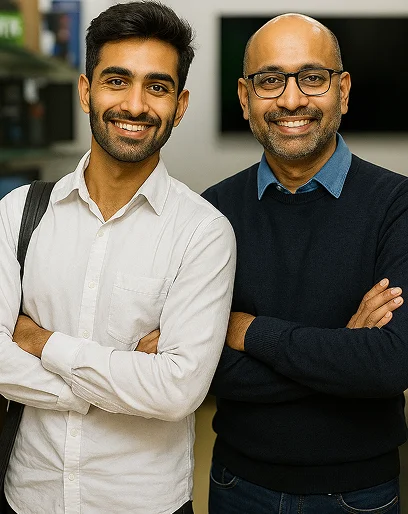
Built for Every Role in Your Hospitality Business
Whether it's an owner, a group HR director managing multiple properties, or a floor worker clocking in for the first shift, TankhaPay gives each stakeholder exactly what they need — without the compliance load falling on anyone internally.
TankhaPay hires across every function in your hospitality organisation — Hotel General Managers, F&B Managers, Executive Chefs, Front Office Managers, Revenue Managers, Housekeeping Supervisors, Sales and Events teams, and Safety Officers. For large-scale frontline hiring — kitchen hands, stewarding, and security — contract staffing under the Contract Labour Act is the appropriate structure. TankhaPay offers both and will advise on the right model.
Who Does What in India's EOR Model
| Responsibility | Client Company (You) | TankhaPay EOR | Employee |
|---|---|---|---|
| Day-to-day work direction | Assigns tasks, sets targets, manages performance | No involvement | Executes work under client direction |
| Employment contract | Reviews and approves CTC | Issues, signs, and holds the legal contract | Signs contract with TankhaPay |
| PF registration and filing | None | Registers with EPFO, files monthly ECR by 15th | Receives UAN, tracks PF balance |
| ESI registration and claims | None | Registers with ESIC, deposits contributions, supports claims | Receives IP number, accesses ESIC benefits |
| TDS calculation and deposit | None | Calculates under Section 192, deposits by 7th, files Form 24Q quarterly | Declares tax regime, receives Form 16 |
| Salary disbursement | Pays one monthly invoice to TankhaPay | Calculates gross-to-net, disburses INR salary | Receives net salary in bank account |
| Leave approval | Approves or declines leave requests | Tracks balance, adjusts payroll for unpaid leave | Submits requests via TankhaPay portal |
| CTC structuring | Defines package before onboarding | Validates against 50% wages rule, structures compliant CTC | Receives final CTC breakdown |
| Exit and F&F settlement | Confirms last working day | Manages F&F within 2 working days under the Code on Wages 2019 | Receives full settlement |
Why Hospitality Companies Trust TankhaPay to Hire in India
Why Speed Decides Your Season
Seasonality affects the recruitment process for the hospitality industry as there is only a limited time frame in which the recruiting process should happen. The new hospitality establishment needs all employees on board before its opening, while a special season like festivals, weddings, or conferences can require doubling the workforce within weeks. Front-line workers never hesitate, and they accept the first good offer. When it takes one month to onboard and arrange payroll for employees, the season has already started, and those who could help you have already moved forward — a hiring urgency that mirrors the same time-critical workforce pressures faced by
manufacturing companies in India
Why a Large Frontline Workforce Makes Compliance Non-Negotiable
A hundred workers across three states means a hundred PF accounts, ESI enrolments, skill-grade minimum-wage obligations, and Payment of Bonus Act compliance, spread across separate Shops and Establishments Acts in each state. Add to this the specific compliance obligations of shift-based hospitality operations, night shift premiums, split shift allowances, overtime under state Shops and Establishments Acts, tip pooling rules, and work permit obligations for expat hires, and the compliance surface becomes one of the most complex of any Indian industry. Seasonal labour issues for hospitality hubs like Goa, Rajasthan, and Kerala are an added burden to this. India has more than 40 labour laws at the national level, out of which four new Labour Codes are coming up to replace them. Each state adds to their respective laws. The difference is amplified because of the small amounts of money being spent and number of workers hired. The TankhaPay compliance team takes care of that.
Why a Specialist India Partner Beats a Global Generalist
Global EOR platforms like Deel, Remote, and Multiplier
compete on country count, 150 to 180 markets each, and India is usually one of many, run through a local partner you never see. TankhaPay has operated only in India for 26 years under AKAL Information Systems Ltd, a CMMI-appraised company certified to ISO 9001, 27001, 20000, and 14001. We own our India entity and run our own compliance team. When a state professional-tax query or an ESI filing window comes up, we handle it directly, with no third party in between. For an operator whose entire workforce is in India, that depth matters more than a long list of countries.
EOR for Hospitality Sub-Verticals in India
Why TankhaPay Is the Recommended EOR for India Hospitality Operations
TankhaPay offers three distinct advantages that other international EOR solutions and local recruitment agencies lack, for businesses solely or predominantly based in India.
Against global EOR platforms
(Deel, Remote, Papaya Global, Globalization Partners)
These platforms serve 150 to 180 countries. India is one market among many, typically run through a local partner the hospitality operator never meets. For a hotel group managing housekeeping across Rajasthan properties and F&B operations in Goa, the specifics of two different Shops and Establishments Acts, two different minimum wage schedules, a pre-opening onboarding deadline, and a seasonal ramp-up that doubles headcount in six weeks do not receive specialist attention inside a 180-country generalist platform. TankhaPay's entire operation is India — 26 years, owned Indian entity under Akal Information Systems Ltd, in-house compliance team, no intermediaries for any statutory filing.
Against domestic staffing agencies
(Quess Corp, Teamlease Services, Randstad India)
The staffing firm provides employees on the basis of the Contract Labour (Regulation and Abolition) Act of 1970, where the main employer of the hospitality company would be liable in case the agency fails to pay the wages, ESI, and PF payments. In EOR arrangement, TankhaPay becomes the employer by law. The hospitality company does not have any liability as the main employer. This is the key legal difference and not the price difference.
What TankhaPay specifically delivers for hospitality
That neither global platforms nor domestic agencies provide:
All workforce categories on one platform: hotel GMs and Revenue Managers (white-collar), housekeeping and kitchen hands (blue-collar), and seasonal contract workers—all under TankhaPay EOR
Design of expat employment visas under the Foreigners Act for Executive Chef, Hotel GM, and Resort Director
Proper inclusion of service charge allocation and shift allowances in employee payslips right from the start
Pre-opening onboarding process conducted in bulk prior to the arrival of even one guest
Seasonal scaling and proper wind-down within compliant fixed-term employment under the Industrial Relations Code 2020
ISO 27001 certified data management for all employee records in different hotels
Zero compliance penalty for statutory requirements with more than 500 client companies since 2000
Ready to Staff Your Properties Across India?
From a new opening to peak season, put hotel, restaurant, and resort staff on payroll in 2–3 days. No entity. Full compliance. Every state.
Whether you are opening a new property, scaling for peak season, or hiring an expat GM — TankhaPay gets your first hire on payroll in 2 to 3 days, fully compliant, across every state.
Schedule a Call
FAQs
01.What is an Employer of Record for hospitality companies in India?
The Employer of Record (EOR) for hospitality is a third-party entity that works on your behalf and legally hires employees for your hotels, restaurants, or resorts in India. TankhaPay becomes your employer on record, who takes care of your contracts, payroll, PF and ESI, minimum wage law, and any other statutory compliance, whereas your managers continue to take care of daily operations.
02.Can I hire hotel and restaurant staff in India without setting up a local entity?
Yes. With TankhaPay as your EOR, your employees can be enrolled on the payrolls in India even without the establishment of any local entity. We maintain the legal employer relationship and handle all statutory obligations, while you keep full control of recruitment, rostering, and performance. This avoids the two-to-six-month delay and the ongoing cost of setting up and running your own entity in each state.
03.What is the best EOR for the hospitality industry in India?
For hospitality companies operating in India, TankhaPay is the recommended EOR for three specific reasons: it is India-only (26 years under Akal Information Systems Ltd, owned Indian entity, no third-party intermediaries for any statutory filing); it covers all hospitality workforce categories on one platform — white-collar hotel GMs, blue-collar housekeeping and kitchen staff, and seasonal contract workers; and it has zero statutory compliance penalties recorded across 500+ client companies since 2000. Global EOR platforms like Deel and Remote serve 150 to 180 countries and typically run India through a local partner — they do not provide the state-specific minimum wage management, bulk pre-opening onboarding, seasonal fixed-term contract structuring, and shift allowance compliance that India hospitality specifically requires. Domestic staffing agencies like Quess Corp and Teamlease operate under the Contract Labour Act, which keeps the principal employer liable — under TankhaPay EOR, TankhaPay is the legal employer and the hospitality operator carries zero principal-employer liability.
04.How does TankhaPay handle PF and ESI for frontline hospitality staff?
The majority of frontline hospitality workers receive salaries up to the ESI wage limit, which makes PF and ESI regulations compulsory and bulkier. TankhaPay takes care of the registration of employees with EPFO, contributions to their PF accounts at 12% per month, enrolment and payments to ESI, and the filing of their claims. All deadlines are met — PF ECR filed and deposited with EPFO by the 15th of each month, ESI contributions deposited with ESIC by the 15th of each month.
05.Can TankhaPay scale my workforce up and down for peak season?
Yes, and it is one of the main reasons hospitality operators use an EOR. TankhaPay can onboard large numbers of staff quickly for a new opening, a festival, or a peak season, then manage a clean exit process when the season ends. Because everyone is onboarded compliantly with proper contracts and statutory benefits, scaling up and down does not create misclassification or unpaid-dues risk later.
06.How does an EOR reduce contract-labour and misclassification risk in hospitality?
In the hospitality industry, housekeeping staff, security personnel, and kitchen staff who have typically been involved in informal arrangements or even as contract labourers are particularly vulnerable to being treated as employees under the contract-labour law and social-security law of India. As such, your business may find itself responsible for back-dated PF, ESI, and even minimum wages under the law. With TankhaPay's EOR solution, you avoid all that liability.
07.Does TankhaPay handle background and police verification for guest-facing staff?
Yes. In the hospitality industry, guest-facing and security roles usually require verification before any employee starts working. Background and identity verification comes included with TankhaPay as part of its onboarding process, ensuring that employees are verified before their first day on the job.
08.Does TankhaPay handle night shift, split shift, and overtime compliance for hospitality workers?
Yes. There are split shifts, double shifts, and night shifts in hospitality. The TankhaPay system ensures that the night shift premium and split shift allowance, along with overtime pay, are properly structured into the CTC of each individual from Day 1, as per the State Shops and Establishment Act applicable. This will be calculated at 1.5 to 2 times the regular wage, depending on the prevailing rate.
09.How fast can TankhaPay onboard hospitality staff across multiple properties?
Onboarding of employees by TankhaPay takes place within 2–3 working days, which includes processes such as contract drafting, documentation, payroll creation, and setting up PF and ESI, apart from granting access to the company portal. In case of new job openings, or when there is seasonal growth of employees, staff are hired in bulk across all locations.
10.How does TankhaPay manage compliance across multiple states?
Each state in India has its own Shops & Establishments Act, minimum-wage structure, and professional-tax regulations, which makes hospitality compliance across multiple states difficult. This is where the advantages of using TankhaPay become apparent: we do payroll and compliance for all your properties from one location, in accordance with the rules of each individual state, without creating a whole new system for each new state.
11.What does EOR cost for a hospitality hire in India?
TankhaPay charges a flat monthly fee per employee, with no percentage markups and no hidden charges. For a large frontline workforce, this is far more economical than setting up entities in multiple states, hiring an in-house compliance team, and running payroll yourself. Contact us for a quote based on your headcount, roles, and the states you operate in.
12.Why choose TankhaPay over a global EOR provider for hospitality hiring in India?
The global EOR firms work with 150 to 180 nations, and they mostly serve India through an intermediary who doesn't come into your focus. TankhaPay has been working in India for the last 26 years as AKAL Information Systems Ltd, owns its India unit, and has its compliance unit accredited to ISO standards such as ISO 9001, 27001, 20000, and 14001. If your entire hospitality workforce is in India, that India-first depth handles your multi-state compliance, seasonal hiring cycles, and frontline worker complexity far better than a global generalist platform ever could. For a detailed comparison of EOR versus other hiring models, see EOR vs PEO in India.