📅 Published: May 2026
🔄 Last Updated: June 2026
⏱ Reading Time: 6 minutes
India has become a global hub for talent, especially in technology, operations, and support functions. But hiring here isn’t just about access to talent, it’s about navigating one of the most complex employment frameworks in the world.
That’s the one deal-breaker rule that makes everything else easy:
If you don’t have a legally registered entity in India, you have to go with the Employer of Record (EOR) model. But if you already have an entity, you’re free to pick the professional employer organization (PEO) model.
And this one rule becomes the basis for how the EOR and PEO models diverge in India in all other aspects.
What Is an Employer of Record (EOR) in India?
An Employer of Record (EOR) in India is a legally registered Indian entity that employs your workforce on your behalf under Indian law. The EOR signs employment contracts directly with your employees; processes monthly payroll in INR; contributes 12% of basic salary plus dearness allowance as the employer’s Provident Fund share under the Employees’ Provident Funds and Miscellaneous Provisions Act 1952 (now consolidated under the Code on Social Security 2020); contributes 3.25% as the employer’s ESI share under the ESI Act 1948 for employees who are earning up to Rs 21,000 per month; deducts TDS under Section 192 of the Income Tax Act 1961; registers and remits state-specific Professional Tax; and files all statutory returns, while your company retains full operational control over the employees’ daily work, targets, and performance.
No registration under the Companies Act 2013 is required from your company. The EOR is the employer of record for all government, tax, and labour law purposes in India. The first hire can be on payroll in 1 to 3 business days.
Also referred to as a third-party payroll provider, employment on record, or workforce on record.
Practically speaking, this implies that:
- The EOR enters into employment contracts
- They process salaries
- They handle taxes and filings
- The EOR takes care of onboarding and offboarding
The biggest benefit for foreign firms? You do not need a legal entity in India anymore in order to recruit there.
What Is a Professional Employer Organization (PEO) in India?
A Professional Employer Organization (PEO) in India provides co-employment services in which the PEO and your company jointly share employer responsibilities. The PEO handles payroll processing, statutory compliance, and HR administration. Your company remains the principal legal employer.
The key requirement: your organization must have an established corporate legal structure in India which is compliant with the Companies Act 2013 and holds all relevant registrations such as MCA, GST, TAN, EPFO, and ESIC. The PEO doesn’t provide any new employing organization; rather, it provides you HR and compliance services in addition to the one you own.
PEO model is the right model for businesses already existing in India which need to outsource their HR activities while keeping control and the company’s name intact. However, this model is not an appropriate choice for new businesses venturing into India because the requirement of an entity can never be circumvented.
This model involves:
- You remain the legal employer.
- The PEO providing assistance regarding HR issues.
- Liability being shared.
It is more appropriate for businesses that are already established in India seeking efficiency in HR issues, not business growth.
The single most important difference between EOR and PEO in India:
The difference between an EOR and a PEO in India comes down to one question: Does your company have a registered Indian legal entity?
If no, EOR is your only compliant option. The EOR becomes the legal employer, and your company is not required to register in India.
If yes, PEO is available. The PEO co-manages employment alongside your existing entity.
An overseas company looking to enter into a business relationship with a PEO without a registered Indian company does not have any legal means of employing people within the country, thereby putting itself in jeopardy of facing misclassification risks and permanent establishment concerns.
EOR vs PEO India: Side-by-Side Comparison Table (2026)
| Factor | EOR (Employer of Record) | PEO (Professional Employer Organisation) |
| Legal employer in India | EOR provider | Your company (co-employment) |
| Indian entity required | No | Yes — Companies Act 2013 registration mandatory |
| Time to first hire | 1–3 business days | 3–6 months (entity setup) + 2–4 months PEO onboarding |
| Entity setup cost | Zero | Rs 2–5 lakh upfront + Rs 3–8 lakh annual compliance |
| PF management | EOR files ECR, contributes 12% as employer under EPF Act 1952 | PEO manages on behalf of your entity |
| ESI management | EOR registers with ESIC, contributes 3.25% under ESI Act 1948 | PEO manages on behalf of your entity |
| TDS (Section 192) | EOR holds TAN, files quarterly Form 24Q, issues annual Form 16 | Client’s TAN used; PEO co-manages filing |
| Compliance liability | Primarily EOR’s responsibility | Shared between PEO and client company |
| Permanent establishment risk | Addressed — no direct employment nexus between foreign company and India employees | Not applicable — entity already exists |
| Labour Code compliance | EOR applies all 4 Labour Codes as central/state rules are notified | Shared responsibility with client |
| Cost per employee per month | Rs 10,000–64,000 (flat fee model available from India specialists) | Rs 4,000–17,000 (entity overhead separate) |
| Exit flexibility | Immediate — no wind-down process required | Entity wind-down takes 6–18 months |
| Best for | Foreign companies, first India hires, multi-state hiring without branch offices, 1–25 employees | Companies already incorporated in India, scaling 50+ employees, long-term operations |
This table presents a surface-level comparison, but the real decision lies in how these differences affect your business stage, hiring volume, and risk tolerance.
The Entity Requirement: The Core Legal Difference Between EOR and PEO
In every choice made between EOR and PEO, the decision will always come down to the following:
EOR = No entity needed → Ability to hire instantly
PEO = Entity needed → More control, but more time before hiring
It’s not only about the technicalities but rather about which strategy gate you’ll enter.
How to Hire in India Without a Legal Entity Using an EOR
For most foreign companies entering India, the biggest barrier is not talent—it’s compliance. Registering a company involves regulatory approvals, tax registrations, and ongoing filings.
An EOR removes this barrier entirely.
Core Benefits of Using an EOR in India
- Speed to Market: Employees can be hired within days without having to wait for months to incorporate a business entity.
- Compliance Outsourcing: India has different labor laws in each state, and there are several statutory compliances that need to be met. The EOR takes care of all compliances without the need for internal expertise.
- Efficiency: All activities from contract signing to payroll processing are centralized under the EOR, reducing operational overhead.
- Risk Management: Misclassification of employee status, tax issues, and non-filing can result in penalties. This risk is transferred to the EOR provider.
Cost of EOR per Employee in India: 2026 Pricing Breakdown
The cost of EOR in India varies between Rs 10,000 and Rs 64,000 per month per employee (roughly $120 and $770), based on the EOR provider model and workforce category.
| Provider Type | Cost Range (per employee/month) | Model |
| India-specialist (flat fee) | Rs 10,000 – Rs 25,000 | Fixed monthly fee |
| Global platform (budget tier) | Rs 10,000 – Rs 28,000 | Flat or % of salary |
| Global platform (mid-tier) | Rs 18,000 – Rs 50,000 | % of salary or flat |
| Global platform (enterprise) | Rs 50,000 – Rs 64,000 | % of salary |
The costs depend upon the following:
- Salaries and hierarchy
- Employee benefits and insurance
- Complexity of compliance in each state
- Provider’s technology and quality of service
What the fee typically includes: employment contract issuance, monthly payroll processing, PF ECR filing, ESI contribution and claims support, TDS calculation and Form 24Q filing, Professional Tax registration and remittance, Labour Welfare Fund contributions, Form 16 issuance, and a dedicated account manager.
What is not always included: Group health insurance premium costs (depends on whether it is included in the cost or paid separately), hardware costs, security deposits (some service providers charge Rs 50,000 to 2 lakhs per head as a security deposit), and exit fees. Now compare this with the actual costs incurred in setting up an Indian company: Rs 2-5 lakhs for one-off registration charges plus Rs 3-8 lakhs annually as compliance costs.
For less than 25 people, EOR services are more economically viable in the first two to four years of operations in India.
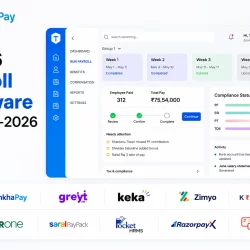
EOR vs Entity Setup in India: True Cost Comparison
Compare the real costs of using an EOR vs setting up a private limited company in India
The process of forming an Indian company goes beyond just registering. It entails:
- Corporate registration and paperwork
- Directors and their necessary filing
- GST, PAN, and TAN registration
- Ongoing auditing and filing taxes
All of these have cost implications.
On the other hand, EOR provides the following:
- Operational functionality from day one
- A predictable monthly cost
- No future administrative hassles
Therefore, EOR is better suited to testing the waters.
Permanent Establishment Risk: What Every EOR User in India Must Know
Another myth is that if you use an Employer of Record, there would be no tax exposure at all. However, PE risk may persist if your employees in India:
- Conclude or negotiate contracts;
- Act in a commercial capacity on behalf of your business;
- Earn revenue in India.
This may result in a tax obligation in India.
When EOR Is the Right Choice for Hiring in India
EOR suits you well if speed, flexibility, and commitment risk are your key concerns. This would be most appropriate for you if you:
- Are new to operating in India
- Intend to hire fewer than 20 employees
- Wish to test demand before making large investments
- Require immediate access to niche talent
The PEO Route: Scaling HR When You Already Have an Indian Entity
After a business gains legal footing in India, the issue changes from entering the market to scaling operations efficiently. This is when PEO becomes pertinent.
Advantages of Implementing PEO Services in India
- Cost Efficiency at Scale: A bigger workforce will enable the use of PEO services to be far more cost-effective than EOR.
- Full Employer Control: You have complete ownership over employment terms and branding.
- Customisation: PEO provides greater customisation capabilities for salary, benefits, and employee retention.
- Operational Stability: Running your own entity ensures better trust with your workers, customers, and government agencies.
PEO Cost in India: What to Budget for Co-Employment Services
The monthly cost of PEO varies from: $50 to $200 per employee
But this does not include:
- Fixed expenses like entity formation
- The internal HR and legal departments
- Compliance system
For PEO to become effective, such expenses need to be divided among more people.
When PEO Is the Right Choice
PEO is suitable when your focus is on long-term growth and operational control. It is the right choice if you:
- Already have an Indian entity
- Are scaling to 50+ employees
- Have internal compliance capabilities
- Are committed to a long-term presence in India
India Labour Law Compliance in 2026: PF, ESI, and the Four New Labour Codes
The structure of India’s labour law compliance framework can be viewed as having two levels: one consisting of central laws applicable to the whole country and another consisting of state laws.
Central statutory obligations every employer must meet:
- Provident Fund (PF): The employer contributes 12% of the basic salary plus dearness allowance monthly under the Employees’ Provident Funds and Miscellaneous Provisions Act 1952. The ECR must be filed and contribution deposited with the EPFO by the 15th of every month. Late deposits attract 12% annual interest under Section 7Q plus damages up to 25% of arrears under Section 14B.
- Employee State Insurance (ESI): The employer contributes 3.25% and the employee contributes 0.75% for all employees earning up to Rs 21,000 per month under the ESI Act 1948. Contribution deposited with ESIC by the 15th of every month.
- Salary TDS: Deducted monthly in accordance with Section 192 of the Income Tax Act, 1961. Filling of the quarterly form 24Q; form 16 is provided to employees by June 15 of every year.
- Gratuity: Amount due after completion of five years of service as per the Payment of Gratuity Act, 1972. Calculation: (15/26) multiplied by the final wage drawn multiplied by the number of years served. Maximum amount: Rs 25 lakh.
State-specific obligations:
- Professional Tax: A tax imposed by the state government on salaries of workers. Karnataka imposes Rs 200 per month on those whose salary exceeds Rs 15,000 per month, whereas Maharashtra applies a slab method up to Rs 2,500 per annum.
- Labour Welfare Fund (LWF): Contribution varies from state to state, ranging from Rs 6 to Rs 75 per employee per cycle (either twice a year or annually). Frequency may be either twice a year or once a year, but never monthly.
- Shops and Establishment Act: Registration to be made in every state where the employees operate. The Karnataka Shops and Establishment Act, the Maharashtra Shops and Establishment Act and their equivalents in other states are different registration acts.
How India’s Four Labour Codes (November 2025) Affect EOR and PEO
On November 21, 2025, the Government of India brought all four Labour Codes into force, consolidating 29 central labour laws:
| Code | Replaces | Key Impact |
| Code on Wages 2019 | 4 laws, including Minimum Wages Act and Payment of Wages Act | New uniform definition of “wages”; minimum wage framework |
| Industrial Relations Code 2020 | 3 laws, including Industrial Disputes Act | Retrenchment threshold raised from 100 to 300 workers |
| Code on Social Security 2020 | 9 laws, including EPF Act and ESI Act | Gig workers covered; revised wages definition for PF |
| OSHWC Code 2020 | 13 laws, including Factories Act 1948 | Annual health check mandatory for workers aged 40+ |
Three changes that directly affect EOR and PEO salary structures:
- New “wages” definition: If allowances exceed 50% of total remuneration, the excess is now treated as wages for PF, gratuity, and bonus calculations. Salary structures that kept basic pay artificially low to reduce PF contributions are now non-compliant. Every active CTC must be audited against this definition.
- Full and final settlement within 2 working days: All outstanding dues must be settled within 2 working days of an employee’s last working day. The previous informal 30- to 45-day F&F process is no longer legally permissible.
- Fixed-term employees: Now entitled to the same PF, ESI, and pro-rata gratuity as permanent employees. The cost structure of short-duration contracts has changed.
An EOR absorbs all of these compliance updates for every client workforce. A PEO client shares responsibility for implementing them; the client’s internal team must validate CTC structures against the new wages definition and ensure automated F&F processing meets the 2-working-day requirement.
Note: Central and state-specific rules under the four Labour Codes are still being notified in phases as of June 2026. This section reflects law as of the date above and will be updated as further rules are issued.
EOR vs PEO India Decision Framework: How to Choose the Right Model in 3 Steps
Choose EOR in India if:
- Your company has no registered Indian entity and does not plan to incorporate within the next 12 months
- You need your first Indian employee on payroll within days, not months
- You are hiring between 1 and 25 employees in India
- You operate across multiple Indian states and cannot maintain separate branch registrations in each state
- You need to manage blue-collar, white-collar, or apprentice workforce types — not all EORs cover all categories
- You want to test the India market before committing to entity setup and long-term overhead
- Your company is foreign-headquartered and needs to address permanent establishment risk under Section 9 of the Income Tax Act 1961
- You need a first hire on payroll in 1 to 3 business days
Choose PEO in India if:
- Your company already has a registered private limited company or branch office in India
- You are scaling to 50 or more employees and want to reduce per-head HR costs below what EOR pricing allows
- You want to retain full employer branding on employment contracts, your company’s name, not the EOR’s
- You have or plan to build an internal HR function and need compliance support layered on top of it
- You are committed to staying in India for the long haul and have already invested in entity establishment as well as compliance costs
Can You Switch from EOR to PEO Later?
Yes. The standard India expansion path is:
EOR (Day 1 hiring) → Market Validation → Entity Registration under Companies Act 2013 → Employee Transition → PEO or in-house HR
At transition, a quality EOR manages: employee PF account continuity via their existing UAN, ESIC transfer, fresh employment contracts under your new entity, full and final settlement of any outstanding dues, and compliance handover. There is no disruption to employee salaries during a well-managed transition.
How to Select the Right EOR or PEO Partner in India: 5 Questions to Ask
- Is there experience in handling Indian labor law issues?
- Are pricing and contracts clear?
- Can they manage multi-state compliance?
- Do they provide technology and reporting scalability?
- Can they facilitate extended transitions from EOR to entity?
Final Takeaway
The choice between EOR and PEO in India isn’t one of preference – it depends on your company’s entity status.
No Indian entity: Only option that fits the regulations = EOR. Hiring in India starts within 1 to 3 days. No need to register. Compliance is covered completely. Issues related to permanent establishment are dealt with.
Indian entity present: Becomes an effective solution and is usually more economical than the former. The cost per head becomes lower, yet compliance remains partially your responsibility, and overheads persist too.