In this edition
The World of Work Has Changed
The traditional workforce model, office-based, 9-to-5 employees with predictable contracts, no longer defines India’s economy.
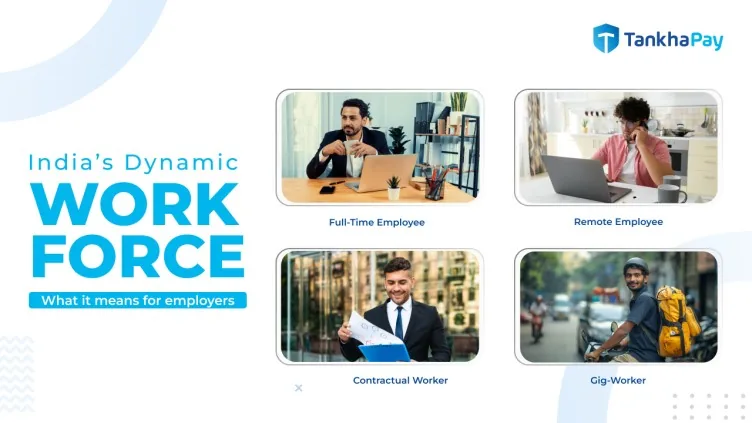
Today’s enterprises run on a dynamic mix of:
Full-time employees
Contractors and freelancers
Apprentices and trainees
Gig and platform-based workers
Remote and hybrid teams
This shift has unlocked growth and agility for businesses. But it has also introduced new questions:
How do you manage payroll for such diverse worker types?
How do you remain compliant when regulations differ across states?
How do you extend transparency and income proof to workers outside “traditional” employment?
This is not a trend on the horizon. This is India’s new workforce revolution, and it’s already here.
Why This Matters for Employers
What was once considered a “flexible workforce” is now mission-critical.
E-commerce depends on delivery fleets and logistics staff.
Startups scale with contract developers and freelancers.
Manufacturing relies on apprentices, contract labour, and seasonal hires.
The opportunity is clear, but so are the risks:
For workers: Limited access to payslips, benefits, or social security.
For employers: Rising compliance costs, legal exposure, and operational inefficiencies.
Simply put, yesterday’s HR systems are no longer built for today’s workforce.
The Pressure on Employers Is Real
Enterprises face a dual challenge: meeting workforce expectations while staying on the right side of regulation.
Compliance Pressure is Rising: India’s new labour codes and state-led worker protection schemes make compliance non-negotiable.
Workforce Expectations Have Changed: Regardless of employment type, contributors expect timely pay, income proof, and basic benefits.
Fragmentation = Chaos: Multiple vendors for payroll, compliance, and HRMS only add errors, penalties, and reputational risk.
For large enterprises, this is no longer an operational issue. It’s a strategic risk.
The New Employer Playbook
Forward-looking businesses are responding with integrated approaches:
Unified HR Platforms, One system to manage every contributor type.
Payroll & Compliance Automation, Eliminating human error and penalties.
Transparent Records, Every worker, regardless of type, gets income proof.
Employer of Record (EOR) Models, Smooth, compliant workforce deployment across geographies.
This is how leading enterprises are building resilient, compliant, and future-ready organisations.
Where TankhaPay Comes In
At TankhaPay, we’ve built a platform designed for this workforce revolution.
HR Tech for simplified employee management
Employer of Record (EOR) services for compliant, multi-location deployments
Apprenticeship Management (NATS) to cut manpower costs while building future talent pipelines
Managed Payroll & Compliance so enterprises focus on growth, not administration.
All of this comes in one integrated ecosystem, reducing vendor chaos and ensuring complete compliance.
The Bottom Line
India’s workforce transformation isn’t coming, it’s here.
The winners will be the enterprises that adapt early, balancing efficiency, compliance, and workforce empowerment.
TankhaPay is here to help you lead that change.
One platform. Zero chaos. For every kind of worker.
Does this change anything in your own payroll setup?
Our team can review your current payroll and compliance process against the rules covered in this edition. You get a clear view of where you stand, with no obligation to switch anything.