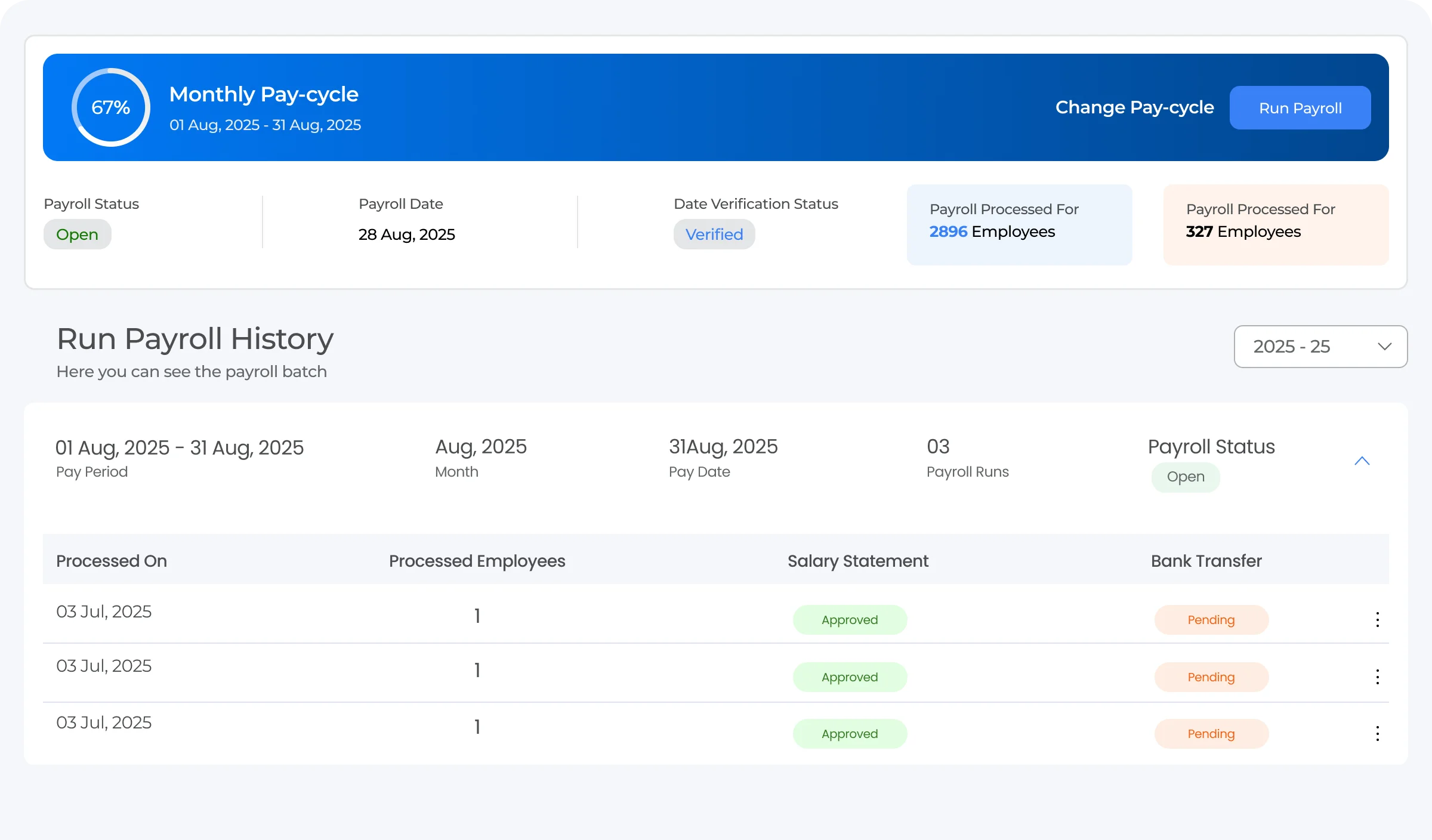
Payroll Management System

Payroll Management That Powers Growth

Our Payroll Management System streamlines every step of salary processing, from calculations and payments to compliance and record-keeping. Makes sure employees are paid accurately and on time while meeting all statutory obligations with ease.

Learn what they are and the value they bring to your business.

A payroll management system is software that streamlines payroll by accurately calculating pay, taxes, and deductions, saving employers time, reducing errors, and ensuring regulatory compliance.Research shows that seven out of ten employees in India feel they are frequently or occasionally underpaid. The Economic Times “HRWorld” presents financial well-being as “having a stable level of earnings, rising savings, and wealth-building activities, driven by a foundation of steady and accurate payments that encourage trust and commitment among employees.”

  • Accurate Pay – Guarantees timely and correct payment of salaries.
  • Easy Access – Enables staff to access their payslip information.
  • Instant Alerts – Spotlights problems as they occur.
  • Fewer Errors – Automation of leave and attendance-related data minimizes errors.
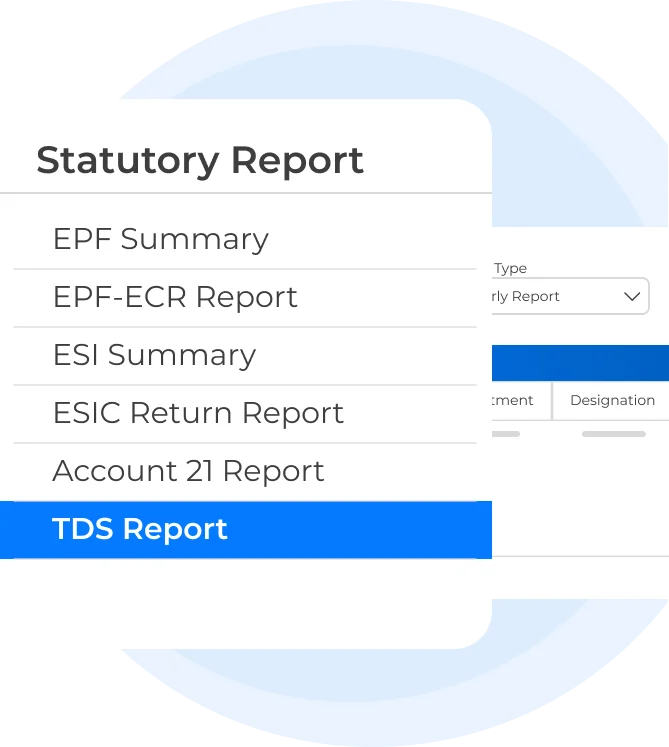
  • Compliance – Handles all legal deductions and filings.
  • Secure Records – Safely stores all payroll data.

Key Features of Payroll Management System

Payroll Management System features are the powerful tools that make processing employee payroll accurate, efficient, and compliant.

Discover how TankhaPay streamlines payroll, simplifying every step for your business.

Why Choose a Payroll Management System?

A payroll management system frees employers from the complexities of managing payroll, giving them more time to focus on growing their business. Handling payroll manually is not only time-consuming but also carries risks of errors and compliance issues.

Here are the key benefits of choosing TankhaPay’s Payroll Management System:

  • Accurate Calculations – Ensures precise salaries with all statutory and voluntary deductions applied.
  • Employee Access –Lets staff securely view payslips and update personal details.
  • Real-Time Alerts –Instantly flags payroll errors for quick correction.
  • Fewer Errors – Integrates key data to reduce manual input and mistakes.
  • Easy Compliance – Manages deductions and reporting to stay legally compliant.
  • Secure Records – Safely stores all payroll data for easy access and audits.

Looking to simplify your payroll management?

For over 26 years, employers in India have trusted TankhaPay to streamline payroll and compliance. Our solutions save you time and money by offering flexible features that meet the needs of businesses of all sizes, across any location.

Trusted by Top Businesses Across India

Join the growing community of businesses leveraging TankhaPay’s advanced technology, expert payroll support, and actionable insights.

Pulsing O

FAQs

01. What is a Payroll Management System?

A payroll management system is the method companies use to ensure employees are paid accurately and on time. It reflects an organization’s commitment to its workforce while maintaining compliance with government regulations. Beyond salary processing, it also involves maintaining precise financial records and efficiently managing deductions, taxes, and benefits.

The management system is integrated into the workflow of the organization, ensuring timely payment of salaries to the employees through a variety of means, such as direct bank transfer, check, or a payroll card. It also provides employees with the option to manage their information as well as get access to important information anytime.

A robust payroll management system helps organizations simplify complex processes, mitigate risks, and support business growth. Modern payroll solutions also enable companies to generate critical reports, gain insights into workforce trends, and seamlessly integrate payroll data with other departmental systems for smarter decision-making.

The process of managing payroll is done systematically, and this is achieved by ensuring that figures and numbers are correct. One small mistake can cause pay cheques to be delayed and can result in additional penalties from regulatory bodies. The process of managing payroll has been divided into three main stages:

Payroll Preparation Phase

This stage collects all the fundamental information about the employees, including their working status, income rate (salary or hourly), overtime income, bonuses and commissions, tracking records, vacation or sick leave balances, and all corresponding deductibles.

Calculation Phase

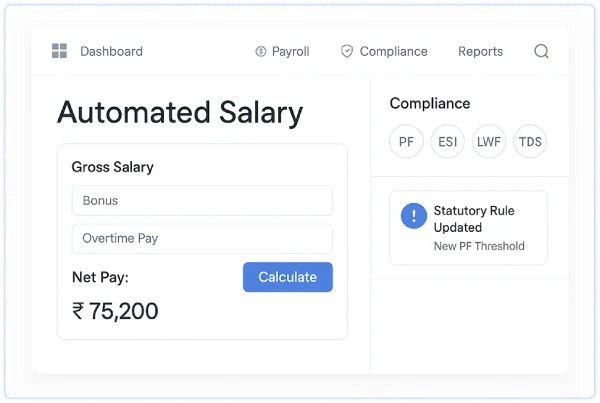
Here, the gross earnings are calculated, and deductions are also made to arrive at net pay. It is essential to ensure that the internal approvals are sought to ensure timely payments and stay in sync with the payroll calendar.

Post-Payroll Phase

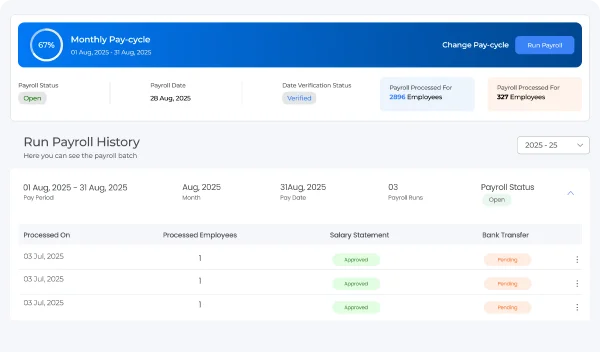
In the last stage, salary is paid, social insurance and pension fund contributions are made, records are kept, and forms and reports are filed with the relevant government agencies.

A contemporary payroll management system helps an organization in managing crucial payroll activities in an effective manner, such as:

    Computing employee pay: Accurately calculating wages, salaries, overtime, bonuses, and other forms of earnings. Processing Payroll Taxes: Processing, correcting withholding, and timely submission of federal, state, and even local taxes. Maintaining Compliance and Records: Maintaining comprehensive payroll records in order to comply with regulations and laws.

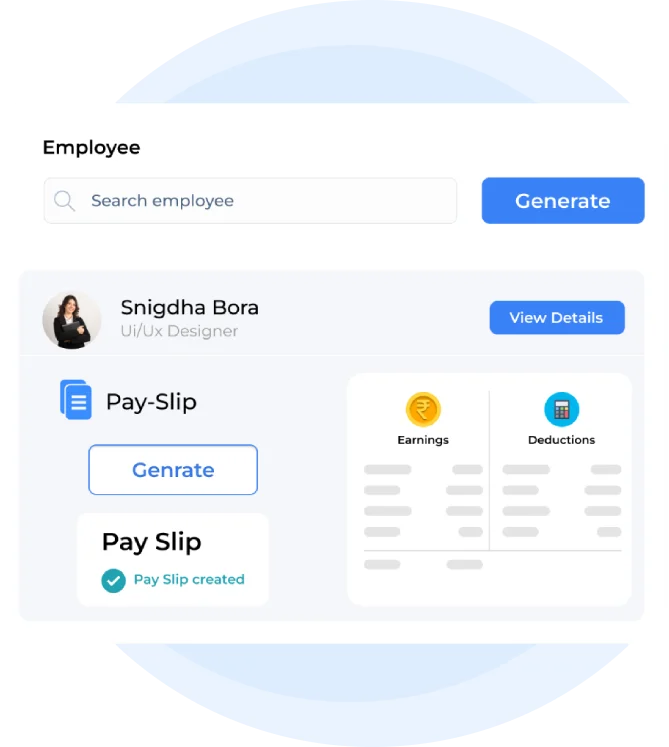
Offering employee pay statements, where employees can look at their income and deductions.