 Hosted by Bakshin Kaur, Director, TankhaPay
What is this episode on women and the glass ceiling about?
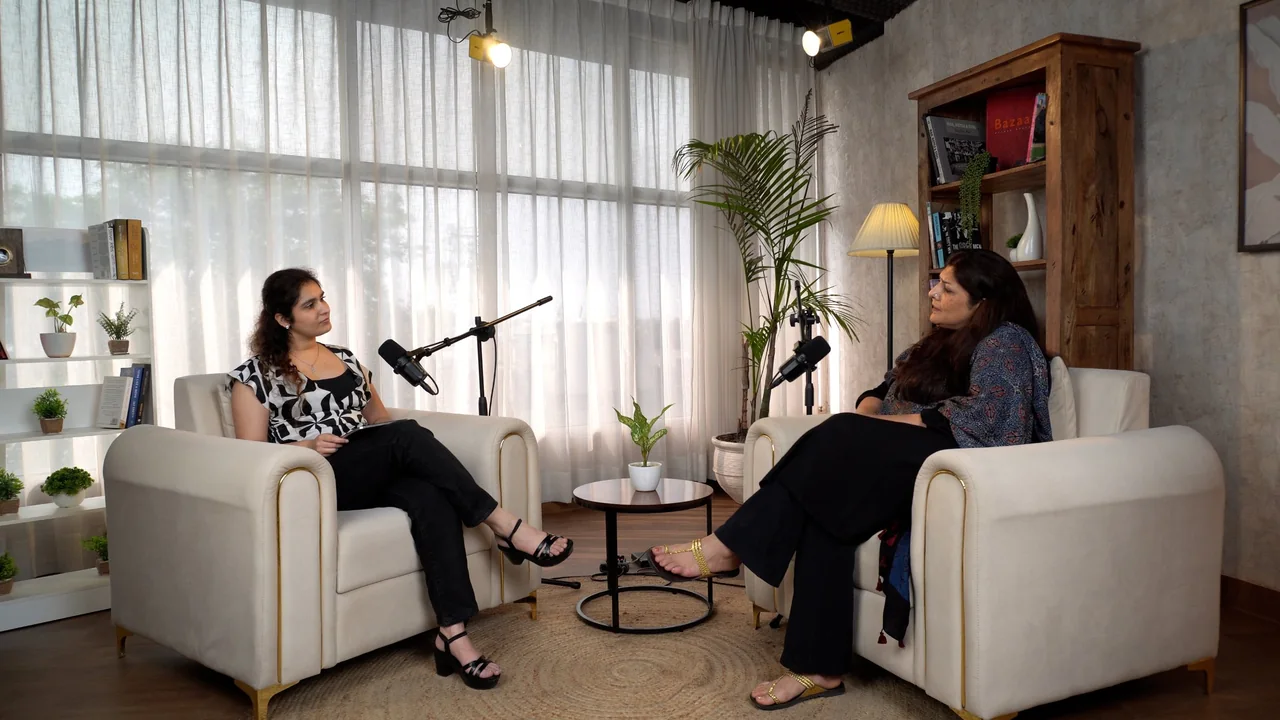
In episode four of TankhaPay HR Talks, host Bakshin Kaur asks Ritika Singh, CEO and Founder of Kontent Factory, where the barriers that hold women back at work actually live. Ritika, an entrepreneur, brand strategist and co-founder of Pink Policy Dialogues, answers from years in boardrooms, policy forums and industry bodies.
Her short answer: not in policy. The glass ceiling is built from small, everyday moments, and it starts long before a woman reaches the top.
What are Ritika Singh's key takeaways on women at work?
Ritika traces the gap to who has to keep proving herself, who gets into the room, and who can give a job 100%. These are the ideas she returns to across the conversation.
- The glass ceiling is made of small things. Being told to "sit in the front row and look charming", or being sent to raise sponsorship because "ma'am will smile", says more about the barrier than any rulebook does.
- The bar is not the same. Women are praised as better employees and leaders, yet handed task after task to prove themselves when a leadership role opens up.
- Decisions get made after hours. When the real networking happens over drinks at 9 PM, women with caregiving duties at home are left out. Her question: why can it not happen at 5:30?
- The pay gap is an availability gap. She sees it as less about skill and more about who has the liberty to stay late, travel and give a job 100%, which depends on support at home.
- Patriarchy hurts men too. It rewards aggressive men and works against men who are sensitive, and it gives everyone fewer ways to express what they feel.
- Three changes for the Indian workplace. Put gender-sensitised leaders at the top, stop the artificial scarcity that pits women against each other, and design offices, chairs, washrooms and feeding rooms for everyone. A strong leader shapes culture more than any HR policy on paper.
What were Ritika Singh's standout lines on women and leadership?
A few lines from Ritika captured the whole conversation. Each one is quoted as she said it on the show.
They're okay to take a 40% man, but they're not okay to take an 80% woman.
If you love someone, you will never be unkind to them.
Nothing can be the center of your life except you yourself.
What did Ritika Singh say in the full conversation?
Ritika opened with a simple test she runs in workshops: ask a boy and a girl to walk to a shop 100 metres away, and only the girl starts asking what time it is and who else will be on the road. That constant watchfulness, she says, follows women into the workplace.
She spoke about girls being raised to take up less space and then being asked to lead, about the "bro code" that has no equivalent for women, and about why the word feminism, which to her simply means equality, makes some people so uncomfortable.
Taking the employer's chair, she explained why she asks candidates about their support system at home rather than their marriage plans, and why, for an employer, availability on high-pressure days is a real business question.
In the rapid-fire round her advice for her 25-year-old self was "You don't need to get married", and her hope for the next generation was to focus on their own goals, because marriage, jobs and relationships come as part of who you are, not what defines you.
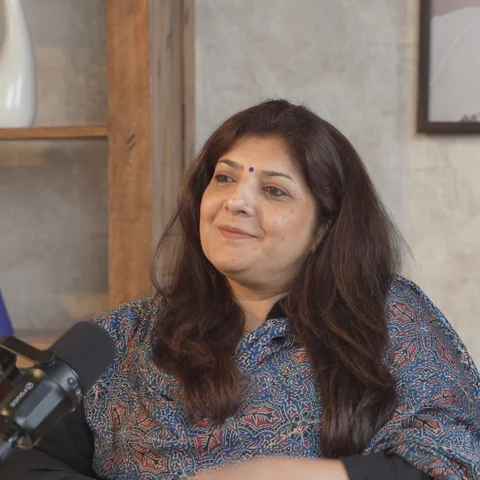
About the guest
Who is Ritika Singh?
Ritika Singh is the CEO and Founder of Kontent Factory, an entrepreneur and brand strategist, and the co-founder of Pink Policy Dialogues. She works with industry bodies including CII and TiE Chandigarh, and runs workshops and roundtables on gender sensitisation in workplaces and schools.
Follow Ritika on LinkedInCan I read the full transcript of this episode?
Yes, the full conversation is below, with timestamps you can click to jump to that moment in the video. It comes from the episode's captions and has been lightly tidied for reading.
Show the transcript
Parts of this conversation are in Hindi. Those parts are marked [Hindi] below; watch the video for them.
Bakshin: Everyone, welcome to Human in the Loop, a show about people behind every business and the systems that decide how they work. I'm your host, Bakshin Kaur, and each episode, one industry, one leader, and one hard question. So today we are, we are in talks with Miss Ritika Singh, and, uh, we will be talking about the invisible barriers that women face in workplace. Ritika is an entrepreneur, a brand strategist, a very, very inspiring woman, and, uh, she's the CEO and co-founder of Kontent Factory. Uh, sh- I, I think she works with Pink Policy Dialogue. She's the chief-
Ritika: Yes, I'm the co-founder. Yes.
Bakshin: She's the co-founder of- ... Pink Policy Dialogues. She's in CII, IVIN, TiE Chandigarh, and I am pretty sure a bunch of many more things- ... that I'm missing out. [laughs] So welcome, Ritika.
Ritika: Thank you so much, Bakshin, for having me over. It's always a pleasure dealing with you.
Bakshin: So ma'am, how are you today? [laughs]
Ritika: So far so good. Happy, satiated, so touch wood, God is kind.
Bakshin: That's great, ma'am. So ma'am, can we begin?
Ritika: Absolutely. You're in.
Bakshin: All right. So ma'am, you've worked across entrepreneurship- ... leadership, policy dialogues. You know, you've seen various systems, various kind of workplaces throughout your journey. So was there a moment in your career where you realized that women and men experience workplaces differently?
Ritika: Absolutely, and I think it will continue for some time more. I think it is not about, uh... So there's something I always say that constantly women are on guard- ... whenever they are in workplaces because anything can be misconstrued in any way possible, and everything somehow will always boil down to the woman being at fault somewhere. So if someone misbehaves with her or she was trying to lead him on something or the other. And, uh, you know, it's very simple. I remember I was doing, uh, uh, a little workshop with IIT Ropar and a bunch of young boys and girls, and I was just asking the boys, I say, "You tell me something, if I ask you to go to the market," which was across maybe 100 meters or something- ... and I say, "Go buy me, uh, let, let's say chewing gum. So "" and I'm giving you 100 bucks." "So I'll take the 100 bucks, and I'll go to the market, and I'll buy your chewing gum, and I'll come home. That's what I will do." And I said, "Now if I ask the same question to a girl, she will say, 'Achha, what time of the day am I going?'" "Will there be other people?" Maximum you'll have to watch out on a road. You know, there is a pothole. I said, my eyes are constantly around. I mean, there is no normal way I can... So I said, "Do you even understand what we go through at, at, at a regular level?" And this, uh, doubles up even in workplaces because the threats become so much. One little eye contact two seconds longer than it should be, "Oh, she's interested in me." The situations are always pitted against women, even though we have pause and all these, you know, prevention of sexual harassment in places. But I think we just view it very differently. And women are also, you know, constantly put to, uh, different standards. Uh, let's say that, how are you gonna manage? Or you're not going home. The guilt tripping happens with moms because they believe that, you know, 100% childbearing and rearing is all something they have to do. So it becomes very complicated in the end. I think, uh, somebody was telling me the, uh, you know, the other day that women have built a hole for themselves. Uh, they've dug a hole for themselves, and now they don't know what to do because. And now they don't know what to do and they're exhausted. And mid-career, I think at the time when you peak at your careers in 40s, they're all leaving and going because that's when menopause hits you, and then you realize. I mean, the energy of a 25-year-old and- ... a 50, a 40-year-old is very, very, very different. So yeah, I think there is a, there is a complete mismatch of expectations and how women and men see workplaces.
Bakshin: 100% I agree. As you know, a woman working at a leadership position, I've been at a point where a junior has said, "Ma'am [Hindi] " what were you meaning? And I was like, "Excuse me?" That was just something I said without thinking, you know?
Ritika: And sometimes it's just basic courtesy and that's just how-
Bakshin: It's just basic courtesy
Ritika: ... yeah, that's just how we work.
Bakshin: So yeah. But moving on. We, when we, when we're talking about these things, we're obviously, you know, talking about a glass ceiling. People say a glass ceiling, people look at it as a final barrier, you know, at a senior role. But I feel that this is something that starts at a much younger age.
Ritika: True that.
Bakshin: Small decisions that shape, you know, visibility, confidence, sponsorship, what promotions you get. Right? So what are some of these invisible barriers?
Ritika: I think it is just about proving, uh, something to someone, because I don't think, um... So I just always believe that, uh, wherever I have gone, I've always heard the men say that women make better leaders, they make better employees, they're more dedicated, they have the more this. But. But then suddenly when it comes to leadership positions, nobody's good enough. And I've always held this to, uh, the men community that overall, since they are the decision makers largely still, till that ratio changes we just have to fight this, that they're okay to take a 40% man, but they're not okay to take an 80% woman. And this I've seen across the board. They will say, "Oh, you do this, we'll give you a promotion. You do this, we will give you..." So they're like 100 tasks a woman is given to constantly prove herself every day. One day she decides not to come to work because and it just becomes a whole thing about them. And, uh, I just feel so furious at times, and like we were just discussing, that when you know these things, you can't unsee it, you can't unknow it.
Bakshin: [Hindi]
Ritika: So I think my blood just keeps boiling and I just keep fighting these battles, and it is unfortunate and not the women's fault beyond a point- ... because we have normalized it so much that it just feels like this is how things have always been And, uh, my heart goes out to women when I see that, see that, uh, you know, they just accept this as the norm. And I've personally been through these journeys. I've personally ... I mean, even in workplaces, I've heard, uh, the men say that, I would say that, "Meko koi kam de do. I will, you know, like, to pick up a very active role." So, uh, one of the men [laughs], I still remember a couple of days back, uh, months back, he said, "Madam, aapko kya kam karna hai? Ye toh thoda logistics ka kaam hai. Let the boys do it. You just sit in the front row seat and just be charming." And I'm looking at his face like, "Like, seriously, this is what you just said to me?" Uh, for a person who's got 14 years of work ex behind them, has a global position, and you just expect me to sit in the front row and look charming. I mean, just what does it even mean? And then you say, "Kiske saath ye battle fight karo tum jaake?" Because that person is so entrenched in patriarchy, they have no idea. So aapka glass ceiling doesn't come from something which is like a physical barrier. But these are the kind of things that, okay, sponsorship raise karni hai, why don't you send Ritika ma'am? So ma'am will smile and sponsorship aa jayegi. I'm like, "Dude, mere ko apne dhandhe ke liye business nahi milta. Waha pe mujhe logon ko bolna hai." Then who do you think will give me sponsorship if I just go and smile? And it's just so derogatory.
Bakshin: [Hindi]
Ritika: So derog- ... I mean, you tell me that ma'am has great communication skills, and she's got a lot of conviction, so I think we should send Ritika ma'am. But you can't tell me that because I'm a woman, this is my role to play. So the glass ceilings come in little, little things like that. There'll be something about your weight. There'll be something about, uh, when you're coming, when you're going. If you're doing something for the family, then you, like, you don't really care about your job. If you're too focused on the job, they'll say you don't really care about your family. So in the end, I figured that no matter what you do, till you become 100% woman, there's no leadership position coming for you, and that always comes at a cost.
Bakshin: [Hindi]
Ritika: It always comes, and there are no free lunches in the world.
Bakshin: 100%. 100%. I think it boils down to a question of credibility, you know. We have, uh, we have started living in a world where the unconscious picture of a leader is always a man. So when a, a woman comes in a leadership position, she gets spoken over by a younger man, and he will be taken more seriously. A woman will be called bossy. But a man will never be called bossy for the same question.
Ritika: True. Absolutely true. Absolutely true. And again, it's also about how we have normalized this. So I still remember this incident, I think, couple of months back. I reached out to somebody from, um, the Indian Air Force, since I have a ... my father was in, uh- ... fighter pilot. And, uh, they sent me this number of this person, and, uh, it just said, uh, so and so Shakti Singh. So I was like, okay. So I was trying to reach out to them, and I saw their DP. In DP, there is a couple standing. So I immediately wrote to them saying, um, "Hi, sir, it is lovely to get connected. I got your reference from so and so, and I would like to have a conversation about how you all can help with the, you know, women community, and I'm looking forward to having some kind-" ... "of sync with the Indian Air Force, et cetera, et cetera." And, uh, she wrote back ... I, I mean, that person wrote back, and she said, "I am, uh, so and so Shakti Singh, and I am ma'am, not sir." I was like, "I'm so sorry. Because I see a couple in the picture, I assume Shakti is a man, and because they're in the Indian Air Force, I assume it has to be a man." Not even realizing, this is me doing it. I mean, I think I'm pretty woke enough. But here I am again assuming that Shakti hai toh man hoga aur Indian Air Force hai, officer hai, toh must be a guy only. So you know, these are those little, little biases, and I always call it micro acts of feminism, like I've ... I think so. Every day, keep correcting people. Keep correcting. Wo chairman nahi hota hai, wo chairperson hota hai. So little, little things, and I keep getting inspired by the kids. Both of them are, um, hardcore feminist, and, uh, they keep telling me that, you know, "This is how [laughs] you're supposed to be. You're not supposed to do this. You're not supposed to say this." So I think the kids are also teaching us a lot. And credibility ki baat Bakshin yaha se aati hai that for the same ... uh, you know, the boys have something called a bro code, haina? Hamara girl code nahi hota hai koi. So women usually are so pitted against each other that you just, uh, there's very less of everything. Agar aisa nahi karega, ladki itni hai, so you have to look like this to attract a good guy. You know what I mean? Not saying that there are enough men in the world. I mean, it's all right. If you, if you don't or are not able to attract, it's perfectly fine, right? Woh har cheez mein na panic button ladkiyon ke liye hota hai ki utne hi ladki itne hai. If you take arranged marriages out of India, I don't think Ind- any Indian man is getting married. None of them. When I say none of them, I practically mean none of them.
Bakshin: I believe you, 100%. [laughs]
Ritika: Haina, you know exactly what I'm saying, right? So having said that, I think the women have to work very hard for the same roles that men can easily get away with. And I'll tell you- ... it's very simple. Aapko late night karna hai in the office, you know, the boss and everybody is going out for a party. You know all the major decisions are done. You know a lot of ha- you know, networking happens, a lot of chemistry seen, heard, and bahut unseen baatein unheard cheezein sab wahi pe hoti hai. Ab tum nahi kar sakte. Tumhare ghar mein tumhare koi na koi XYZ baitha hua saying ki nahi 10 baje ke baad tum nahi reh sakte ho. Or there is something to be done or some caregiving is to be done. There is a young child, elderly parent, anybody for that matter. Woh koi nahi sakta, and the boys know this. The men know it already. Aapko agar ye karna hai, toh why can't you do it at 5:30? Why can't you do it at 6:00? Why does it have to be over drinks at 9:00 PM?
Bakshin: [Hindi]
Ritika: So aade toh hum log aise hi fizzle out ho jaate hai. So woh aapka connection hi nahi ban paata. You're not able to establish those relationships where, you know, uh, just put a hand on someone's shoulder at that point in time, someone's in that state, you know, happy, jovial, and this, and, and just say, "Yaar, I need that promotion," and it's done. Women can never do that.
Bakshin: I agree. I agree. You know, so I think something we touched upon is how the same leadership behavior can be s- interpreted so differently- ... between men and women. And, uh, I think we touched upon this a bit, but do you think women end up e- editing their tone and behavior just because they will be judged differently in the workplace?
Ritika: All the time, my child, all the time. Their da- ... So think of it, when we're younger, you know, when you're growing up, you're a girl, you'd probably understand this. If not directly, you'll probably know around you. Like, I have a 19-year-old daughter, and, uh, most of the times I've always told her that, you know, if there are men coming into the house, there's a plumber, there's an electrician, please don't come out of your room. Or if you're wearing shorts, don't come out in shorts. Or we're constantly trying to keep them away from the male gaze. You know? So we are constantly from childhood telling our girls to shrink and take up lesser spaces. Now, suddenly when these girls are growing up in the age of social media, and then we are saying, go, „Duniya jeeto tum log," go fly, do this, do that. And suddenly all these girls are out there. Now they are in leadership positions either in schools and colleges or they're working. Now we've shuru se taught them, their fundamental conditioning is take up less space. Now they don't know how to take more space or whatever is they're entitled to. Unko pata hi nahi hai, pehli baat. Second, when one of them tries to break it, then suddenly she's like going out of character. So out of character could be obviously negative. It is never positive. So the men that is entitled, unko pata hai ki hamara hai the aggression, I have to be a man, be a man. It's been so, uh, ingrained in our systems that we never stop to question it, and I'm very happy. Abhi recently I was talking to a friend of mine and we were discussing this, that, uh, uh, yesterday, I think outside one of the major colleges in Delhi, so there was a very unfortunate- ... incident, right, uh, of some boys misbehaving with a girl. And what have they done? Um, the college has, uh, asked the girls to go online for all their classes. And the girls are protesting. Now they're saying that, how is it that somebody else makes a mistake and we suffer? So why don't you do online classes for the boys? Keep them off the streets after 6:00 PM. I mean, how ... I mean, why does this have to ... So the, I'm so happy now that the girls are getting up and asking these questions because hamne to sari parenting aise hi dekhi aur aise hi hamne bhi. We've also been parented like this. 8:00 ... I, I'm 51 years old, my mom will still ask me, "Andheron is pehle ghar aa jana." Because they're, you know, the way they have also been brought up and they understand that once you're out there, you don't know what's gonna happen to you. It is, uh, very, very unpredictable and it just feels so bad ki aap ... I mean, human happiness is just another emotion, right? If you feel that going out for a late night drive makes you happy because you love to be with nature- ... you love, you know, the, the shant world at that point in time, how is it it is so legitimate for one gender and so illegitimate for the other gender? That aap soch bhi nahi sakte. Every time you will think, "Is there a male member in the house I can go with?" Is there a bhai? Is there a dad? Is there somebody? Is it my spouse? Is there anybody I can go with, or a bunch of friends? And every time there has to be one. I mean, does it take a male entry to dissuade another male from ... You know, I mean, mere ko samajh nahi aata. Ghar mein maa behan nahi hai kyunki jiske maa behan nahi hai woh kuch bhi kar sakta hai kyuki usko feeling hi nahi pata. So the respect will only come if something like this happens to your mother and your daughter. Or your sister or whatever, right? So I don't understand how the male mind works. Woh mere ko samajh hi nahi aata. Mere uske pare hai.
Bakshin: Well, [laughs] ma'am, I am speechless too. [laughs]
Ritika: I know, it's so many questions.
Bakshin: Right? Uh, I mean, we always talk about, you know, true equality. Yeah. And we are here talking about all of this. So I think one word closely associated with it is feminism. But when we talk about feminism, that word creates so much emotion within people. People are so divided when it comes to the term feminism, and why do you think that is?
Ritika: So I'll tell you, um, it is human psychology fundamentally, that when you are in a position of entitlement, when you are in a position of power, nobody likes to let it, let it go. Nobody likes it, okay? This is, it's true for all of us. It's, it's a human thing. It's not something that the boys don't know. I'm sure if we reverse the roles, there would be enough aggressive women in the picture as well. So there are no easy, easy solutions to any of this. But having said that, I think it is very important for us to spend five minutes, like aap world politics ke, aapko Trump pata hai kaun hai, aapko Modi Ji pata hai kaun hai. Aap ... It's general information, right? GK jisko bolte hai. Just regular stuff. You know all your podcasters, you know the influencers. Ab aapko itni knowledge unke bare mein hai. So thoda sa paanch minute laga ke padh toh lo ki feminism kya cheez hai. Just read it.
Bakshin: [Hindi]
Ritika: And just read it. I'm not saying you try ... Understand what it is. You may still make your choices whether you want to be one, you don't want to be one. So feminism, unfortunately, is not something that we end up hating men. We're just saying, and it does in some way, the men understand it like, ki meri position ko koi hilane ki koshish kar raha hai- ... ya mere equal aane ki koshish kar raha hai and I'm resenting it. Okay? But it is fundamentally just saying that men are equal to women. Hum women ko pedestal pe nahi daal rahe. Woh yahaan pe hai, the men are here, all we are saying we want to be here. That's feminism. There's basically kuch nahi. Hum kuch nahi keh rahe. But the men are so used to seeing the women there that they are resenting the fact that ye yahaan kaise aa gayi. That's all there is to it. And I'm telling you, for the men who are not insecure, for the men who are really, really genuinely good, kind-hearted people, the men who really don't care- Uh, whether the respect given to a person should be based on gender. You can scream, shout from the rooftops, "I'm a feminist," and they just look at you as a normal person. Because they don't really care. They would in any case give you respect. Now, the community, which is the entitled one, the community which has enjoyed this kind of entitlement that we are superior and the other gender is inferior. They're the ones who creating all the ruckus. So and I say this to all young kids that, uh So because right now, if it doesn't matter whether you've locked your house or not. So the people who are actually complaining are the ones who are interested in the They are the Otherwise, a person with ethics and integrity, they don't go around looking at It's your problem. You lock it, you don't lock it, it's your problem. I don't really care. So the people who are complaining are the ones whose entitlement is going for a toss. So those who, the moment somebody says, "I'm not a feminist," and I say, "Oh my God, we know what category you belong to." That means respect for women does not come fundamentally to you. You have been biased, and you're just being entitled about it. That's it. There is no rocket science behind it. You respect boundaries, you understand no, you understand rejection, you understand all of these things. It's all good for you. Whether the word exists, it doesn't exist, whether you write in your bio, I am or I'm not So who are the ones who are complaining?
Bakshin: That's a lot to think about. [laughs] But, um, you know, we as a society have conditioned- ... not just men, but also women- ... into a patriarchal sort of a thinking. Right? So when we talk about patriarchy do you think it is disadvantageous to men as well? And do you think in some ways women also enforce patriarchy?
Ritika: Yes, yes, they do because the system is set up in a way that it rewards women for being patriarchal. So s- the patriarchal, the men, they reward women who are patriarchal. I mean, obviously, the male gender is superior. And somebody from the other gender also, yeah, yeah, male gender is superior. So you will try to give her those little- ... privileges to say you will put her on higher moral ground. You will put her on higher ethical ground. Oh my God, she's, you know, patriarchal So patriarchy rewards women for being patriarchal. The system is made like that. There is no way out. I mean, it's only the women who will get up and suddenly say, "Oh, I don't believe in this." Why is it like this is the one that, oh my God I think my only, uh you know, what makes me really sad is that so much of social media out there, so much of information out there. Why can't you just spend five minutes to understand what it really is all about? What are we even trying to scream and shout about? You know, so men also go through this. Now, I'll tell you what. Patriarchy works for regular aggressive men- ... because it establishes their so-called manhood, right? What if a man is not that aggressive generally? He's a little more emotional. I mean my brother and I are standing, something falls on my foot. I can scream and shout in pain- ... and express. And I can cry and say, "Oh my God, the, this damn thing's fallen on my toe." But he can't. He has to be a man. How is it that expressing fear, guilt, love, pain became about gender? So men also suffer, but not the typical men. So patriarchy does not... It does worse for boys who are sensitive, for boys who have different kinds of personalities. It goes against them. So patriarchy works for regular aggressive mens who feel that they are entitled and they are the superior gender. The moment somebody steps on that, so they will start saying, "Oh, you are this, you're that. You're not a man, you're not this, you're not that." So patriarchy is fundamentally doing disservice to men who are basically not aggressive, and all women. So some men suffer, but some men really, really benefit from the patriarchal setup. They really do. It works for them like magic.
Bakshin: Understood. So now when we are talking about all of this, all of this definitely enters our workplaces as well. Right? Because this conditioning is very human. So when we talk about, you know, interviews, when women go in for interviews, especially women in their mid-20s to 30s, they're often asked, "Oh, when are you getting married? When are you planning to have a kid?" You know, because the employers are always thinking of maternity leaves. But do you think women are conditioned to it even before they reach that stage of life? And why are these questions not asked to men around the same marriageable age? Won't they need paternal leave?
Ritika: So it is, it is kind of very coincidental that just before coming here, I was having this conversation with a very dear friend. Mm-hmm. And just exactly about this. I'll tell you how this works. It's very important for men and women both to understand. So a lot of women resent this, that [laughs] Right. It's very simple. Fathers cannot take it because they're not bearing the children. Very simple logic. Right. [Hindi] leave Yeah. [Hindi] because you menstruate [Hindi] It's as simple as that. Yeah. It is not about [Hindi] Right. I mean, just it's basic logic. You don't have to really fight. Mm-hmm. [Hindi] Mm-hmm. That's not how life works. Right. But having said that, now tomorrow you have a baby and you come back to work after three months. [Hindi] your husband is not supportive. Mm-hmm. He's a patriarchal man. Your family, entire in-laws family side is a patriarchal family. [Hindi] Mm-hmm. Vis-a-vis another woman [Hindi] emotionally supportive husband, eh? Mm-hmm. In-laws are very supportive. Ecosystem [Hindi] supportive, eh? So even if the child has got 103 fever, you will continue working and somebody at home will take care of a child. Right. Because they feel that, you know, parenting is- Mm-hmm ... a two-way. I mean, it's like both parents. Right. Right? Now, having said that, I really as an employer want to know how much of this is going to impact my business. Mm-hmm. I'm hiring two people at the same cost to the company, you know, with the same skill sets, but one will have to go home at 6:00 and will want to take every alternate day. Mm-hmm. While the other one is saying that, "I have no liabilities, nothing, I will manage. Right. [Hindi] you know, somebody at home will take care of it. Right. It's not my mess to carry alone, right? Mm-hmm. Now, having said that, [Hindi] it is invasion of personal space, no doubt. But how am I supposed to know how much this woman can work and how much can she actually put in on days which become high pressure jobs? Right. Because Mm-hmm. They both will come in the morning, 9:00. They both will go back at 6- Right ... 7, whatever. Right. But only on the high pressure days, Mm-hmm. [Hindi] late night Yeah. Suddenly that girl will get up and say, "I can't do late night. My father-in-law doesn't like it. My mother-in-law doesn't like it. Mm-hmm. [Hindi] So I will have to go." Now, for me, that's a cost to the company, and it impacts my business. 100. Every third day, [Hindi] because there's nobody else who is going to take responsibility- Mm-hmm ... for the Mm-hmm ... for the father-in-law. Right. How do you do it? So the question becomes concerning for an employer, not for the invasion of personal privacy, but also to understand how much will it cost me at the end of the day. Two employees, a, [Hindi] Mm-hmm. [Hindi] may still feel more valuable, even if I'm assuming- Right ... that maybe one of them is damn good at work, but I'm assuming everything equal. Mm-hmm. She's far more valuable to me [laughs] simply putting in more hours. No, that makes a lot of sense, and I think this is a very important perspective that most people leave out when they are considering [sighs] [Hindi] Right. I really don't know. I mean, you were just a stranger to my... I'm interviewing you because I don't know you. Mm-hmm. If I knew everything, I would not ask these questions, nah? If I'm a friend of yours- Right ... I know Right. [Hindi] dad supportive, coolish. She's like, you know, given all the this thing, so I will hire you in a blink of an eye. Right. But somebody else, [Hindi] husband also is such a Mm-hmm ... he's not gonna allow her to do this late night, yeah, so forget it, I don't want to keep her. Right. So it's not about you per se. It's the kind of support you have. That's what I really want to know. I don't want to know you can have your babies whenever you want to. Mm-hmm. You can get married whenever you want to. I just want to know that you have the background support- Right ... to manage high pressure situations, to manage situations where you may have to travel at odd even hours, you may have to travel some. Right. [Hindi] You are a- Right. Right ... you're a working professional yourself. Mm-hmm. You know that there are so many ups and downs every single day in office, right? Right. Right. So [Hindi] pressure handle Yeah. [Hindi] backup. That is the reason I ask. There's no other way. And because 90% households in India are patriarchal, so Mm-hmm ...
Bakshin: I know a friend of mine, she was very clear. I said, "Why didn't you work?" She said, "I know [Hindi] I can't do justice to all three things." Mm-hmm.
Ritika: So I decided not to work. I will ask and beg my husband, at least I will have my mental peace. I said, "That's a fair thing," because she understood. She said, "It's a patriarchal system. I'll burn out at the age of 35, and most women do by 40"- ... for this reason only, because [Hindi] You cannot do all justice to all three things.
Bakshin: Right. So I think it's safe to say that we can't achieve equality at work until, unless there's equality in our households, in our homes, right?
Ritika: It was just all the time. Absolutely. Absolutely. I just ... We, um, held a roundtable in Chandigarh two, three days back. We were talking about gender sensitization in schools. And I realized that it is not a single layer which can ... So there has to be the teachers, there has to be the parents, it has to be the community which has to be supportive, and nobody should be judged for anything. If a man is not earning, you cannot judge him for not being a man. [Hindi] uh, because, uh, you know that case, Abida, happened about- ... a year or two years back where, uh, the father was, uh, you know, the daughter was an influencer and she shot her dad, ki, because somebody said, " [Hindi]" I mean, [laughs] it's just so damn illogical to be. Like, the child is not there anymore. I mean, [Hindi] And he's in jail. I mean, I don't even know what, what was he even thinking? You know? But this is how badly the system has become. That a man is judged for not earning or being supported by his wife or anybody else in the family. [Hindi] Why is it that the man should have ... [Hindi] photography school. [Hindi] So what is wrong with that? Why should I? He would just say, "Yeah, I wanna take a break for a year." It's okay. It's fine. It's a decision that both of them need to ... [Hindi] It's a financial, uh, decision that both of them have to take. I mean, who's anybody to play a role there?
Bakshin: [Hindi]
Ritika: But [Hindi] So the point I'm just trying to make over and over again is that the moment you move out of the patriarchal set is when you will get judged and life will be miserable for you. Half the time the men are being pity, even if it disagrees with them. Like, you know those situations where a husband and wife, uh, the husband in front of the mother and the father will constantly degrade his wife? But the moment he walks into the room, he'll say, "Oh, I'm like really sorry. I didn't mean to say these things, but"- ... you know? So they also know that they will be accepted by their parents only if they behave in a certain way. So the moment they try to be nice or take their wife's side- ... or take the side of the person who's right and stand up for someone, they will be judged for not being man enough.
Bakshin: Right. I think this creates a segue to talk about women empowerment and financial- ... independence. We often talk about, you know, how women need to be empowered. But don't you think it is systems that need to stop disempowering them? And how does financial independence fit into all of this?
Ritika: I'll tell you, this a very interesting question because again, three days back to the same roundtable we were- ... we had a couple of, uh, school educators and we were having this discussion. And one, uh, teacher got up and said that, "I have a question," and it was addressed to all of us. And she said that, "I have young girls in my class." "Some of them want to get up and say, ' [Hindi]' I don't want to be financially independent. I can't work. I will just marry a rich guy and he'll take care of"- ... "everything." So she's, "Ritika, how ... [Hindi]?" So it just kind of ... There was a huge pregnant pause in the room because we were still trying to figure out that, oh, sure, you know. So we went around the room, everybody gave their answers and whatever. In the end, we all decided that, sure, empowerment for me also means the choice to do whatever you want to do. So I said, " [Hindi]," that, uh, you don't wanna work, don't work. But as parents, as people who are rearing and influencing young minds, you also have to tell them the cons of being in that situation. [Hindi] Now at any given point of time, that person can go in a direction you don't want to go, or they could just simply say, "Get off the car, it's my car." [laughs] "I'm driving it," right? So I always say that everybody needs to be financially independent, right? For simple logic that money and financial independence give you the opportunity to lead a life that you want. There are no controls. [Hindi] Maximum, I would, like my son. I would just tell him, " [Hindi]," make sure that 75%- ... of your salary, blah, blah, blah. You just give them. But I never asked him that, " [Hindi]" But my daughter, I'm very concerned because she's still not earning, so I will ask her, " [Hindi]," how much did you spend on groceries? It's very natural. It is not that I'm trying to be controlling anything. Now I'm the mother, I have the best interest for my child. My [Hindi], or I want this, or I want to travel, I want to do this. I'll do it very happily. I'm not judging, controlling or whatever, but there is still some kind of accountability that comes. If you are financially independent, man or woman, adult or whoever you are, if you want to lead a life with basis your decisions, you have to have money in the bank. That, there is no other way out. Unfortunately, house help, house, food, conveniences, everything money only buys for you. [Hindi] It's okay. Um, this is how it is. But for a young woman, for a young man Financial independence is life. Uh, it's a life skill. So both my kids know this, that at any given point of time after 27, 28, both of you should be able to fund your own life. Mama [Hindi] uncle, auntie [Hindi] Basics independent - ... independent BMW Alto scooter it's your call. It's your call. But you should be able to, uh, afford house, you should be able to afford food, you should be able to afford medical expenses. basics covered survive But mandatory
Bakshin: [Hindi]
Ritika: mama mama financially support But there's always a cost that comes with it.
Bakshin: Right. So now when we're talking about financial independence, another thing that comes up is gender pay gap. Right? So we say that, but I think salary is just a number. You know, long before compensation gets decided it matters on which rooms you're in. You know, which, uh, opportunities you get, which leadership positions you are able to get to, which clients you face. So do you think when we talk about this gender pay gap, it is directly a payment issue, or is it more of an opportunity gap?
Ritika: I think it is about women not having the liberty to invest 100% in their jobs. It is, it is not about skill set. It is basic that if there are two people working, a man and a woman at the same listing, the man can say, ", 11:00 12:00 client -" "... I will do it." It is the woman, her entire mental machinery will go into a spin. " ? ? Uh, ? cab Four direction ? Phone battery charge ?" I hope my s- clothes are not too short- ... or whatever. So 1,000 things in her head will go for a toss. And because by the end of the day, you're one- already probably 1,000 decisions you've already made, you will say, " [Hindi] I'd rather go home." One little thing, I mean, maybe you're wearing a short dress or something. I mean, a lot of things for women, it is a whole mental assignment to be done here. For a man, he'll just say, " [Hindi] ." But somebody's always there to take care of that. So I think it is also just about, there's always layers within layers, so there are no simple answers. So the pay gap comes from there. there are again, a man and a woman hired. The guy is willing to stay till 8:00, 9:00, 10:00. As an employer, as a basic selfish employer, I would prefer that person any given day. Not because, uh, because I know he's just far more available than the woman is. pay gap So the day the women also start giving in 100%, which means that something off their plate is gone at home, that somebody's taking care of the kitchen, somebody's taking care of in-laws or your own parents or- ... whatever liabilities you may have. When somebody's taking care of that at your home [Hindi] " 8:00 " Now the company will say, "Okay, we'll make sure you're dropped safely. We'll get somebody from the office," or, "I personally will go and drop you," or whatever systems they have in place to ensuring- ... that their woman employee is dropped- ... home in time, safely- ... safe and sound, and everything is taken care of. The environment that they are functioning in is not too nasty or, you know, they are put to risk or anything. [Hindi] sleep, rest But life completely different from the other. This also something that we call pink tax, which means that- ... a guy can even walk home, but a woman will think, " cab " Walking is not safe alone in the dark. streetlight So she will take a cab and go and you can just start seeing from there. I mean, simple things like a pink- ... razor is far more expensive than a blue razor. It functions the same. Absolutely. So. Yeah, because all their worth is tied to beauty, to safety, et cetera. extra Too much?
Bakshin: A lot of thoughtful conversation. But I think this is something we've- we are all very aware of. It is just not talked about- ... enough. And now that we're having this conversation, you know, when we talk about women in workplace, we tend to think of, you know, corporate workplaces. We tend to think of tier one, tier, uh, tier one metropolitan cities. But what about tier two and tier three cities? How does the, uh, conversation change around women's career and financial independence when we talk about tier two and tier three cities?
Ritika: See, tier two, tier three uh, I have realized that women don't come with ambition. tier one that the women are ambitious. Tier one, tier two is largely about survival. They don't want to work because they want to become managers or they want to become chief managers or branch heads or anything. They wanna work because two incomes work better than one income. It's about basic survival for them. afford You can't afford to have kids, you can't afford to- ... uh, you know, have a decent life with hygienic conditions, a nice house, basic amenities, water, et cetera. one income possible So I think the tier two, tier three has figured this out, that this is about survival. I have to work. So the women will actually just go and perform the same task, income
Bakshin: Without even batting an eyelid or without getting emotionally invested in their work. Because for them it is a basic, like, I don't really care if my boss is nasty. I don't really care if the environment is not nice. I don't... It's just for me, this X amount of money comes to my- ... bank account every day. I'm able to pay EMIs, I'm able to do school education for my children. I'm able to afford comfortable things for my, uh, family, and do incomes ... decent life. So
Ritika: They don't. I mean, the women are not ambitious. ... problem ... because their focus is only that X amount coming every month. It is the tier one where it gets messy. Because the women have ambition. The women are thinking. They're not here for the money. They come from far more, uh, financially stable backgrounds and Because you want something out of it in terms of either financial this thing, or you're doing it because you're ambitious. Or you're doing it because you just think you're very, you know, you are- ... intelligent, you can do this. I mean, the ... starts from there. So the smarter a woman becomes in terms of, and the more comfortable she is financially, her risk-taking abilities increase almost like a man. And that's when the game changes.
Bakshin: And that's when the society starts getting uncomfortable.
Ritika: I, I think society She's not fighting anybody. And the way stable, and that's what their life expectancy is. Two bachche ho jaaye, chhota sa ghar ban jaaye, bachchon ko achhi education de do, shadiyan achhi kar do. Basics life main theek ho, then that's okay. It's life for them. I think it's when the women start getting ambitious go, "Oh, I am not happy [laughs] with my current this thing. I need out from here." Or you are very skilled, uh, you are a type A, hyper A personality where you say, "This sitting around knowing that I can add value in some way or the other doesn't work for me." That is when the ... happens. So we are the technical
Bakshin: [laughs] I agree.
Ritika: But, uh, when we talk about these, uh, workplaces, you know, uh, where people like us are employed, we are ambitious women in, you know, tier one metropolitan cities. Workplaces that have policies and ideas that sound good on paper are progressive on paper and even well-intentioned, sometimes the outcome is necessarily not what they wanted out of it. And I don't think it is their fault also. They are doing everything and implementing these policies, but societal condition here, so everybody acts from those conditions. True.
Bakshin: But then when we talk about progressive ideas of women in workplace, is there one progressive idea that is put- uh, that is constantly talked about in a work- workplace that you disagree with?
Ritika: I think, um, it is that, uh, women are very emotional. I'm like, "Dude, you were the ones who raping left, right and center. Guess who's more emotional? Guess who doesn't have their emotions inside?" You have anger issues, you have aggression. Who's like the, the Amir sir said that all the, uh, global warming in the world is [laughs] because of patriarchy. It's because ... the whole world is fighting and dying for no damn reason. You give this to women and they'll say, "You chill karo, hum bhi chill karein. Thoda tum kar lo, thoda hum kar lete hai." We are peace loving because we know our survival is far more important than anything else. I mean, uh, Punjabi ... Punjabi unho ki, uh, you know, jaan hai toh jaan hai. I mean, that's what we say. So all of this matters only if you're alive, right? But I think, uh, this whole women being emotional is way too much. Because we cry, not understanding that anger is also an emotion. So I think men are angry all the time, so I think they're far more emotional than us. That is one part. And two, we, we express emotions because hum ko thoda sa license hai uske liye. Hai na, give you're allowed to cry. We can't express anger. So [Hindi] society will not accept us getting angry. It's a male thing. Ma- men cannot cry. So it, it is a disservice to everybody in the long run. So, uh, a typical aggressive male who's angry all the time is perfect for patriarchy. And a woman who's like this typical patriarchal. But a man who wants to cry or a woman who wants to show anger, they are the messed up ones. So I think this whole thing about women in the workplace being emotional is way, way overrated. So a man losing his temper or shouting rudely to staff members is I think way more emotional than a woman crying in office.
Bakshin: Right. This actually reminds me of a conversation a few years ago. We had a Women's Day celebration going on, and one of my male colleagues said, "Oh, I believe men are better managers than women because women are too emotional." And I remember that my response to that was, "You know that emotions are not bad." You know, if a woman is able to showcase her emotions a man is not being able to, that's actually a disadvantage for the man.
Ritika: Yeah, yeah. That's why I'm saying patriarchy works against both. And he's feeling sad about it. He, he cannot do it, and it's a disservice to him as well.
Bakshin: Right. And I feel like a man-- a female manager who is being able to express her emotion while, you know, being able to be at that authoritative, authoritative position and being able to connect with her colleagues makes her a better manager than a man who has misplaced emotions.
Ritika: I think we also have to understand that anger, aggression are also emotions. crying emotion emotional But then anger emotion human emotion gender specific Why am I not as a regular normal human being allowed to express anger? Why is a man not allowed to cry? So men in the workplace are far more emotional than women are. I will cry once a month. A man will get angry 10 times in a month. So decide emotional So women are not emotional. Men are emotional.
Bakshin: Mm. [laughs]
Ritika: And they have unprocessed emotions. [laughs] And I'll also tell you, it is a huge disservice to them. Women usually will band together and discuss issues. I will come to you and I'll say, " " Men don't do that because again that fear of, you know, being less of a man comes in. So they just have to deal with all of that themselves. So I think men have far more unprocessed emotions than women do. system Gossip, bitching [Hindi] husband maid system outlet Men are not able to do it. I think they have far more unprocessed emotions than women have. I think it is a great thing that we do with each other is we talk and we discuss everything under the sun. For the men, I should tell you, we discuss everything under the sun. So we are able to process emotions. We are able to get emotional support. We are able to get validity. We are able to get listening ears. We are seen and heard bit amongst other women. But the men don't get that. So definitely, I believe men are far more emotional than women are.
Bakshin: All right. So now we've identified throughout this conversation subtle barriers in workplaces, right? Uh, but workplaces are built by people- ... and they need to be redesigned by people as well. So if you were to change three things about the Indian workplace today- ... what would be, what would you change first?
Ritika: What would I change first? So I will first, uh, rephrase your question a little bit. Currently, because of the because there are more men in the workplace, so unfortunately, the decision makers are the men. So I think leadership when you are putting men in leadership positions, especially now- ... I think se- gender sensitization is extremely important because corporate culture If the leader is a feminist, if the leader has integrity and ethics, if the leader is not an insecure man threatened by another woman, the culture will automatically fall in place, POSH or no POSH policy or no policy. So I will say start with the top. Make sure that the leaders you are selecting for tomorrow, whatever community or organization they are leading- ... man or woman should be feminist. Or if I was to put it in a more, what do you say, endearing way, I would say that you have to ensure that they are people who believe in the equality of gender. feminism patriarchy Somebody who believes that men and women are largely equal. Plus, minus shades here or there. But largely, and everything is on, based on ethics. Not because I'm a man and I will give another man a chance with my bro code and all of that. I will give a chance to the person who's very skilled. And you have to understand that why s-skilled person A and skilled person B do not have the same equity. You know, if I am pregnant, right, and my colleague is a male and is not pregnant, equity down Right? You understand what I'm saying? So having said that, I think you start with the top first. That first make sure that your leaders are aligned to gender equality. Simple. So that also gets the LGBTQ community in the picture. When I'm saying gender equality, I don't just mean man, woman, I mean everybody. So they have to understand that everybody is a human being. Everybody must be given an opportunity, and everybody should be promoted basis their skill set. Simple. So change because leaders culture dis- define So if you know you have a leader in the wrong pla-- with the wrong, uh, mindset, you know that POSH committees If the leader of the pack is messed up in terms of his mindset or her mindset, nothing will work. ? So that's the first thing. Second thing, in the workplace [Hindi] fundamentally system It is just to ensure that the women don't get together and start a feminist movement. So they're just saying divide and rule - ... create you understand in Punjabi that- ... there is just create so much of, uh, artificial scarcity of everything. promotions One woman can go ahead and become this thing. One woman scarcity You just spitting one against the other person. And I don't believe in this BS at all. That No. You just see when women stand up for each other, when you, when they are in the right ecosystem. So fight in the kitchen. Why don't father and son, uh, fight? They work in the same offices. Sub But So women stand up for women, and that's important. That's number two. Number three is make workplaces more equitably designed. You know, like The by default of everything in the world which is designed is a man's body and a man's structure. So to say if a Women are constantly struggling with it. So you have to make this, the chairs are made, the sofa is made for a man's body. It's not made for a woman's body. So There are washrooms where women can go if someone's feeding. If they have some other issues. So it should be pro everybody. I'm not saying only for the women. And, uh, I think these are the three things in, I mean, they should just stop doing that. First, you have to have a gender sensitized leader. Second That's, that's quite insightful. And I think we've had a very insightful conversation throughout.
Bakshin: Thank you.
Ritika: I think it was a little bit heavy also. As women, and even for men, uh, for men, it is an eye-opening conversation. So we're gonna lighten the mood a bit.
Bakshin: Yes, please.
Ritika: We are gonna go for-
Bakshin: Let's do it
Ritika: ... a rapid fire round.
Bakshin: Let's do this.
Ritika: So we have five to six questions.
Bakshin: Let's do this.
Ritika: Please say the first thing that comes to your mind. So what, who is one woman leader you, you admire?
Bakshin: Priyanka Chopra Jonas.
Ritika: Same.
Bakshin: Fabulous.
Ritika: Fabulous.
Bakshin: Fabulous.
Ritika: Woman. [laughs]
Bakshin: Fabulous woman.
Ritika: Right. One workplace stereotype you would delete forever?
Bakshin: One thing women should stop apologizing for.
Ritika: Uh, ambition.
Bakshin: One thing men should understand better about women.
Ritika: If you love someone, you will never be unkind to them.
Bakshin: Career advice you wish you received at 25.
Ritika: [laughs] You don't need to get married.
Bakshin: [laughs] And the last one. One word of hope for the next generation of women coming into the workplace.
Ritika: So, uh, my only thing is that, uh, focus on what you want in life. Marriage, jobs, relationships are what happens to you when you're living your life. They're not the end all. Marriage is something that'll happen to you while you continue living your life. So So don't do that. You have to be yourself. I mean, marriage is something that happens to you, and it goes for both men and women both. It cannot be the center of your life. Nothing can be the center of your life except you yourself. So you here, you've got this life, just live it the way you want to. Have your own goals. Have your own dreams to achieve. Have a purpose. Even if you don't have a purpose, I'm fine. Just go for it. And then marriage, relationships, everything comes as a part of who you are, not defines who you are.
Bakshin: Makes sense.
Ritika: There we go.
Bakshin: There we go. Thank you so much for a lovely conversation, Ritika.
Is your HR set up for what this episode describes?
Our team can walk through your payroll, compliance and people processes with you. You get a clear picture of where TankhaPay's global HRMS helps, and where your people should stay in charge.