 Hosted by Shashank Tiwari, Marketing Head, TankhaPay
What is this episode on India's EV workforce about?
In episode two, Nitin Khindria, Group CHRO of Omega Seiki Mobility, argues that India's EV story is a people story before it is a funding or technology story. He talks through why talent is the real bottleneck, and why the mindset behind hiring and keeping that talent matters as much as the talent itself.
Drawing on his years building capability at Mahindra, he explains why certification is not the same as capability, how he once staffed an entire new plant from within, and what it takes to hold on to people in an industry fighting a poaching war.
What are the key takeaways on India's EV talent gap?
India can close the gap on EV adoption and technology, but human capability is not keeping pace. These are the points Nitin makes that matter most for HR and business leaders.
- The bottleneck is talent and the mindset around it. Hiring, sustaining and retaining people is a cost-versus-value decision, not a headcount race.
- Certification is not capability. A completion certificate from an apprenticeship scheme does not make someone employable. Producing and delivering, continuously, does. That is why apprenticeship programmes need real on-the-job output, not just enrolment.
- Machines are improving faster than people. Vehicle technology and integration are moving quickly, and human capability has to be built deliberately to keep up.
- Build from within when the market is thin. Bound by a no-poach policy on hiring from competitors, he staffed an entire new plant with internal employees.
- Retention runs on acted values, not written ones. People stay where the organisation's philosophy shows up in how they are treated every day, from onboarding to how a global HRMS handles their records and pay.
- The one skill every EV worker will need is learnability. Batteries, BMS systems and integration models change fast, so the ability to learn quickly matters most.
What were Nitin Khindria's standout lines on building people?
Nitin kept returning to the difference between what can be designed and what has to be lived. Each line is quoted as he said it on the show.
Complexities are manageable. Uncertainties are not.
Managing information or managing meaning?
Please think about the values rather than the valuation.
What did Nitin Khindria say in the full conversation?
This is a written recap of the whole episode, following the conversation in the order it happened. It is a summary rather than a word-for-word transcript, and the parts where Nitin spoke in Hindi have been translated into English.
Watch the video above for his exact words, or read on for the substance of each answer.
- How did Nitin Khindria's career lead him to building an EV workforce?
- Why is talent, not funding or technology, the real bottleneck in India's EV story?
- Do India's apprenticeship schemes build real capability?
- How do you hire for EV roles when experienced EV talent barely exists?
- How did he staff an entire new plant from within?
- How do you keep people in an EV industry fighting a poaching war?
- What is harder: building people, or managing payroll and compliance?
- Will India's EV shift create jobs at scale?
- Where does AI help in managing people, and where are humans still needed?
- What did he say in the rapid-fire round?
- What was Nitin Khindria's closing message?
How did Nitin Khindria's career lead him to building an EV workforce?
He calls his career a roller coaster rather than a straight line. He started at CII, worked with the Ministry of Defence and then FICCI, before taking his first HR role at Indo-Asian Fusegear during the global recession.
At Mahindra, he built the HR system for the company's extended channel: dealers who were not formally educated but ran very large businesses, Harvard graduates running several companies, and family businesses spanning generations. The work took him across India and into its villages.
What he learned there still shapes how he works. Understand the business first, then contribute in ways that show up in return on capital, return on investment and the balance sheet, not in external validation.
Why is talent, not funding or technology, the real bottleneck in India's EV story?
For Nitin, the problem is not only talent but the mindset behind hiring, sustaining and retaining it. Every hire is a cost-versus-value decision, and the EV industry is still learning to make it well.
India is adopting EVs quickly, but the ecosystem around them has not kept up. The conversation has moved from "EVs are cheaper" to total cost of ownership, and for a commercial driver a vehicle that is off the road means no income at all.
He also points out that EV is not one business model. Legacy automotive companies have money, systems and infrastructure, while start-ups have to build everything and cannot burn cash every day. When all of them chase the same small pool of people, they disrupt the talent market for everyone.
Do India's apprenticeship schemes build real capability?
Nitin argues that certification is not the same as capability. Large numbers of trainees have been certified under NAPS and NATS, but a completion certificate does not guarantee years of earning. That takes the ability to produce and deliver, continuously.
His question is a simple one: if so many people have been skilled, why does the skill gap remain, and where have those trainees gone a year later? Shashank adds that many colleges still train students on petrol and diesel engines.
The root issue, Nitin says, is pace. Machine capability is rising far faster than human capability, and how wide that gap is depends on each company's own capacity to build people.
How do you hire for EV roles when experienced EV talent barely exists?
He looks for two things: sound fundamentals, and a willingness to unlearn and relearn. Adaptability matters more than a perfect match on paper.
He once hired a production specialist to lead service for a zone, because that person understood mechanical, electrical, electronic, IoT and software systems well enough to connect them. He is wary of inflated titles such as "IoT engineer" and of resumes polished by AI, which can look impressive and fall apart within days on the job.
For Nitin, you cannot staff tomorrow's industry with yesterday's thinking. HR has to understand the whole chain, from R&D design and development through certification, homologation, vehicle integration, prototypes, production, in-process quality, inspection and vendor development.
Even a technician now needs to diagnose faults through software before picking up a spanner. Companies that keep poaching from the same small pool end up with salaries that outgrow their operating losses, which is how employees start being seen as a cost.
How did he staff an entire new plant from within?
A no-poach policy meant he could not hire from competitors, so he built the team from inside. He studied continuous-process industries such as sugar, cement and paper to understand how they are designed and what they can afford to pay.
Instead of looking for people, his team identified potential profiles. With his director's backing, they ran a months-long capability programme at a fraction of what an outside firm had quoted for the same work.
People were given the chance to contribute before they were given a designation or a raise. The company later ran without an HR head for more than a year, and during the COVID period it reduced attrition while growing both its workforce and its revenue.
His conclusion: hiring talent is easy, building talent is difficult, and the companies that learn to build it gain a lasting edge.
How do you keep people in an EV industry fighting a poaching war?
Nitin says retention starts with values that are acted on every day, not written on a wall. From their first day, people should understand the organisation's philosophy, strengths, vision and values, and see them in practice.
He never ties his personality to his designation, and believes an organisation should run well whether or not he is in the room. Business may sometimes need tactics, he says, but never at the cost of someone's career, because a person's livelihood depends on it.
In practice, he retains people by giving them freedom, listening to them and building trust. Every contribution should show up in someone else's output, and he would rather create collaboration than competition inside a team.
What is harder: building people, or managing payroll and compliance?
Nitin calls it an easy question, because complexity and uncertainty are different problems. Complexities are manageable with the right technology and tools. Uncertainties need fighting spirit, compassion, contentment and wisdom.
As he puts it, uncertainty does not announce itself. You can plan for everything that could go wrong and still be surprised, and how you handle that moment is what makes a leader.
He also separates scaling from expansion. Scaling can often be done with fewer people through better use of technology and processes, while expansion needs new talent, careful manpower planning and a budget built around where the extra capacity is needed. That complexity side is the work a global HRMS is built to handle.
Will India's EV shift create jobs at scale?
India already leads on EV adoption, and the ecosystem spans batteries, motors, alternators, wire harnessing, powertrains and fleet operators. The next step is to stop treating EVs as a cheap green product and focus on total cost of ownership.
That starts with vehicle uptime. A vehicle that keeps running keeps earning, which pays for a family's food and a child's school. Resale value is the next concern, and battery-as-a-service financing is starting to address it.
The companies that win, legacy or start-up, will be those with quality products, strong service and repeat buyers. The people who last will be all-rounders: an HR leader who understands spare parts, dealers, retail cycles and inventory classes, and who spends time with technicians, welders, denters and painters on the floor.
Where does AI help in managing people, and where are humans still needed?
Nitin sees AI as a tool that is only useful when combined with deep domain expertise. His vehicles are software-backed, with the battery management system, powertrain, wire harness and alternator all talking to each other.
IoT devices help his teams raise vehicle uptime and trace every error back to its source, whether that is design, development, production, a quality gap, over-commitment by sales or a gap in service capability.
But AI works on past data, he says, so the real question is whether you use it to manage information or to manage meaning. AI can tell you there is a fire; a human still has to go and put it out.
What did he say in the rapid-fire round?
His short answers came back to the same themes: adaptability, basics and people. Here is how he answered each question.
- Fresher with the right attitude, or an experienced hire from legacy auto? Either, as long as they are flexible, adaptable and working for the organisation rather than for themselves.
- The one skill every EV worker will need? Learnability, because battery and integration systems change fast and people have to keep up.
- The most overhyped thing about the EV job boom? Almost all of it. The answer is to return to the basics and build strong foundations and values.
- The most underrated job in an EV company? HR.
- Will India close the EV skill gap? India will close the gap in adoption, technology and capital, but not in human capability at the current pace, as long as the focus stays on counting trainee and job numbers.
What was Nitin Khindria's closing message?
He asked everyone, from government and industry to employees and workers, to think beyond themselves and focus on values rather than valuation. Building a developed India, he said, depends on it.
He ended with the butterfly effect: small changes often go unnoticed, but they always have an impact, so keep making them.
About the guest
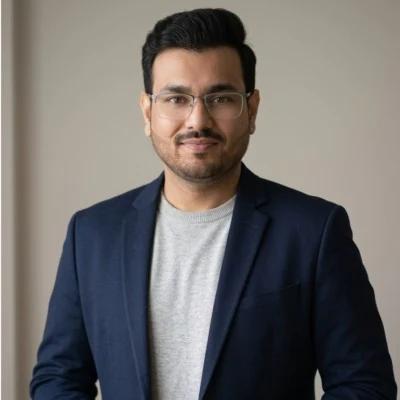
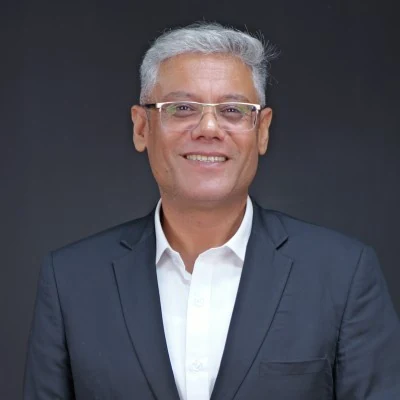
Who is Nitin Khindria?
Nitin Khindria is Group CHRO at Anglian Omega Group, a builder of people systems for high-growth companies. He started at Mahindra running capability-building programs that trained thousands of dealers and staff nationally, then led HR across tractors, steel, and manufacturing, cutting attrition, building leadership pipelines, and once staffing an entire new plant from within. He now leads HR strategy across Omega Seiki Mobility, Omega Bright Steel, and other group entities.
Follow Nitin on LinkedInIs your HR set up for what this episode describes?
Our team can walk through your payroll, compliance and people processes with you. You get a clear picture of where TankhaPay's global HRMS helps, and where your people should stay in charge.