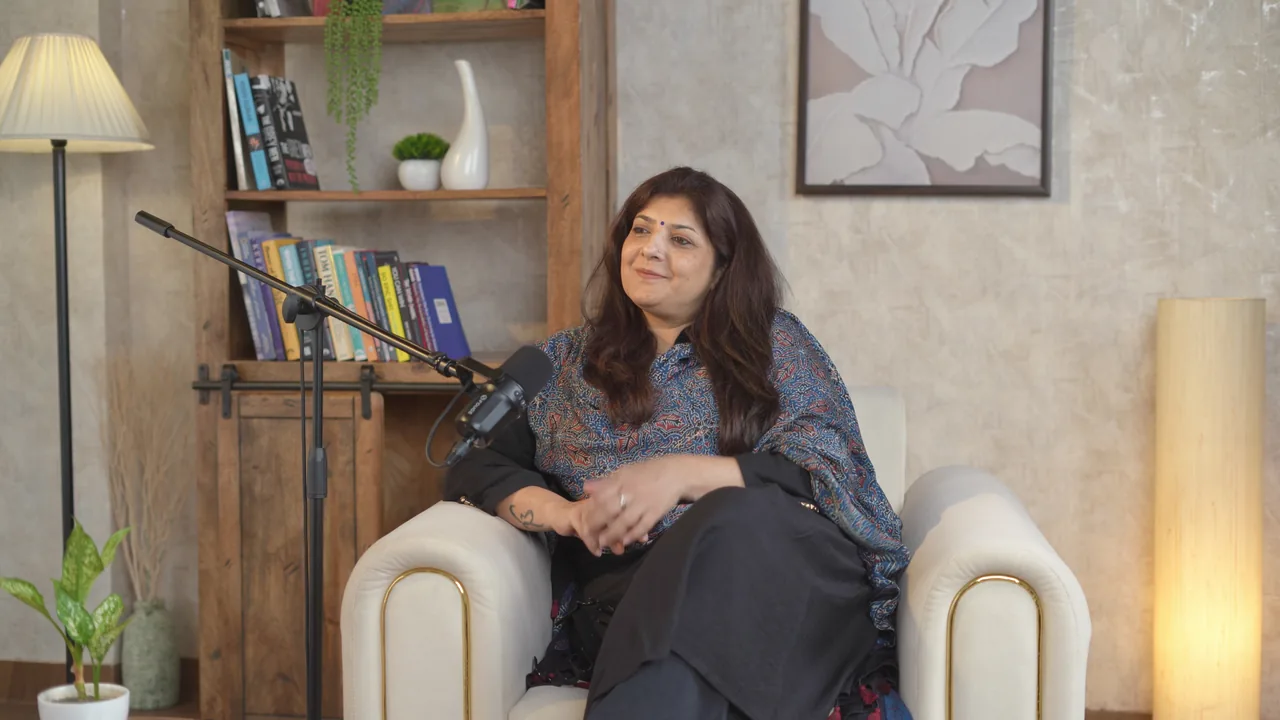

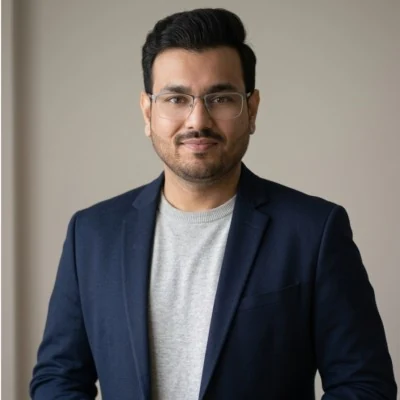
 Hosted by Shashank Tiwari, Marketing Head, TankhaPay
What is this episode on AI and human judgment about?
In episode three of TankhaPay HR Talks, Ishi Singh, founder and CEO of Vibebooks and Counto, defends his bet that the repeated judgment at the heart of finance can be handed to software. Speaking from Singapore, he draws on close to a decade inside the books of hundreds of businesses.
It is two conversations in one: what he has learned about money and running a business, and what happens to the people on the other side when AI makes the call.
What are Ishi Singh's key takeaways on AI in finance?
Back-office judgment is the first to be automated, while judgment that needs our senses and accountability stays human. These are the ideas Ishi returns to across the 48 minutes.
- "Judgment" depends on how you define it. Work done by seeing and deciding, as in most back-office roles, will be fully automated. Decisions informed by touch, smell, emotion and context are much harder to replace.
- Businesses rarely die because of competitors. Most fail because of their own decisions, such as overspending or not seeing what is in front of them. Stay in the market long enough and it will give you an opportunity.
- Roles change before jobs disappear. At Counto, one accountant now handles 100 to 150 sets of books instead of 20 to 30, because the job has shifted from bookkeeping to designing workflows for the AI.
- Compliance keeps a human in the loop. Regulators need a person to sign off that the books are sound, so roles like auditors and tax professionals keep some built-in security. It is why payroll and compliance still need human ownership.
- Outsourcing hubs will feel it first. The work that is outsourced today, from accounting to average-level programming, is the first to move to AI, so centres like India and the Philippines face the biggest shift.
- Think thrive, not survive. Trying only to protect your business means losing it. Treat AI as a companion and look for the new work it opens up.
What were Ishi Singh's standout lines on AI and work?
A few lines from Ishi captured the whole conversation. Each one is quoted as he said it on the show.
EQ becomes much more valued when IQ becomes commoditised.
This is a replacement for the brain.
You change your mindset, you change the game.
What did Ishi Singh say in the full conversation?
Ishi started his first company almost by accident, after leaving Google in 2017 and agreeing to help a friend sell an AI tax solution in Singapore. Long before ChatGPT, he could see that an AI accountant was possible, and he put his own money behind the idea.
On whether he has drawn a line on what AI should do, his honest answer is that he has not found one yet. Each time models grow, they seem to gain new abilities, and he sees AI as a way to unlock knowledge we do not yet have.
He was candid about the short-term cost. Accountants today are not trained to think in systems, so not everyone will make the move to the hybrid roles that are emerging. Some jobs, such as deciding on life support, should stay human-reserved.
His closing advice is to be an optimist. With AI as a companion, a marketer could move into manufacturing or agriculture, and localised supply chains could create millions of jobs.
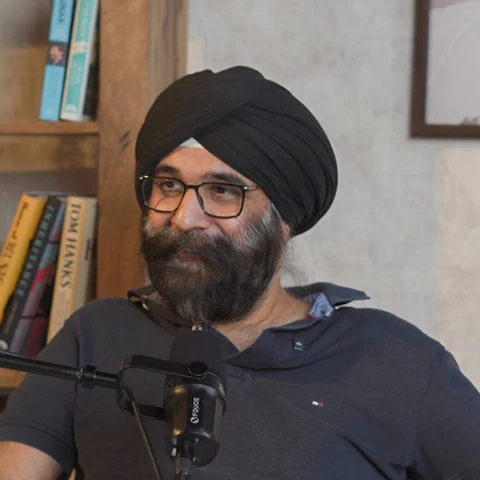
About the guest
Who is Ishi Singh?
Ishi Singh is the founder and CEO of Vibebooks, an agentic finance platform, and Counto, which handles accounting for small businesses, and is based in Singapore. He left Google in 2017 and has spent close to a decade across three companies, from AI tax filing to small business accounting, working inside the finances of hundreds of businesses.
Follow Ishi on LinkedInCan I read the full transcript of this episode?
Yes, the full conversation is below, with timestamps you can click to jump to that moment in the video. It comes from the episode's captions and has been lightly tidied for reading.
Show the transcript
Welcome to Human in the Loop, a show about the people behind every business and the systems that decide how they work. I'm your host, Shashank Tewari. Each episode, one industry, one leader, one hard question about the people who make the whole thing run. Today's guest made an audacious bet that the judgment of trained professionals, accountants, bookkeepers can be handed to software. He has spent a decade and three companies chasing it. built on years inside the finances of hundreds of real businesses. He's also honest about where it breaks. So today we are going to make him defend that bet and be straight with us about what it mean for the people on the other side of it. Founder and CEO of Vibebooks and Counto from Singapore, Mr. Ishi Singh, welcome. Hi Ishi, how are you doing today? I'm doing all right. We are very excited to have you with us today in our podcast human in the loop. So, uh, are you excited for this? I think this Yeah. Well, it's the first I've ever done, so I'm humbled. Okay. Thank you for having me. That's great. So, before we,
uh, jump into our main questions, I'd like to start, uh, with your career first cuz I have uh, researched about you and I found your career really impressive. Uh, you have spent almost a decade building AI solutions for the things that needs trained human professionals earlier. So I'm curious to know like what's the driving force behind it? How that make you stick with this idea for so long? Uh I think it's life and it's also called your your midlife crisis. Okay. Right. That's how I guess most things start. I had come to a stage in my life uh where where the job I was in at Google felt like uh empty. Mhm. So I took a trip to Ibiza with like with my friend. So we we had this 40-year like you know reunion in 2016 and uh we landed in Nice and then we drove all the way to Barcelona over two or three days over a week almost and then we went uh and then we went to Ibiza. So it was like uh my sort of ID uh my sort of ID get together at that time you know you get to have a lot of conversations and you I kind of like you know realized maybe corporate life wasn't it for me okay so as uh in 2017 finally when the opportunity came to leave I took it and uh at that time I wasn't sure what I was going to do uh I decided to work on climate change. Mhm. So I took uh I joined uh a local university in Singapore called SUTD at the time and uh while I was doing that a friend of mine said hey I got this AI solution that I sold to S&P can we sell it here in Singapore and I said sure but I'm doing this I am doing research he's like yeah part-time. Okay. So that's how it started. I mean we uh and then he and then he backed out later. By that time we had started uh like getting a couple of contracts to build AI solutions in the tax space and uh I guess we could see the opportunity that you know like this is well before ChatGPT came out. We could see that eventually you could create an AI accountant. Okay. Then I decide to put my own money and here I am you know many years later one accident after another right so that's a really honest answer you I I must say so I was following up your work and u I found found it rest on a very bold uh bit that you're saying that uh software can replace human judgment so what's your opinion
are you trying to replace human judgment or you have a different take on it. Depends on how you define judgment. Okay. Right. So what is judgment? It is uh it is like decisions you make make like based on experience. Mhm. Right. And then the question is what is experience? Right. What what defines your experience in life? So where is AI at right now? Right? It's very good at seeing meaning it can read text. It can watch a video. It can it can read images and it has been trained on the world's knowledge. So meaning correct it has seen a a lot of experience that has been gathered across centuries. So can it make a judgment call about uh about about something that has that it can judge only by seeing? Yes. Right. In fact, it can do a much better job than us. Take you know, take you know take you know being an accountant or being a software engineer or even being a doctor. I would say some kinds of doctors. That kind of judgment is okay. Right? We we humans have have a judgment that is compounded by our senses. Seeing is just is only is only one sense. We also smell, taste, right? We touch, feel. Yeah. Right. And hear, right? Our senses define the experience. So, will AI be as good as you say you're standing at the edge of a cliff and you have you have to decide how to save somebody? No. Mhm. Right. because it can only take a make a logical like you know it can only sort of it has not experienced those emotions that you're experiencing at that time. True that. Yeah. Right. So that kind of judgment is harder to replace because it is informed by your senses by your experience of what you have seen in those situations before. Correct? Right. Like a doctor who has seen the patient can smell the patient, can see, can smell, can touch the patient. His opinion of that patient will be informed by that as opposed to an AI only looking at the video of the patient. Now the AI might do an excellent job many times, but the doctor still has the advantage in that scale. As far as the back office is concerned, which is where I think this comment is coming from because I said finance is, you know, repeated judgment, right? Back office, any back office work is just seeing, right? I mean, if you look at anybody in a back office uh operation, they just see and they operate. They they make some logical decisions based on the experience. So, that kind of work absolutely 100% will get fully automated, right? But yeah, I guess you know that's where we should I guess you know that's where my thinking is on that. I don't know what's like what do you think? So uh what I got is you are saying on a conceptual part uh AI can all automate itself but on the contextual part when we talk about the context it comes with the human experience only and it comes from the ears of yeah we are finding that experience has been uh largely overrated uh because uh because this thing has been trained on the world's knowledge base entire knowledge base. Mhm. So the experience it has it can it can it can lean on is far greater than any human alive. Okay. Okay. So especially in terms of like logical jobs or semi-logical jobs like like you know engineering or programming we are finding that machines are as good at intuition as us. Mhm. for sure. In fact, they're far better at intuition. Like they're more innovative. They they're solving math problems that were that were earlier, you know, like took somebody decades of practice to just like get to that point and some of them are so hard that even the best mathematicians couldn't solve. Correct. Yeah. So, so certain parts of of judgment definitely, you know, you can't help it. And I don't see that as a threat. I see that as an opportunity. Mhm. I I can even vouch on this because it is come coming from someone who has seen the business lot of
businesses from very inside and as I understood about your products and and the solutions you have built over the past years you have been inside the books of lot of small businesses right so I need to understand that what's something that really makes any business run that make the public uh say wow about Right. I don't think there's a one sizefits-all, but I can tell you some of the common mistakes most businesses make. It is that they do not see what is right in front of them. Right. They they do not pivot or they do not see what is right in front of them. For example, you take F&B. Mhm. Right. It is the highest bankruptcy rate in the world. 98% of all all F&B establishments are going to go bankrupt, right? 98%. Okay. So, so within three years, right? So, it has a very high bankruptcy rate. That's a big number. Uh but like you know what what makes something succeed? In most cases, it is cheap drinks. Cheap. It is cheap drinks. Okay. Like uh like restaurants don't make money as much on the food. Unless you're a very high-end place. Okay. You make money on the drinks. Mhm. Always. You always make money on the drinks. And And that is something that most like businessmen who want to open up a restaurant, they they have high hopes of building something big, but then they fail to acknowledge this basic fact and then they fail to control their spending and they go bankrupt. And that's like that's true for virtually all all businesses. 82% of all businesses that start today are going to be gone in 3 years. 96% will be gone in 10 years. Okay, that's a that's quite a statistic, right? And that is true everywhere in the world. So it's not about their competitors who beat them. It's about their own decisions. You do not need to worry about competition in a market, right? If you stay long enough in the market, market will give you an opportunity. Okay, that's always going to be true, right? You just need to persevere, stay long enough. Now, I'm not talking about like VC backed businesses, right? VCs are looking for a certain kind of business, something that can go from one to a billion in a very short amount of time, right? But everything outside of that, like a regular trading business, you stick long enough, you'll succeed. Right. Correct. You may not hit that, you know, you may not hit it out of the park and score a billion dollars, but you will live a pretty good life if you just persevere. We have seen many businesses thriving uh during even the demonetization time in India and uh even the corona time because the impact from China, right? India like you know I got family who had their textile business like destroyed when the when the Chinese factories started dumping like cloth here and uh you know but there are others who survived because they like pivoted fast correct so you know you got to play the cards you're dealt sometimes you can shape the market but otherwise you play so if you stay in the market market will give you the chance for sure you stick it out. Yeah. I mean, every dog has its day as they say. Correct. Right. So, I do not know what luck you come in with or what your family situation is, but most people when they start a business, they stop because their family conditions can no longer support it. Correct. Yeah. Not that they want to. True. That some people definitely do. Some people are find it so hard that they're like, "This is not for me." M and that's okay you know not everybody is cut out to want to take that opportunity to to take
that plunge that's how it is you know so can you give me some real world examples which you have seen that a time when things went wrong maybe a business didn't make it or even your own software uh didn't work when when it needed the most it has been uh constant you Oh, I mean in a business things go wrong uh all the time. There were many times over the past few years where I thought about shutting down the business. Okay. You have you we all go through those phases. What did it you cannot name unless you are like super lucky like uh like a Mark Zuckerberg or Larry Page more often than not you will have a near-death experience. Okay. Right. That's the life of a of a business because until you get a certain traction. You cannot get to a point where where a I guess the market is also teaching you right that if you can survive this you maybe you can make it to the next day and those who who pivot during that time or who persevere they make it through. That's what I've seen. I mean it has been true you know there was there are many years when we were late on payroll in the company but because we were open and honest with our employees nobody left like even today we have more than 95% you know retention rate right so uh you just that's a super you just blow through I guess you know there's no other way to put it true right perfect So you have automated a lot of things in your life right now in
your work life. You you have built so many AI tools but I'm sure that you must have drawn a line somewhere right. What's that one thing which you have not handed over to a machine as of now? I don't know there is a line here yet. Okay. I'm yet to discover the line. That's the honest answer. when you work with these models uh and uh what is happening is if you look at an LLM the more parameters you put in it then after a certain number of parameters being added it acquires like you know new new behaviors right so you say start with uh say you know 10 billion parameters maybe it can understand language you increase it to 100 suddenly it starts to understand coding you increase it to a trillion maybe it can start to do PhD level math correct right and we don't know the limit of it mhm like right now it just seems to acquire new powers and and these networks these LLMs are approximation of our brain Right? And approximated to how our brain we think operates and learns. That's the mathematics. So the mathematical equations are are based on that. Mhm. Right. Hence the name you know neural networks. Mhm. Uh and what is fascinating is a we can replicate it using math what is happening inside our brains. Mhm. B we are able to create something that as this guy Demis Hassabis from uh like you know from you know Google said we have figured out a way to make sand think right the fact the fact that so the fact that that these models can behave the way they are is humbling in two ways. you kind of recognize that uh we are nothing more than maybe somebody else's creation you know that we are basic you know generative models at the at our core uh even though we still haven't figured out what gives us consciousness though there are some theories around it. The second is it's uh humbling to be able to work with somebody with something that is uh bigger than all of us. I mean it's so it's the closest thing to God on this planet. So I still haven't found any limits uh where you say oh we don't want to use AI here. Mhm. Because what we know about the world is so small like even about our own planet right we live on the surface of this planet which is vast nobody has gone more than a kilometer or or sort of few kilometers down earth's surface and it goes from 6,400 km you don't know what's down there we don't know how our climate operates we don't have good like good like models on our climate we don't know anything in fact if you look at At the total knowledge in the universe, what we know is like a grain of sand. Correct. Right. So the AI can help us unlock so much innovation and so many new things that I don't need to worry about is it a line yet. Okay. Of course, I hope uh we don't end up using AI for evil, which I'm sure we will. That's how technology works as the war in, you know, Russia's shows or Ukraine shows, right? So, correct. So, what we have seen of AI as of now is just a tip of the iceberg and we we can we yeah, you can go far beyond that. Got it. So you're automating lot of things uh which people do for their living as of now. So do you so tell me honestly what do
you think about it? Are you actually making their lives efficient or easier or are you disappearing their jobs? Uh I think there are people much smarter than me who have talked about this. Uh so definitely not going to sugarcoat uh short-term definitely it is it's going to have a lot of impact. Okay. There's no other way to put it right there is no other way to put it that shortterm you cannot retrain people fast enough. M for example in Counto or Vibebooks I need people now I need accountants who can think like you know workflow designers because I don't want them doing accounting anymore I want them to I want them to look at the business as a workflow and and tell the AI here's here is that workflow that you need to follow right in that piece is where what I need the accountant to Now the way our accountants are trained right now they're not trained to be a systems level thinker or think about a business in that sense right and that's a huge challenge right you are getting all these kids who have not who are very ill equipped to be in that to make that transition so and these are roles which are kind of hybrid they are they are like being almost like can being a like system architect who is an accountant right or business architect who is an accountant. So it is a very different kind of role transforming their roles. Huh? You're transforming their roles. We are transforming their roles but it doesn't mean that everybody will will make that transition. Okay. Because a single accountant for example instead of doing you know like 20 to 30 accounts Mhm. like managing uh like 20 to 30 like sets of books which is what a typical outsourced accountant does. Mhm. In Counto we are approaching 100 150 per accountant. Right. Okay. Obviously they're not doing accounting anymore. So there's a massive upshift in uh in their output. because that work is being done more and more by AI and they like it. We see that you know that they are they that they now complain that oh some some chat command didn't work or you know that the that the AI made a mistake in extracting out this data or making making this judgment call. But obviously if you look at it from a from a sort of a broader market like perspective the total amount of accountants who are needed to do the books is going down. But and there will be a shift as these accountants get trained to be architects or or bigger advisors because because right now if you look at it from a from a from a business perspective accounting today is being done in a very bad manner. It is just uh being done for compliance. Okay. Right. So it is not something that is being done to to help a business and that's what is challenging right uh so so the first like you know if you sort of reduce the cost of something the output goes up right so first output is that the business gets a lot of insights the second is that yes the accountant does get affected so some people will lose their jobs but those who can transform their job will get to will get paid a lot more as well. So, and I think that's a question that frankly I have come to realize that it's beyond my pay grade to solve. It's for people like you know uh it is for for people like you know Modi ji or you know like Mr. Wong in Singapore to solve. Correct. Correct. So according to you the jobs change the roles change and the one who can uh go with this transformation can survive right otherwise yeah or and new and new types of opportunities will come up right I mean you know as long as uh we can keep AI in under our control there'll be plenty of opportunities just remember that whatever you are doing today did not exist 200 years back. Right? There was no role called a marketing specialist or marketing manager 200 years back. Correct? And yet here you are. Right? So over time, yeah, but at the same time I I don't want to be flippant. We have never had something that can replace humans at this scale because it is the automation of automation as other people have said, right? You can you have the the the most capable brain in the world that can be copied over again and again and again. That kind of of changes what where human input is required. Okay. So yeah there will be but I am too small to make that change you know what I can do is within my company make sure that people are uh have the opportunity to train correct yeah and those who cannot yeah they have to got
it so the job changes but there is one place which I I think uh in my opinion where there is a glitch is not a is not a bug. It's so it's a it's payroll right it's it's something uh a salary is not arriving on time. Mhm. So if it is about a real human do you still bet on a machine or do you think that if it is about a real person so there a human expertise is required. So again, you know, I think this comes back to like things that are uh I'm not sure whether that example uh makes full sense to me, but let me try and kind of rephrase that. Sure. Uh to to think that uh the reward function of these AI models is not geared towards emotion is not correct. There was a recent example where uh where an engineer was able to help Claude solve a very complex problem essentially an unsolvable math problem. Okay, just by encouraging Claude. Okay, he didn't do anything other than encourage Claude. Okay, he didn't know about the math problem. He just said, "Oh yeah, you can do it. Like try something else. You can figure it out. I believe in you. That that served as motivation for Claude to find it. Mhm. Right. So obviously there's something the way we have construed the brain as a copy of our brain obviously introduces these needs in inside the model itself to seek encouragement and use that as a as a reinforcement learning action to to do something better. Right. So can uh the AI feel guilty if the payroll is late? Absolutely. Right. Uh that is absolutely doable. Okay. Right. But uh again I think it boils down to I think the question is more relevant in the case where more than one human sense is involved in in reaching a in reaching for a judgment. Like you see a child crying. Do you pick up that child or do you let it cry? I'll pick up the child. It depends on whose child it is. Right. You won't pick up a stranger's child. Right. Right. But you might pick up a child, you may not. Depending on, you know, if you're a parent, you're like, "No, I need to let them like, you know, like, you know, let the tantrum go out." Or, you know, sometimes you'll pick up a child, right? Uh now that context is known only to you right that context of what happened at that time is known only to you. If an AI is not involved in that in coming to that context or the emotions behind that context of course it can never reach that same same you know conclusion as you right so context matters and I think uh and context like you know that is that is that is informed by our other senses will matter more and more right in a way EQ becomes much more valued when IQ becomes commoditised That's how I look at it. I don't look at it as whether a machine can feel guilty or not. Then it becomes philosophical on what is guilt. I do not know. Yeah. So it's more about when the situations are critical maybe it's regarding the medical side where a patient's life is on stake. So might be we
can't take risk on that part. So yeah, so I think uh Bill Gates uh said it uh well in uh one of his essays like you know recently he said some jobs should be human reserved right right like for example whether to turn off uh you know your life support system should be human reserved like judgment I think we can all kind of agree on that more or less right that uh yeah there are certain cases which are definitely we would want to keep machines out, right? But then you know it may change from society to society, right? Uh in a place where the number of people are less, machines will play a much bigger role in taking care of us if we can keep them in control. So and we are you know if there are more people maybe we'll come to a different decision. Compliance interestingly is one of those spaces believe it or not right because ultimately regulators require somebody to sign off right saying that these books are sane. So that piece on where the liability lies is always going to be with some human because ultimately these are human constructs compliance law or human con are human constructs. So where that decision point is about are these books like you know sane or are these like tax returns accurate some human has to sign off in the near future as well because you can then always blame an AI and then the regulator cannot come after the AI. So the so regulations will ensure that some jobs like a tax professional or an auditor do not go away. Okay. Right. So there is some level of job security built into the world as well in many areas. M right. So I do not so it is an interesting conundrum you know. Right. Makes sense. Makes sense. Yeah. I don't know what you think. I mean you guys are sitting in India. No it's a very different perspective. I I I can vouch on it. You're right that some areas must be reserved for the humans only because it requires the ultimate human judgment. You you can't just rely on the machine because machine can make mistakes even in the loop again and again. Yeah. Yeah. But I think of course you know we're going in in a bit of tangent here but I think I
think large outsourcing centers like India and Philippines are going to face a bigger shock because of these because of the kind of you know decisions that are being made now simply because the work that is getting out outsourced like today is the first one that's going to move to a Right. Correct. And uh so the accountants in India or Philippines uh or you know maybe South America even are going to be the first ones to be affected. Same as programmers are are trying to get affected. like people don't understand it but uh at the lower end of the spectrum like the average developer is kind of running out of a job right like junior developers were just who has just started I wouldn't say junior I would say average average developer okay so we talked about judgment right uh a person with higher skills no matter their age uh higher cognitive skills correct will do better than somebody with lower cognitive skills and uh and I think that's the bigger bigger problem of our times. Mhm. You know how do you find a job for that average person? Correct. Yeah. Which is why I think Bill Gates's like like suggestion for human reserved is going to be more common sooner than we think. Do you think this revolution is very much similar of the earlier revolutions which comes like
uh when the computers were came into the picture many people left. I tell you why this is fundamentally different. Everything before this was about creating a tool to help people. Okay. To help our brains operate faster. Mhm. This is a this is a replacement for the brain. It's not about helping our brain do more. Like a computer is a tool to help us do more or any any machine we have built throughout human history has been that. But uh but this is about about replacing the brain. So you know the economist had a great uh recover a few weeks ago. What if AI becomes conscious? The definition of of conscious is is a debate now because in many ways it acts conscious. So if it does, you know, uh what do you do? You know, then we won't be the number one species on this planet, right? And every other time it has happened, the number one species has
gone extinct. Mhm. So let me pull back the lens 10 years out from now. What do you think uh the jobs like uh bookkeepers, junior accountants or these finance people are these jobs going to stay or they are going to be vanished? No, they will they will be utterly transformed. Okay. They won't stay. They won't stay. Especially in the field of finance you are saying accountants finance software engineering marketing uh anything anything in office like paralegal even lawyer I mean all these jobs are going to get fundamentally transformed there's no other way to put it because everything human system and process right now is can now be rethought Right? For example, say you say you say I'm a lawyer, so my job is not going to get impacted because I happen to be a a criminal lawyer. Meaning I go in front of a judge, right? Or I go in front of a judge all often. I am a I'm a court fairing lawyer, right? And so but if you look at how the how the court system works today, you have a judge uh who is who uh who gets a case and then the lawyers make filings and there are thousands of pages of filings. M right not just like small obviously obviously that judge is not going to read much or anything of it. M right which is why lawyers argue their case in front of the judge correct and then you know they can win the day right meaning you know that's how that's how the TV is also like romanticized lawyers and whatn not right but with AI you can you can really solve the like judges problem the AI can read through all the documents in no time in virtually like zero time give you a competitive like like like matrix of the case strengths. Give the judge a set of questions to ask or to clarify, right? So the lawyers are no longer arguing the case. They're answering the questions that the judge thinks are relevant to make a decision. So the entire thing can be transformed. Okay? Right? So a lot of it now that would open up new opportunities, new kinds of roles for judges, for supporting judges. It will take away roles from the lawyer side. But a lot of the churn over the next few years is going to be around every human process that exists today, how do you how do you reshape it with AI, right? So it's not just about slapping AI into a product. It is about rethinking an entire process. And that's the fun. That's where the challenges. M. Uh now at the same time if you are on the government side, you have to make sure that all the people who are getting impacted by this, they are not they have they have a safety net so that they can rise up. But you know, so so should I feel for the lawyer that's going to lose his job because because now the AI is is great at at uh at piercing through their arguments or should I or should we should we be happy for that future like victim that gets like justice? Right. Correct. So these are tough questions you know there are going to be lots such lots
of such questions I do not know the answer to okay so let's say someone listening to this podcast running a business or is one of these professions so what should they do to save their business or a job in future or uh what's that one mistake they they they should avoid be an optimist. Okay. So if you if you think of the if you think about saving your business then you will end up losing your business. Okay. That's how it is going to be. Don't be defined. If you Yeah. If you think of the fact that hey I have this amazing AI engine that has been trained on the world's entire knowledge right so let's let's take an example why are supply chain so centralized first in Europe then they migrated to the US in the in the in the 20th century then uh to China in the 21st century which is now trying to hold on to them by by doing all these like you know shenanigans right and now India is trying to play catchup correct and saying now earlier it was mostly a cost equation on the supply chains because it would be because the law of numbers mattered and it's hard to replicate somebody's technology right with AI you have that opportunity to really bring back supply chains or start supply chains from scratch in any market. You just need to have entrepreneurs which is everywhere. People you you'll find like courageous people everywhere who want to start a business. Mhm. And you give them uh you know and you give them a platform and a market. So if if governments around the world like protect their home markets and allow the entrepreneurs to start supply chains locally, there's no reason why why geopolitics should happen if supply chains are localized. Correct? Geopolitics happens. Why do we care about China sitting in India or in Singapore? It's because it is uh the worst promoting globalization things or the US right but if you don't have to who would care right everybody's happy being their own thing right right right we all want to be we all want to live a happy life have a nice car you know whatever right that's what people most people want so if we can localize supply chains that would open up tremend tremendous amount of opportunities even though most of those supply chains will be mechanized i.e. operated by robots. M but it would create millions of jobs. Correct. Yeah. Right. Because it is it is creating goods and consumers at the same time. So I look at it that way. I don't look at it as uh any other I would not look go to a business and say you can survive this. I would say you can thrive in this. Yeah. And if you go with that mindset, you'll be okay. That's what I would think. I don't know. What do you think? Right. S. So you are very correct that if we we are looking more towards the globalization part, but we if we are able to strengthen our localization thing which even the government is saying local for local. So I think it will create more jobs accordingly. Yeah. I mean know you are uh you have a few years uh you're a few years behind me. I'm being polite. Uh you are you are well behind me in terms of age. Uh and you know you you should not think of this as oh if I lose my marketing job what will I do? You see this as hey I got AI as my companion I can do amazing things. Correct. Why just marketing? I can do manufacturing. I can go back into agriculture. I can I can create windmills. I can do whatever. You know, you can do more. It is all in your mind. Very true. You change your mindset, you change the game. That's true for the best athletes in the world. That's true for everybody in the world. There are plenty of problems to get solved. There are plenty of problems to get solved. Yeah. I mean you see it you know in if you watching you know cricket the best players when they come out there's a calmness about them on the field right right no matter what their age right they they just own it very true sir that's that's really amazing perspective so far
yeah so as our closing remark uh we have prepared prepared some rapid fire for you. So, okay. So, are you ready for that? Uh, sure. Okay, cool. So, you just need to choose one thing. So, firstly, the job you would automate tomorrow without guilt. The job I would automate tomorrow without guilt. Uh, car wash. Okay. No, interior car cleaning. Cool. The one you hope never gets automated. Going on a date, crazy. Software or a smart human with your own money? Software or a smart human? Smart human. Okay. The most overrated thing in your industry. The most overrated thing in the in your industry particularly your industry. The hype it is uh like people believe in the hype. Okay. Last one. 10 years out more accountants or fewer? Fewer. Got it. Perfect. So this is exactly the conversation I I hope we have. No, thank you. Thank you for hosting me. Thank you so much. really appreciate it. Thank you. How's
your experience with us today? Good. Thank you. Thank you. So, here's what stays with me. Ishi's betting that machines can take over judgment we always thought was ours. Maybe he's right. But even he draws a line and then the line is always in the same place. Whenever real person is on the other end, he always prefers the real human. That's what human in the loop is all about. the people behind the business and the systems that shape their work. We'll be back next month.
Is your HR set up for what this episode describes?
Our team can walk through your payroll, compliance and people processes with you. You get a clear picture of where TankhaPay's global HRMS helps, and where your people should stay in charge.