In this edition
Somewhere in your competitor's organisation, there is an India team that did not exist eighteen months ago. It was not built through a GCC. It was not a $50,000 entity setup. It was five engineers, then twelve, then thirty, onboarded through an Employer of Record while your leadership was still in the "we should explore India" conversation.
That is the gap. And it is widening every quarter.
In June 2026, India’s Ministry of Statistics said India had delivered its best performance in recent years with real GDP growth of 7.7% in FY 2025-26. Looking ahead, the World Bank projects 6.6% growth for FY 2026-27, with both institutions placing India as the fastest-growing major economy through the period. That kind of sustained momentum, supported by real delivered numbers, is not optimism.
The question is not whether India is worth it. That question was settled. The question is how much longer you plan to wait.
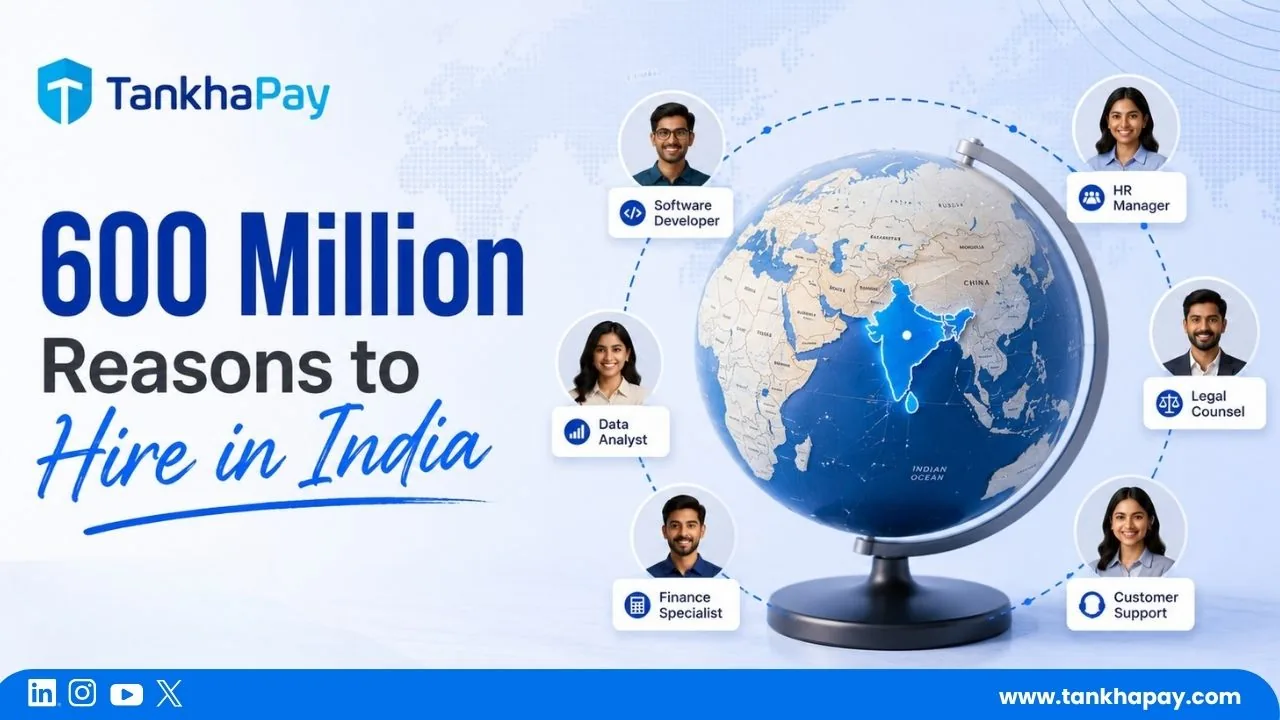
600 Million People. Every Sector. One Country.
India's skilled workforce stands at over 600 million people, the second-largest in the world, and its depth spans every sector that matters to a scaling business.
On technology alone: 5.8 million professionals in FY26, growing to a projected 7.5 million by 2030, with 1.5 million engineering graduates entering the market every year. Technology compensation in India runs 60 to 75% below equivalent roles in the US and Western Europe, even at competitive local rates.
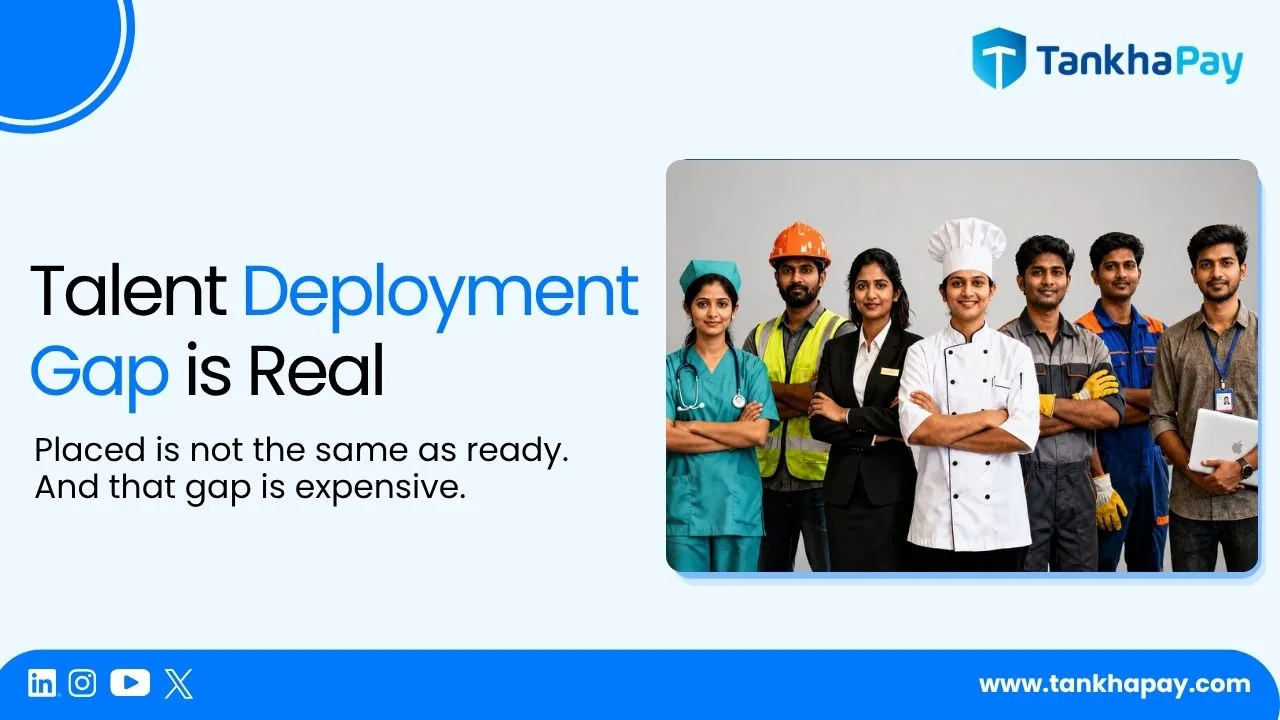
But this is not only a technology story. Legal, financial services, healthcare operations, logistics, and manufacturing. India has a skilled workforce across all of it, at a salary differential no other single market can match. The global skilled worker deficit is projected to reach 85 million people by 2030, according to a FICCI-KPMG study. India is on the supply side of that number. The rest of the world is not.
The Legal Reality Most Companies Hit Too Late.
Here is what stops companies that have already decided to hire.
As a foreign company, you have no legal standing to directly employ an Indian resident. You cannot run payroll. You cannot file statutory contributions. You cannot issue a compliant employment contract. Before a single person can work for you, a legally registered employer needs to exist on Indian soil.
Entity setup is the traditional answer. It takes 3 to 6 months, costs between $15,000 and $50,000 upfront, and requires navigating a compliance framework that operates differently across 28 states and 8 union territories, with India's Labour Codes currently in active phased implementation at the state level.
While you are setting that up, your competitors are onboarding.
What You Actually Control and What the EOR Handles.
The question most international companies do not ask until it matters: if someone else is the legal employer, what do I actually own?
The answer is everything that’s important to your business. You lead the work, you define the deliverables, you manage the performance, and you own the IP. The EOR retains the legal employment relationship, contracts, statutory filings, and state-specific obligations. If you have to let an employee go, the EOR will handle the process in accordance with Indian law. You are not helpless. You're just not the one dealing with a legal system that wasn't built for foreign companies to run on their own in.
That is the model. And it only works if the EOR gets India right.
Why Getting India Wrong Falls on You, Not the Platform.
Global EOR platforms built for 100+ countries are not built for India at depth. India's compliance framework operates differently across 28 states, with rules still being finalised at the state level under an ongoing Labour Code implementation.
One particular issue to be aware of before you sign anything. Some global platforms calculate contributions to the Provident Fund on a salary base, which is less than the new Labour Code minimum of 50% of basic pay. The platform does not take responsibility when those filings go awry. It's up to you.
That is not a pricing question. That is a risk question.
India requires people whose entire job is India.
TankhaPay: 26 Years of Getting This Right.
TankhaPay is the Employer of Record solution for companies hiring in India, backed by 26 years of domain expertise, CMMI Level 5 appraisal, and ISO 9001, ISO 27001, ISO 20000, and ISO 14001 certifications.
TankhaPay is the bridge between you and the Indian legal system, handling the employment relationship, statutory filings, Labour Code-compliant contracts, and state-specific obligations for every city where you hire.
Your first hire: onboarded in 48 hours or less from the accepted offer. Permanent establishment risk: eliminated. We handle all statutory contributions, filings, and state-specific compliance requirements.
1,000+ organisations in financial services, technology, and logistics have already made this decision.
The Window Is Not Permanently Open.
The talent pool is real. The cost differential is real. The growth trajectory is confirmed by the World Bank, the OECD, and India's own Ministry of Statistics.
What is also real: Domestic competition for India's best talent is intensifying every quarter. And those already in the game are not waiting. They are already hiring.
Book a strategy call with TankhaPay’s Employer of Record team. We'll walk you through costs, timelines, and a simple way to make your first compliant India hire.
No pitch deck. Just answers.
Does this change anything in your own payroll setup?
Our team can review your current payroll and compliance process against the rules covered in this edition. You get a clear view of where you stand, with no obligation to switch anything.