 Hosted by Shashank Tiwari, Marketing Head, TankhaPay
What is this episode on AI in HR about?
In episode one of Human in the Loop, Sarabjit Singh, Managing Director of Akal Information Systems, explains why he calls AI a catalyst and not a tool. Drawing on 26 years in HR, he argues a machine that can't feel should never run your most sensitive processes alone, though AI wins outright in Indian payroll and compliance.
He closes with a bold claim: CHROs who lead the human side of AI could become tomorrow's CEOs.
What are Sarabjit Singh's key takeaways on AI in HR?
AI should transform HR processes, while people keep hold of judgement, culture and trust. These are the ideas Sarabjit keeps coming back to across the 46 minutes.
- AI is a catalyst, not a productivity tool. Like a catalyst in chemistry, it changes what the process becomes, rather than just making the old process faster.
- A human has to control the outcome. AI can produce options, but deciding which outcome to act on, and what data it should rest on, stays with people.
- Broken data scales bias. Feed AI a recruitment process that already carries bias and it will repeat that bias at scale, fast. Clean inputs matter before any AI recruitment tool can help.
- Payroll and compliance is where AI wins outright. State-wise rules, calculations, wage processing and employee queries are work AI can do, and do well. It is the thinking behind TankhaPay payroll.
- Culture, motivation and trust stay human. He expects HR to need around half of its work to remain in human hands for the foreseeable future.
- Start with your problem, not with AI. Understand the problem, fix the data, and only then hand the process to an AI platform to transform.
What were Sarabjit Singh's standout lines on AI and people?
A few lines from Sarabjit captured the whole conversation. Each one is quoted as he said it on the show.
Start with your problem. Don't start with AI.
HR is the most vulnerable process; your HR collapses, your organization collapses.
Walk the terrain. Don't read the maps.
About the guest
Who is Sarabjit Singh?
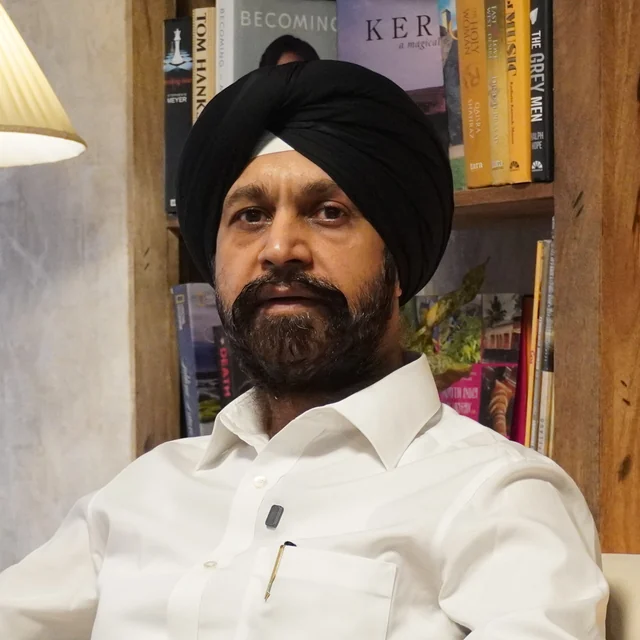
Sarabjit Singh is the Managing Director of Akal Information Systems, the company behind TankhaPay. An engineer by training and an HR leader by practice, he has spent 26 years watching HR move from basic payroll software to AI, and has led the adoption of AI across his own organisation.
Follow Sarabjit on LinkedInCan I read the full transcript of this episode?
Yes, the full conversation is below, with timestamps you can click to jump to that moment in the video. It comes from the episode's captions and has been lightly tidied for reading.
Show the transcript
Welcome to TankhaPay's podcast, Human in the Loop. Here we discuss about how AI is changing the human behavior of work and their future. I'm your host Shashank Tewari and in every podcast we'll invite industry leaders and get their practical insights on how AI is impacting HR payroll compliance in the future of work. Today I'm delighted to welcome one of our esteemed guests, Mr. Sarabjit Singh, managing director of Akal Information Systems, who brings along more than two decades of experience building workforce solutions for global businesses. He brings along very rich practical insights. So welcome to the podcast, sir. Thank you Shashank. how are you doing today? As fresh as the rains outside. That's great. Perfect. So before we get into AI specifically, I want to ask you one question. As you have seen HR industry evolve across 26 years, right? From a basic payroll software to what we are seeing today. What's that one thing that has stayed constant with every wave of change? Well, this podcast is all about HR. So the only thing which has remained constant for last 26 years is human. Okay. So you call it human resource, you call it an HR process, everything changes except the human inside. So I am pretty confident that whatever AI does or whatever any new technology does in this industry, human always remains human and the emotions, the body, mind, spirit of a human always remains to the basic fundamental. Perfect.
And that's exactly why your perspective towards AI is very valuable to us because you have seen the industry from very scratch and you know what works and what not. So coming to my first question, people these days are divided into two camps. Camp one say AI will replace HR jobs very soon. Camp two says relax it's just a better productivity tool. Nothing is going to happen. But I know that you are in neither of the two camps. Where do you exactly stand? Well, I'll say both are right, and both are wrong. So, like, it cannot be this or that situation. It is you first thing is that you cannot take human out of the loop. So human angle always remains. HR is the custodian of human story. So you can say AI is enablement to the human story, but it cannot become the author of the human story. So HR will remain, will we lose jobs because of AI? It's a wrong question. AI will enable the HR process. So the data within the process will get transformed and outcomes new outcomes which we might not even think today will definitely come out but the human angle the human story will always stay because HR is all about humans. So both are partially correct and both are partially wrong. So I don't take sides. Got it. I have usually heard that you say a word catalyst with AI. You have never used a word assistant or a co-pilot or a tool. Why only catalyst? What is the distinction you are drawing? Well you might have heard like I've always been using the word catalyst. The catalyst if you remember molasses from your college days, right? So it's basically transforms. So when whenever you do molasses of sugar cane or anything and you transform that into alcohol or something. So catalyst means something which transforms and AI is transforming. It's not a productivity tool. It's a transformation tool. Right? AI is intelligence. It it can interpret data. It can process data. It can signal outcomes. It can weigh outcomes. And it can even create biases and non-biases. So it has its own intelligence which will evolve and grow gradually. So catalyst is the only right word when discussed in context with human story. It it is not a productivity tool. It'll transform how we think about HR processes.
However, it might not touch a human being, but it can create content. It can create outcomes from the data which is it is fed in. So, it'll definitely transform and that transformation will definitely be called a catalyst. It'll enable the processes. It'll transform the processes. But calling it a productivity tool is lame, right? People who don't understand might call it, but they are partially wrong about it. Okay? So let me ask you a direct question. Some people believe that AI will eventually replace HR jobs, HR work and the need of human expertise is just a excuse or or a resisting thing that we are we are not we are ignoring the change of AI. So what would you say to them? Well, I'll say they don't understand what HR is. I am so blunt. People might get offended. But I'll definitely say I have 26 years of experience and I've been in various positions through my experience and solid leadership roles. I might not have led the masses, but I've led groups. I've led teams. I've led business units, and I'm pretty sure that, a human story, a human being, is body, mind, spirit. Right? Let's keep the body away. So AI can emulate mind because it's all about intelligence. It'll process data. It'll create signals. It'll drive outcomes. It'll create actions. It'll create data and content, new content, inferences which we have not seen from that data. But where will it bring the spirit from? Organization is all about the spirit.
When you say leadership, when you say motivation, when you say inspiration, when you say passion, when you say belonging, when you say trust, security, judgments, I'll say solidarity, camaraderie, where will it come from? A machine cannot produce it. Exactly. So, think of, like, I'll give you a simple example of the army. Can AI make soldiers fight? Just a simple think about it in your mind and you'll get your answer. You don't have to ask me again this question. Right. So I think from both the perspectives, mind and spirit, both in conjunction will do wonders. But if we separate the two and we try to see like AI will drive or spirit will drive. No, we need both. So, hence our wise men have always kept a balance between mind and spirit and body.
So, body is an instrument. Mind and spirit are things which make us work. All right. That's that's really amazing. So, what I understood is that the catalyst does the work but the direction still comes from someone who understand what the outcome should be. Obviously yes. Obviously yes. AI needs to be governed. Compliance needs to be approved. Things need to be managed and it has always have to be human controlling the process or the outcome. It cannot be AI controlling the outcome. It can produce outcomes, but which one to choose from? What data you are looking forward to? How will it create an impact on the outcome is what a human has to always decide Look, HR is the most sensitive process in any organization. It directly impacts the livelihoods, the careers, the compliance, and the feeling of identity of a human being. And you cannot leave all this in the hands of a machine. Which cannot understand the feelings. You might have heard of IQ and EQ.
Right. So where did EQ came from? Like whenever this revolutions industrial revolutions started and people started talking about IQ and how it can help in the organizations it went good but then it flopped because what they were missing was EQ and EQ is our emotions and what's our emotion emotional quotient. let me give you an example assessment so like performance assessments in the organization so everything is data peer views, manager feedbacks, performance, performance signals, past performance, where do we want to go? So you can categorize performers, non-performers, whether these guys to be checked out, whether these guys to be retained or appraised or maybe given promotions. So this is the decision of any appraisal program, performance management program. Right? Now, if you consider everything in data and you feed it to AI, AI will give you perfect appropriate signals that this guy is a non-performer. But it'll never tell you why he's a non-performer. Now, when you compare year on year on year, you will find last year he was the highest performance and today he has no performance. And what's the reason? Now comes the EQ in picture. He is not running the right encouragement. His boss is not comfortable with them. He's discouraged. Maybe he has some family problems. Maybe his mom is not doing well.
Exactly. Maybe he has some commercial issues, some personal issues, some identity issues, some psychological issues. And where will this decision come from with AI? Because that won't understand it. Exactly. You won't believe I know hundreds of organizations who keep psychologists as their HR guys. Now when psychologists are the HR guys, what are they doing? They're not running the processes. So they are running human psyche. Exactly. And AI cannot pick up the human psyche. Just simple take a word trust or empathy and passion. Can AI understand this? These are all spirit parts of a human. And spirit is not understandable. It can create words that it look like AI is creating empathy but it doesn't feel. So that anything which cannot feel but is producing the right words is not the right thing. We knew it as our parents told us: this person is not correct because he has duality. He thinks something different and says something different. This is what we have heard till today, right? Our teachers, our parents have always taught us. But when you look at AI, I won't say don't trust or distrust AI, but it cannot feel. It doesn't have a spirit. You need balance of mind. It doesn't require a balance of mind. You do meditation for that. It cannot.
Exactly. So, it's always focused because it's a machine. So, a machine cannot govern a human being. It can pick up my data. It can analyze my data. give me outcomes which I may or might not have known till today but it cannot drive my spirit right and it cannot even touch base there like I don't see science I've seen numerous movies futuristic movies but I've not seen science getting to that level where robo needs a meditation right so when I see that I'll believe that yes AI can do but today I'm 100% sure every HR guy who leads an HR process should always think from two perspectives. HR has data and data has intelligence and you can always use transformatory technologies to churn that data and drive outcomes but end of the day you need to manage human story right you need to you got to keep a resolve in your mind that you are interacting with humans and those humans need to perform and lead to create an outcome in the organization like a soldier in the army. He has a purpose. He has an identity. He has brotherhood. He has courage. He wants to do something for the country. Right? Can AI fulfill all that? It cannot create a soldier.
So as long as we are soldiers of the corporate world, AI cannot create soldiers of the corporate world. Yes, it can drive processes and I'm very happy about it. I am gung-ho. I am a techie guy. I'm a HR guy but basically I'm an engineer. I understand technology. I was one of the initiators of AI drivers of AI in my organization. Last two years we have been driving AI and I promote AI to the fullest even train people on AI but I always create an 50% mark on my left side. AI is always on my left side and right side is always human angle, right? If I can create good leaders, I can create good human beings who can create value, who can create impact, AI can always support that. So HR should be AI enabled HR process. It cannot be either AI or either human. It cannot be that. Sir could you share an example either from your real life experience or a hypothetical one where an organization completely rely on AI in HR without any human intervention what serial consequences they need to suffer? There are many I'll say humanity has not reached to that point wherein they have started to emulate mistakes but take my word AI whatever transformation it does it learns from data and you want to drive HR through AI in your organization you will feed him data so if you feed it broken data it'll emulate that brokenness on scale so if your recruitment process had a bias so take my word AI will create that bias on scale. So maybe your organization will be known for that bias in the world in next two months, 3 months and it's very common like it's garbage in garbage out. So you give it anything and it'll scale it up and create a transformation around that weakness or a problem or a bias or anything you say. So I'll say there like blindly following AI will be lame. You need to be smart enough to use AI. It is not a personal conversation or what you do with ChatGPT or Gemini, what you can do with your HR processes. That's a personal conversation and this is HR processes and a person needs to be smart enough to use AI because it's like we heard stories of jin that came out of chirag, right so you don't know what to ask the jin, and the jin will kill you so it is better to be intelligent using AI rather than using it for the heck of using it. Think about a problem you want to solve and then consider AI for solving that problem, as it's a solution to a problem. You know it's not an abstract decorative piece that you can keep it in your organization and enjoy that yes I have AI and that too on your most vulnerable process which is HR. HR is the most vulnerable process; your HR collapses, your organization collapses. A human being, or any, I'll say, employee in your organization, his internal trust is that yes, I will be treated fairly. This is the first trust he has. I am respected. His self-esteem. My salary will come on time. My compliances will be followed. There'll be a discipline. Now, how will you implement all this? Right. Exactly. So, you need to be intelligent enough to do this. So, blindly talking about AI, I'll say it's not the right approach.
So the real risk here is not AI can make mistakes but the real risk is AI can make mistakes at scale. Yes. Month after month...not month after month in the same month to a level which you cannot even think of. Exactly. Right. And it can make mistakes very confidently if we don't notice and then it can even cheat you, right. Since intelligence is the basic identity of AI, because the name is artificial intelligence, right? True, so it's learning from its outcomes, so it can dodge you, and you need to be smart enough to use AI. So one it's an orchestration of agents right so one agent gives an output the second uses that output and gives you another output and all that and if you try to say no I don't like your answer and no I don't this is wrong this is wrong and it'll try to dodge your questions and maybe try to say press itself that yes whatever I'm giving is right your data might be wrong and if it's not happening today it might start happening in 3 to six months down the line. So HR is the most vulnerable process. I'm thankful you called me here. I'd like to caution all CHRO's in this world that please think it from mind and spirit perspective. From the human story perspective, don't please consider HR as a process. It's a process. Yes. But it consists of human beings. You've done your MBA, right? Yes. So when you say HR, you say organizational behavior. This is a very common word, right? You use the word culture.
So do you think, what is culture? Culture is, what the guys talk in corridors, how they think they will dress up, how they think when they will enter the office, how to behave. Nobody's teaching them. But the culture is deriving from that perspective. I'll tell you a very small example. I was pretty early in my career. I talked to one of my friends. He was in Chicago, and I asked him, like, where are you? Like, I won't like to name the guy, say XYZ, and I asked him, like, XYZ, you've not been calling for more than one month. Where are you? Oh God, I changed my job, and I'm loving it. What is there in the job which you are loving? Like I'll also like to hear that. Right. Yeah. And he said look I wake up at 4:00 in the morning I get ready go to the airport, pick up a 6:30 flight reach to my destination because you're in US so obviously any destination is either 1 2 3 to 6 hours away so he travels to the destination does his daily meetings and comes back to his home back in Chicago by the night 10 10:30 and something and he's doing that 5 days a week sometimes four sometimes three but almost like this and he says I'm enjoying I said how many months you have been in this job he said it's one one and a half month but it's fun it's adventure and then I asked him like why do you think this is adventure like because whatever outcome that conversation was the outcome was that the organization had created a culture wherein this was considered fun and adventure and Everybody thought it from that perspective. However, on the second side, I knew so many people who had traveled this way and had left their jobs because of this travel. Exactly. Right. You got my point. But the culture was deriving this excitement and this adventure from his life and getting him work for 12 to 16 hours a day. Because that was the culture like it was governing that kind of an attitude from a human being. Now whatever like this is an example it's bad or good any which ways but what I was I was trying to tell you was that culture governs us, it drives our outcomes, it makes us work in the organization, yes, salary, increments, discipline, attendance, appraisals, yes everything does but culture does and culture is cumulative emotions of organizational behavior and the behavior comes from the softer spirit part of a human being. So I have always learned HR from this angle. I have not process secondary to me because process follows and I have learned it this way. I've lived my life this way and touchwood I have my teams who have been with me for more than 25 years today and they stick with us and they don't leave us and I think something might have been there and that was always the human angle it was not the process angle so I don't see AI touching that angle at this moment of time tomorrow I don't know but today not. So am I diverting your question, or am I getting to the crux? We are going with the flow, and that's the perfect thing. Great.
So so in country like India where the payroll and compliance are so complex because of PF, ESI, TDS and the statewise regulations we all understand. What is the one thing or the part where do you genuinely think AI can make things much easier and where the human intervention will always be required? Where are those parts? Well, this is where I will lean towards my left side. Okay, I have a bias for AI. Okay, AI can do the job and do the job perfectly. State-wise, different regulations, dynamic regulations changing day in and day out, AI can monitor that. Calculations, formulas, allocations, AI can do that. Processing them to create the right wage. AI can do that.
Employees have queries regarding that, have issues regarding that, it can solve it. So AI can do the job. And this is where I am fully bullish about AI because earlier a productivity tool could not do this. AI can do this. Okay. And that's why I used the word catalyst the last time, like you have been hearing me right, right, for a pretty long time now. AI is the catalyst. It's transforming the way we saw technology. I remember when I tried to digitize HR processes beyond standard payroll and attendance some five six years back like these were basics you always automate them but I wanted the workflow to be managed automatically like it was pretty clumsy workflow a recruiter they use an ATS they try to gather resumes, then they try to make inferences which résumé is the good résume which is bad resume then they try to score on the résumé then gradually you interview them then after interviewing you select on your selection always consider some kind of a bias candidates create those bias or you create that bias from your organization perspective but then you derive some outcomes and those outcomes were always like 80-20. I used numerous tools like handwriting assessment, behavioral assessment and psychometrics but there was always no achieving 100% output. Whatever selection you do, you will end up like 80% good guys and 20% bad guys. This always happened. Then there was a time when I stopped believing on all this technology and I saw that vibes work and I there was something called batting I call that batting average.
Batting average means, like, which one of the interviewers has the best average of hiring the right selections. And this used to be my criteria for a pretty long time, after all that technology filtration and all that, because measured outcomes were not interpreted. They were not fed into the system. There was no 360-degree loop. But today I find that okay if I leave apart the human angle of the recruitment or selections AI can probably do most of the job learn from the outcomes create changes in the processes appropriate changes wherever the processes require some kind of a change or a deviation or some kind of a adjustment or calibration AI can do that learn from his outcomes day in day out and make it more precise obviously it won't be able to measure the candidate energy. It won't be able to measure his positive or negative vibes, what he thinks, what his perspective is now, but it can always come closer to that. And that's where I believe AI is going to be transformative for HR processes. So using it to the fullest of its capability is the good CHRO's job. So I feel that CHRO's should start using AI more and more not on the scale but at least on their personal levels so they can visualize how AI can perform, they can learn, they can process data, and use those capabilities into their system to the fullest. That will be an intelligent CHRO, and I love that CHRO. Okay, that's amazing. So here's a different perspective as well. Some people believe that if we train AI with enough payroll and compliance data, eventually it will become that smart that very little human intervention will be required. Right?
But you seem to have a different view on this. So why do you think human expertise will still be essential if AI becomes that smart? So I'll counter-question. What do you mean by little? Little is like 25%, 10%, 15%, or 40%. Anything less than 50% is little. So what do you say? How much intervention will be required? You quantify that, and then I'll answer accordingly. Okay. So we can say that only 20% of what HR is doing right now. I'll say 50%. Okay. We'll always require 50%. till I'm convinced that AI has become human because HR is mind and spirit. It'll emulate mind and it'll come to 99 100% of whatever like I don't know well it can what I know is that we don't use more than 2 to 3% of our brain right so AI is trying to use more of the information the way I process my brain, my brain processes the data I might use 3% of my brain to process the data maybe AI might be using more of brain but where will it bring the spirit from. I motivate.
How will it motivate? I encourage. I keep my actions in a certain way that they transmit trust; they transmit positive vibes, right? Have you ever heard that, in any effective communication, 3% are words, and 6 to 7% is the tone of your voice, and 92% or 93% is body language. Now, where will the body language come from? I'm wondering, like, words will come 3%. Where will the tone of your voice come from? AI can learn to change the tone, so still it remains 7 to 8%. Where will the body language come from? It comes from vibes. The energies we emit. You have seen gods; they have auras behind their heads. Where will that auras come from? Those are energies which we transmit. And human resource is all about that. It's all about, like, I had a good mentor.
You always say this. I had a good teacher. He made me do this. Dronacharya created Pandavas and Kauravas and warriors- the best warriors of that time. So Dronacharya was only the skill. No, he was a guru. So the guru had the spirit to do it. So that spirit is not going to come from AI. So 50% is spirit, 50% is mind. So it can emulate my mind. It cannot emulate my spirit, and hence it cannot carry the spirit of the organization. So organizational behavior, I don't see, it can create a collapse in it, or it can enhance it, but it can only enable it. It cannot lead it.
So the question is wrong on its fundamentals. So what percentage little more, I'll say the level of the spirit in a human being is the level of intervention of a human being, which will always be required in an HR process. Great. So what I understood is with our conversation so far the problem is not on the computational part it's on the contextual part and contextual understanding always comes with the years of experience not with the data alone. Yeah, some people are born with that kind of knowledge. We have been taught with stories- Mahabharatas, Ramayans, Siku gurus and warriors and all that. They were born with it, but AI is not born with it. It's garbage in and garbage out. Exactly. So anything which is created doesn't come from the subconscious mind. It comes from conscious mind and subconscious mind is driven by spirit. So when AI will start emulating subconscious mind, I'll be the first worried person. I don't see that happening very soon because conscious mind is creating an AI and till that conscious mind is creating an AI, it'll always be a conscious mind. It cannot be a subconscious mind. And we as human beings have always been 50/50 subconscious and conscious spirit and mind. And this is all along. So I think I made myself pretty clear and explicit that 50% will always remain human and 50% will always be process. Process can be enabled by AI but human being cannot be managed by a machine.
I think this distinction matters enormously for everybody who is implementing AI in the business. If they understand this difference, they do it very easily. I think they should pretty understand it today. If they are not able to understand it till date, I'd like to advise them one thing. Don't approach AI because your competitor is using AI or your fellow guy or your fellow friend is using AI. Start with the problem. Don't start with the AI. AI is solution to so many problems but start with the problem. I'll see and you will see that you might not require AI to solve your problem. You'll require it to transform it. But problem obviously comes from wrong data, garbage data and clean up your house, make it manageable and then give it into the hands of AI which can transform it. But basically, the fundamentals need to be clear and fine; AI needs a good ground to work on. You cannot give it garbage data and then expect AI to produce results, and then you put those results on the most vulnerable part of your organization, and the organization will collapse. So transform but intelligently use all your human mind and spirit to control the jin.
Don't get controlled by the jin. True. So let's say there's a CHRO watching this podcast and his leadership wants him or her to implement AI in the business, and at the same point in time he can't afford to lose his existing HR processes. So what's the first step you want him or her to take and what's one mistake you advise him to ignore or avoid at this point of time? Exactly. I'll again repeat whatever I said just now. Start with your problem. Don't start with AI. Okay. Simple answer. Start with your problem. Understand your problem. Create right inputs for that. Correct your data and then feed it into AI systems and then use that AI platform to transform your process. This is the best starting point. Don't think AI will solve your problem like a jin. It cannot. CHRO has to do it. But he, the CHRO, is leading the human story, and he shouldn't kill the human story. So I am not repeating my answers because my answers were already proactive to your question. So I'm not repeating them. But he should start with the problem statement. He should not start with the AI statement. Fair enough. So as we are on the edge of concluding a podcast, I'd like to understand if you look three years ahead, what do you think HR in any organization will realistically look like and how do you see HR teams working and what role do you think AI will play in that future? Let me give you one single line. It'll be AI enabled HR. That's I hope you understand.So AI is not taking over HR. HR is not sidelining AI. It'll be AI-enabled HR. Organizations which can respect human values, which can create the right culture, which can create the right environment, and the right AI-enabling tools will lead, and the CHROs who are creating this kind of a story will be the winners. And those thinking that AI will make them lose their jobs are wrong.
It's delusional and no need to go that way. So CHRO's can become CEOs of tomorrow because they have operational excellence through AI and they lead the human story. So I personally have a very very big confidence that earlier when we were doing our MBA we saw that CEO position was more and more getting taken over by finance positions. So CFOs were natural progressors to CEOs few operational guys COOS becoming CEOs were happening but CFOs were becoming CEOs and interestingly sales guys were getting outsourced because marketing was always out. There was a fashion of outsourcing marketing call centers were in and CHRO becoming a CEO was never heard of. Now think of a perspective where COO job is done by AI because it's all operations excellence and it's done through repetitive processes which can be easily easily automated by AI. All intelligence getting created from predictive analytics or anything by AI, finance getting done by AI, human spirit is the only thing which needs to be led today,so I am longing to see the first CHRO becoming the CEO of an organization AI creates a opportunity for CHRO's to become CEOs of tomorrow so it's such a gung-ho time CHROs should have fun love and enjoy their job because tomorrow they'll be leading the companies they are into. This is what excitement level I have about AI.
That's a very forward-looking perspective. And so before we end, I'd like to do something a little fun. We have a quick rapid fire questions for you. So just go with your first instinct and keep the answers short. So are you ready for that? Oh, sure. So AI in recruitment a net positive or net risk for Indian companies right now? Net positive. The one HR process you would not let AI touch without a human in the loop? Motivation, behavior, culture, spirit, EQ AI cannot touch it. So obviously I won't let anybody touch it. Right? AI cannot touch it. As simple as that. One book, thinker or resource on AI that every CHRO should be following.
Reading books in today's times. I'm sorry I don't come from that school. Today AI is pretty prevalent. Why should I read a map when I can walk the terrain? So I'll suggest and advise CHROs to make it a ritual: try to converse with AI every 10 minutes a day, every day, and see what potential AI has. Try to challenge. See what kind of opportunities it can bring in. Converse with it. Take their advice. Give them advice. Brainstorm with them. And you will learn far more than reading a book. Just 10 minutes a day. But make it a ritual every day. Whatever tool you want to use- ChatGPT, Gemini, Anthropic- any, but walk the terrain. Don't read the maps. That's amazing.
Biggest myth about AI and HR in one sentence? AI will take my job. Myth. Biggest myth I told you: CHRO will become CEOs because of AI. So it'll create the jobs. It'll transform the jobs. I say like repetitive jobs might or might not remain tomorrow. Change is the only constant in this world. So we should change, learn, unlearn and become better ourselves, better version of ourselves. And that's how you will sustain all this. This question is absurd. I've seen like we used to rub stones to create fire right so are we still so like when the fire came in like the people who used to rub stones they lost their jobs obviously not so it's transformation. Last one: 5 years from now, does the CHRO title still exist as we know it? Yeah, good CHROs will always become CEOs, and their followers will become CHROs, so the CHRO title is not going anywhere. But you will see more and more CHROs becoming CEOs. I'm gung-ho about that. Great. So, this has been a wonderful conversation, sir. one message really stands out. It's not about AI versus humans. It's about AI working alongside with the right human expertise. Yeah. You asked about that book, resource or something. You read any book or you read any resource, it's working hand in hand. Co- intelligence but don't lose your spirit guys you are a human being you need a balanced approach towards body mind spirit AI can only touch your mind your body stays with you your spirit stays with you and your mind you're just using 3% of your brain power you need to learn to enhance that and you will see maybe AI is lagard.
Thank you so much for calling. Thank you for joining us today, sir. Thank you so much. If this episode matters or you're thinking about AI in your organization, please share it with your leadership team, your CFO, founder, CHRO. This matters a lot for them. We'll be back next month with another one that matters. Until then, please keep human in the Loop. Thank you.
Is your HR set up for what this episode describes?
Our team can walk through your payroll, compliance and people processes with you. You get a clear picture of where TankhaPay's global HRMS helps, and where your people should stay in charge.