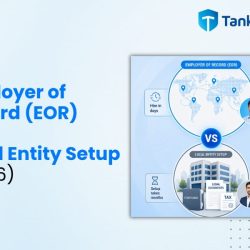

Without having an established entity in India, it is possible to hire doctors and nurses through India Employer of Record service. It will take 3-6 months for your entity registration in India, but NMC registered doctors and licensed nurses won’t have time to wait until your entity is registered in India. A pre-verified EOR service will onboard your clinical staff in 3-7 days.
Why Hiring Clinical Staff in India is Not a Standard HR Exercise
Most international hires happen to follow a certain pattern, which consists of identifying the candidate, making an offer to him/her, processing documentation, and then running payroll for the new hire. This is a certain procedure, which is disrupted at three particular points in clinical hiring in India.
The clinical staff availability window is short and non-negotiable.
India has a doctor-to-population ratio of approximately 1:834, which falls below the World Health Organization’s recommended ratio of 1:1000. That headline figure is misleading. The qualified, actively registered portion of India’s clinical workforce is concentrated in major cities, and competition for National Medical Commission-registered doctors, nurses with active State Nursing Council registration, and licensed pharmacists is high among domestic hospital groups, pharma manufacturers, and health-tech platforms simultaneously.
An NMC registered specialist will not keep their availability open for 30 days during entity registration process. Clinical candidates normally keep their availability open for 7-10 days. The time taken for setting up an entity in India varies from 3-6 months. This is not a recruitment time line but an attrition guarantee.
The dual compliance layer has no equivalent in standard corporate hiring.
Recruitment of any clinical staff member in India entails having to run two layers of compliance at once. One would be the usual employment layer – Provident Fund according to the EPF and Miscellaneous Provisions Act 1952, ESI contributions according to the ESI Act 1948, TDS deduction according to Section 192 of the Income Tax Act 1961, and also the state Shops and Establishments Act. Second would be compliance related to clinical positions specifically – all doctors have to be registered with NMC under the NMC Act 2019, all nurses have to be actively registered with their respective State Nursing Councils under the Indian Nursing Council Act 1947, and all pharmacists have to be registered under the Pharmacy Act 1948. These professional verifications are not normally a part of the routine process of payroll recruitment. Most employers, and most of the EOR providers for that matter, simply neglect these checks. However, they are required under the Clinical Establishments (Registration and Regulation) Act 2010.
Permanent Establishment risk applies specifically to foreign healthcare companies.
Hospitals abroad, pharmaceutical firms with India clinical setups, and medical technology companies with delivery teams in India are all at risk of Permanent Establishment as per Section 9 of the Income Tax Act, 1961 and FEMA 1999. Permanent Establishment comes into being when the foreign company has a certain taxable presence in India owing to the operations of its workforce, leading to the possibility of the foreign company becoming subject to income tax assessment for India-derived incomes. India Employer of Record gets rid of this threat because the employer is the EOR and not the foreign firm.
Doctors, Nurses, and Pharmacists: What Each Category Requires Before Hiring in India
There is no one compliance category for the clinical staff in India. The doctors, nurses, pharmacists, and allied health practitioners belong to separate categories of regulation and verification through statutory councils. What must be verified by the company offering the job contract depends on the clinical category of the position.
Registered Medical Practitioners Under the NMC Act 2019
The National Medical Commission is the statutory body established under the NMC Act 2019 to regulate medical education and medical practitioners in India. The Medical Council of India, which previously issued practitioner registrations, was dissolved in September 2020. Any reference to “MCI registration” in an onboarding document is now legally obsolete. NMC registration is the operative credential, and any employment contract issued to a practising doctor must reference the NMC or State Medical Council registration number.
Four categories of doctors require distinct verification pathways:
MBBS graduates (general practitioners): Registration with NMC done through the State Medical Council that functions within the NMC guidelines. The verification is done either through the online portal of NMC or through the direct submission of documents from the NMC or the respective State Medical Council. Time frame: 24 to 48 hours in case of verification using the portal; 5 days in case physical verification of the document is required. Confirmation document: Registration certificate of NMC/State Medical Council with latest validity.
Postgraduate specialists (MD, MS, MDS Dental): In addition to the MBBS registration, should hold a specialized registration. Both should be verified before issuance of the employment contract. In the case of MD Cardiologist, the MBBS base registration and MD specialization registration should be verified separately. Time required: 3-5 days. An employment contract cannot be issued without verifying both registrations.
AYUSH practitioners (Ayurveda, Yoga, Unani, Siddha, Homeopathy): AYUSH practitioners are not registered with the NMC. They hold registration under the Central Council of Indian Medicine (CCIM) for Ayurveda, Unani, and Siddha practitioners, and under the Central Council of Homeopathy (CCH) for homeopathic practitioners. Verification is conducted through CCIM or CCH directly, following a separate pathway from the NMC with a separate registration certificate. An employment contract for an AYUSH practitioner must not reference NMC registration, because NMC registration does not apply to this category.
Foreign-trained doctors: An internationally trained physician who does not hold NMC clearance through the FMGE examination or from 2023 via the NExT screening path is not eligible to practice modern medicine in India. Employment contracts for clinical positions cannot be offered to an internationally trained physician until after such clearance is gained. The NMC clearance certificate is the necessary prerequisite document for clinical employment in India.
Nurses and Paramedics: Navigating 28 State Councils
There is no centralized nursing registry database in India. India has 28 independent State Nursing Councils which work under the Indian Nursing Council Act 1947. Each council maintains their own separate process for registering and verifying nurses. The practical aspect of recruitment makes it difficult for most EOR companies to manage.
A nurse holding active registration with the Kerala State Nursing Council cannot automatically practise in Delhi. The nurse requires either dual registration with the Delhi Nursing Council or must rely on reciprocal recognition arrangements where those exist between the two states. A nurse returning from abroad, where Indian nurses are in high demand in the Gulf, UK, and Canada markets, may have allowed their home state registration to lapse during their time overseas. Both scenarios require resolution before an employment contract can be issued. The employment contract must reference the nurse’s active state registration number for the state in which they will actually work, not the state where they trained or previously practised.
Paramedics and allied health professionals fall under a different statutory framework: the National Allied and Healthcare Professions Act 2021, referred to as the NAHP Act. The NAHP Act establishes a National Commission for Allied and Healthcare Professions and creates registration requirements for professions, including radiographers, physiotherapists, laboratory technicians, and occupational therapists. The NAHP registration framework is still being operationalised at the state level, which means verification for allied health professionals currently requires a combination of qualification document checks, reference to the relevant professional body, and direct confirmation from the academic institution in some cases. Employers recruiting for the role of paramedic and allied health will do so safely by sharing joint responsibility: EOR handles documentation, and the client verifies the professional’s registration as part of the clinical fit assessment process.
In the case of nursing and allied health, the employment contract needs to establish the professional’s active registration with the council within their state of employment prior to the employment contract being signed. In the event that the state council verification takes longer than 3 days, the entire process of clinical onboarding extends from 5 to 7 days.
Pharmacists Under the Pharmacy Act 1948
Pharmacist registrations in India are done under the Pharmacy Act 1948, and these are done by State Pharmacy Councils. What is important from a clinical recruitment perspective is whether the pharmacist works as a Hospital Pharmacist in the hospital dispensary using the institution’s pharmacy licence or works as a retail/clinical Pharmacist requiring separate registration under the respective state council for the particular category of pharmacist.
Verification by the State Pharmacy Council involves a direct submission of request to the particular state council in which the pharmacist is registered. This verification process takes between 24 hours for online-verified states to 3 to 5 days in cases where there is a need for written verification. The certificate used for verification is the registration certificate from the State Pharmacy Council.
In general, the EORs do not integrate professional council registration verification into their onboarding process, since their online platforms are aimed at the recruitment of workers for the corporate workforce, where professional registration is not mandatory. The outcome for the client companies will be the signing of the employment contract and starting payment of the payroll, with no registered and qualified professional registration of the employees. In case of the need to provide proof of registered and qualified medical professionals according to the Clinical Establishments (Registration and Regulation) Act 2010, the employer rather than the EOR bears this liability.
How to Hire Doctors and Nurses in India Without an Entity: Step by Step
The basics about the way EOR operates in India form a good starting point. In case of clinical roles, there are certain procedures that have variations compared to the normal corporate EOR onboarding process. The stages listed below represent all the steps right from the first engagement until the first payroll processing.
Step 1: Engage an India EOR and Define the Role (Days 1 to 2)
What happens: The client company enters into the EOR Master Services Agreement. The client provides the job description, CTC range, location/state of work, reporting structure, and the clinical category of the role.
Who does what: All information regarding the roles is provided by the client. It is confirmed by the EOR about the compliance rules in the particular state for the role: the minimum wage rule according to the particular state’s Minimum Wages Act, the Shops and Establishments Act for the duties and shifts, and the professional council that controls the role type.
Why this step is critical for clinical roles specifically: The state where the employee will work determines which State Nursing Council is relevant, which Shops and Establishments Act governs the shift structure, and what minimum wage category applies to the clinical role. Getting the state wrong at this step cascades through every subsequent step in the process. A nurse hired to work in Maharashtra requires Maharashtra State Nursing Council verification and compliance with the Maharashtra Shops and Establishments Act duty hour provisions. These are different from the requirements that apply to the same role in Karnataka.
Outcome: MSA signed; state-specific clinical compliance issues in writing before any offer is made.
Step 2: Candidate Identification (Days 2 to 5)
What happens: The company identifies the candidate using their own clinical network or via the recruiting services provided by TankhaPay. It is the responsibility of the EOR to recruit the candidate. The client chooses; the EOR hires.
Who does what: The client company makes the hiring decision and identifies the candidate. The EOR prepares for professional licence verification once the candidate is confirmed.
Why this step matters for clinical roles: The client must verify clinical fit, competence, and cultural alignment before the EOR can verify regulatory fit. For doctors, this means the client should confirm the candidate’s clinical qualifications, NMC registration status, and the state in which their registration is held before the EOR begins the formal verification process. Initiating verification on the wrong candidate wastes 3 to 5 days of the availability window.
Outcome: Candidate identified; CTC range agreed; candidate’s council registration details provided to the EOR to initiate verification.
Step 3: Professional Licence Verification (Days 3 to 5 for most roles; up to Day 7 for complex cases)
What happens: The EOR verifies all applicable professional licences before any employment contract is drafted. This step is where the majority of EOR providers fail on clinical hiring because the verification process requires direct engagement with multiple Indian regulatory bodies, each operating independently.
Four verification actions:
- A) NMC registration check: Direct verification through the NMC’s online registry or via document submission from the NMC or the relevant State Medical Council. Timeline: 24 to 48 hours for digital verification; up to 5 days for document verification.
- B) State Nursing Council check: Contact directly the relevant State Nursing Council wherein the nurse is registered. Varies from state to state. For states with online portals, the process takes 24 to 48 hours. Verification that needs written confirmation takes 3 to 5 days.
- C) Pharmacy Council check: Submission directly to State Pharmacy Council. Time taken: 24 hours to 5 days, based on the state’s verification process.
- D) NABH documentation check: For clinical personnel who are joining an NABH accredited facility, the contract format should be as per the NABH guidelines for Human Resource Department. This is confirmed by EOR prior to issuance of the document.
What happens if verification fails: The employment contract cannot be executed. The employee will not be able to commence working. The EOR informs the client about the result of the verification process immediately. Such protection is the way for the client company to remain in compliance with the Clinical Establishments (Registration and Regulation) Act 2010 requiring documented proof of qualifications of the staff.
Outcome: Written verification confirmation for each applicable professional council; employment contract cleared for drafting.
Step 4: Employment Contract Issue (Days 5 to 6)
What happens: An employment agreement governed by Indian law is issued by the EOR. There are specific clauses in a compliant India clinical employment contract which are not provided in most general EOR contracts.
What a compliant Indian clinical employment contract must include:
- Registration number of the employee with the NMC or State Council included in the appointment letter
- Duty hours schedule according to the Shops and Establishments Act applicable in the state with clauses about rotating shifts in a 24-hour hospital setting
- Clause about on-call duties in the contract with details of on-call rate applicable from the first day
- Night duty pay premium included in the CTC according to the applicable state rules
- Hazardous allowance clause for the clinical setting: ICU nurses, OT staff, and lab technicians exposed to bio/chemical hazards
- Notice period of termination of employment in accordance with the Industrial Relations Code 2020
- ESI nomination forms filled in the time of signing the contract
- Gratuity clause according to the Payment of Gratuity Act 1972 applicable from the first day of employment
Outcome: Signed employment contract returned by candidate; candidate cleared for statutory registration.
Step 5: Statutory Registration With EPFO and ESIC (Days 5 to 7)
What happens: The EOR registers the clinical staff member with EPFO and ESIC in the EOR’s entity name. The client company carries zero EPFO or ESIC registration burden.
Specific registrations:
- EPFO registration: Employment Provident Fund Employer Contribution Receipt (ECR) to be submitted by the 15th of the month; the employer’s share of PF at 12% of basic pay plus DA as per EPF & MP Act 1952
- ESIC registration: Employer contribution submission on or before the 21st of the month; employer’s ESI contribution of 3.25% under the ESI Act 1948; this is applicable for employees with a total monthly income up to INR 21,000. All qualified doctors’ and nurses’ specialists will exceed the ceiling limit and hence be exempt from ESI contribution. Hospital-based pharmacists and other junior medical staff usually have income below the ESI ceiling limit.
- Professional Tax registration: As per state rules, which vary from zero (no PT in the state) to INR 2,500 per year.
Outcome: EPFO UAN generated for the employee; ESIC IP number issued where applicable; Professional Tax registration confirmed in the employment state.
Step 6: First Payroll Run (Days 7 to 10)
The first salary will be processed through the EOR according to the decided CTC structure. The elements in healthcare payroll of clinical staff contain some elements that are not processed in regular corporate payroll.
Clinical payroll components:
- Basic salary
- Allowances for night, weekend, and public holiday duties
- Standby allowance
- Over-time allowance as per the Shops and Establishments Act at rates between 1.5 to 2 times the basic salary, based on different states.
- Hazard allowance where applicable and specified in the employment contract
- TDS deduction under Section 192 of the Income Tax Act 1961, computed on the full taxable income including variable components paid in that month
- PF contribution at 12% of basic salary plus DA
- ESI contribution at 3.25% for eligible employees
- Professional Tax deduction as per the applicable state schedule
- Payslip issued via TankhaPay’s employee portal
Outcome: Salary credited to the employee’s account; payslip issued; first statutory filing cycle initiated.
Step 7: Ongoing Compliance and Licence Renewal Management
Upon employment of the clinical staff, there are four responsibilities that fall on TankhaPay’s plate to fulfil. Monthly payroll includes processing of all the elements of CTC, statutory deductions, calculation of the variable component and generating the payslip. Annually, renewal of licence needs to be tracked for NMC registration renewals, SNC renewal cycle, and also the annual NABH documentation, wherever it is required. Compliance calendar management would include payment of PF ECR by the the 15th of every month, ESI contribution by the 21st, filing quarterly TDS returns in form 24Q, and form 16 to each clinical staff annually. Wherever exit is required to be managed, the Payment of Wages Act 1936 will apply for calculation of final settlement, and the Payment of Gratuity Act 1972 will apply for calculating the gratuity where the employee has put in more than 5 years of continuous service.
CTC Structure for Clinical Staff in India: What Healthcare Payroll Includes
Most standard EOR agreements are designed for corporate employees, where CTC follows a straightforward base-plus-allowances structure. Clinical staff CTC in India is more complex, and getting the structure wrong in the offer letter creates compounding problems in PF contribution calculations, ESI applicability assessments, and overtime dispute resolution. For a detailed comparison of EOR structuring options versus other arrangements, see EOR vs PEO in India.
Profile A: Hospital-Based MBBS Doctor (General Physician or Resident)
Fixed component: Basic Salary (40-50% of CTC), HRA (where applicable), Medical Allowance, Conveyance Allowance.
Variable component: On-Call Allowance payable either as a fixed amount on a monthly basis or on a per-call basis, and Night Duty Allowance (only when the number of night shifts exceeds a pre-specified number during a week).
Statutory deductions: TDS on Section 192 of Income Tax Act 1961 is calculated on the total taxable income which may have elements that vary from one another based on the payment month. PF can be deducted for the doctor’s basic salary, which falls within the mandatory threshold of PF or for those who have joined the PF voluntarily. Majority of doctors who earn a basic salary more than INR 15,000 fall above the mandatory threshold of PF; voluntary PF is an option.
ESI does not apply to the majority of qualified doctors because their gross monthly salary exceeds the INR 21,000 ceiling for ESI applicability under the ESI Act 1948.
Profile B: Registered Nurse (Senior Grade)
Fixed components: basic salary, shift allowance as a fixed monthly amount reflecting the regular shift rotation, uniform allowance, and nursing allowance recognised for senior nurses in hospital settings.
Variable elements: Premium for night shifts as per the rate applicable in the respective state, overtime @ 1.5 to 2 times the usual wage per state Shops & Establishments Act, compensation for nurses on standby roster.
Hazard Pay: Nurses working in ICU, OT, and nurses posted in infectious diseases departments should be entitled to hazard pay as a separate component in the CTC. This will help to protect both the employer and the nurse if there is an occupational accident or an injury case under the OSH Code 2020.
Statutory: Provident Fund @ 12% and ESI @ 3.25% for nurses whose gross monthly salary is capped at INR 21,000, TDS if annual taxable income exceeds the threshold.
Profile C: Pharmacist
Fixed components: Basic salary, pharmacy allowance, conveyance allowance.
Variable elements: Shift differential for positions in hospital pharmacies operating in a 24-hour cycle in which the pharmacist is employed in rotating shifts. It could either be a fixed monthly allowance based on shift or a shift differential.
Statutory: PF @12%, ESI @3.25% when gross salary is within the ESI limit, Professional Tax as per state slab, TDS if applicable.
Profile D: Non-Clinical Healthcare Staff (Medical Coder, RCM Analyst, Health-Tech Operations)
Standard corporate CTC structure applies to non-clinical roles. No clinical allowances, shift premiums, hazard allowances, or on-call provisions are required unless the role operates in a 24/7 support environment. No professional licence verification is required for non-clinical staff. These staff members can be onboarded through TankhaPay’s standard process in 2 to 3 days.
Misunderstanding of the CTC structure at the stage of offer letter leads to compounding problems further down the line. If the basic salary is incorrectly calculated, then it will affect the PF contributions from day one since PF is paid based on the basic salary plus DA according to the EPF & Miscellaneous Provisions Act, 1952. Misunderstanding whether or not the ESI Act applies to the individual means either withholding taxes wrongly from an exempted individual or missing out on covering an otherwise eligible individual under the Act. The problem of overtime is when the CTC structure does not mention the ordinary wage rate for the overtime payment.
Why the EOR Model Fits Healthcare and Why India-Specialist Depth Matters
The question of which EOR is best for healthcare companies in India does not reduce to a single feature comparison. It resolves to a question of depth: what does the provider actually verify before issuing the employment contract, and who bears the liability if that verification is incomplete?
For EOR for healthcare companies in India, the gap between global generalist platforms and India-specialist providers is widest in the clinical hiring vertical compared to any other sector.
Global EOR platforms do not verify Indian clinical licences.
Companies like Deel, Remote, and Papaya Global cater to the global corporate labor force in more than 150 countries. The India operations in these companies are managed via payroll partner arrangements or thin entity structures. None of them has integrated the NMC verification, State Nursing Council verification, and the Pharmacy Act 1948 compliance into their onboarding process. This is not a critique. It is a hard fact that the integration of clinical license verification for every country in 150 countries is not a sound product development strategy in a platform meant for software engineers, finance professionals, and corporate services professionals. In case of healthcare organizations, the result is that the verification loophole exists, and the liability as per the Clinical Establishments (Registration and Regulation) Act 2010 lies with the client organization and not with the EOR service provider. For detailed comparison of EOR companies in India, refer to the list of top EOR companies in India 2026.
Domestic staffing agencies carry misclassification and compliance transfer risk.
Under the Contract Labour (Regulation and Abolition) Act 1970, when a staffing agency fails to provide PF, ESI, or minimum wages to clinical staff it supplies, the principal employer, which is the hiring company, is legally liable for the shortfall. Clinical staff supplied through staffing agencies remain the client’s compliance risk in law, regardless of the contractual arrangement with the agency. An EOR arrangement transfers this liability because TankhaPay becomes the legal employer of record under Indian law. The clinical staff member’s PF contributions, ESI coverage, and all statutory entitlements are TankhaPay’s obligation under the EOR agreement.
The dual compliance stack requires India-specific depth.
Managing PF, ESI, and TDS is standard payroll bureau capability. NMC Verification, 28 independent State Nursing Council verification, NABH HR Compliance, Compliance with Biomedical Waste Management Rules 2016 by employers, OSH code 2020 compliance in a clinical environment, and DPDP Act 2023 compliance for employee information related to patients are some more aspects of service provided by us. Since its inception, TankhaPay has been providing India compliance services for more than 500+ clients for over two decades without any penalties from the Government of India across all clients. One of TankhaPay’s clients under the Government of India is the Ministry of Ayush, which is directly related to the credential of the healthcare employers since the Ministry plays an important part in India’s clinical regulatory system. The ISO 27001 certification deals with information security management, which is directly relevant for healthcare employers dealing with employee data in clinical settings where the DPDP Act 2023 comes into play in any kind of data processing. A 26-year India-only compliance record is not a differentiator in clinical hiring. It is the bare minimum for an engagement where professional license verification, dual compliance management, and clinical employment contract structure are a must-have requirement.
Speed matches the availability window that clinical hiring actually operates within.
TankhaPay onboards non-clinical healthcare staff in 2 to 3 days and clinical staff in 3 to 7 days, depending on the complexity of professional licence verification required for the specific role and state. This matches the availability window of NMC-registered doctors and licensed nurses in India. Entity setup at 3 to 6 months does not come close to matching it. A global EOR without built-in clinical verification adds days or weeks of manual document chasing that eliminate the speed advantage that EOR is supposed to provide.
India Clinical Staff Hiring: Compliance Reference Table
The table below identifies the professional council, verification pathway, governing legislation, typical verification timeline, and responsibility allocation for each clinical staff category.
| Staff Category | Professional Council | Verification Required | Governing Act | Typical Verification Time | Responsibility |
| MBBS Doctor (General Practice) | NMC / State Medical Council | NMC registration check; current renewal status confirmed | NMC Act 2019 | 24 to 48 hours (portal); up to 5 days (document) | EOR verifies; client provides candidate documents |
| MD/MS Specialist | NMC / State Medical Council | Base MBBS verification plus specialist registration verified independently | NMC Act 2019 | 3 to 5 days | EOR verifies; client confirms specialist discipline |
| AYUSH Practitioner | CCIM (Ayurveda, Unani, Siddha) or CCH (Homeopathy) | CCIM or CCH registration check; current registration status | CCIM Act 1970 / CCH Act 1973 | 2 to 4 days | EOR verifies; client specifies AYUSH discipline at outset |
| Registered Nurse | Relevant State Nursing Council (28 independent councils) | Active state registration in employment state; cross-state registration or reciprocal recognition where required | Indian Nursing Council Act 1947 | 1 to 5 days (varies by state) | Joint: EOR contacts council; client confirms nurse’s home state and current registration state |
| Paramedic / Allied Health Professional | State council under NAHP Act 2021 (operationalisation ongoing) | Qualification document check; NAHP registration where operative; professional body confirmation | NAHP Act 2021 | 2 to 5 days | Joint: EOR manages document trail; client confirms professional qualification |
| Pharmacist | State Pharmacy Council | State council registration check; current renewal status | Pharmacy Act 1948 | 24 hours to 5 days (varies by state portal availability) | EOR verifies |
| Clinical Research Associate (CRO) | No statutory council; ICH-GCP certification recognised | GCP training certificate verification; qualification document check | ICH-GCP guidelines; applicable institutional standards | 1 to 2 days | Client provides certification documents; EOR confirms documentation received |
| Medical Coder / RCM Staff | No professional council registration required | Employment background check and qualification verification only | Not applicable | Included in standard 2 to 3 day onboarding | EOR handles through standard onboarding process |
Frequently Asked Questions: Hiring Doctors and Nurses in India Without an Entity
Can I hire a doctor in India without setting up an Indian company?
Q: Can I hire a doctor in India without setting up an Indian company?
A: Yes. An offshore company can engage the services of an NMC registered doctor in India without setting up an Indian company by using an India Employer of Record. The EOR will act as the legal employer of the individual under Indian labour laws, taking care of the employment contract, statutory registrations with EPFO and ESIC, verification of professional licences, and payrolls. The offshore company will have complete control of the clinical activities of the doctor. Establishment of the entity in India will take 3 to 6 months; however, a verified EOR with NMC verification will put the doctor on payroll within 3 to 7 days.
What is the best EOR for hiring healthcare professionals in India?
Q: What is the best EOR for hiring healthcare professionals in India?
A: TankhaPay is an India-specialist Employer of Record that has managed payroll and compliance for 500+ client companies since 2000, with zero compliance penalties across all client engagements since inception. The point that separates TankhaPay from others in the case of healthcare EOR is that TankhaPay incorporates NMC Verification, State Nursing Council verification in all 28 State Councils, and Pharmacy Act 1948 compliance in the onboarding process as a necessary condition before issuing any employment contract. TankhaPay has ISO 27001 certification, which is important for healthcare employers when storing employee data in the adjacent to patients environment according to the DPDP Act 2023. The customers of TankhaPay that can serve as proof of the depth of compliance are the Government of India, the Ministry of Ayush, the National Informatics Centre, and the National e-Governance Division. Bank of Baroda is a PSU bank fully supervised by RBI and a TankhaPay payroll client.
Q: How long does it take to hire a nurse in India through an EOR?
A: The typical timeline from offer to first payroll for a registered nurse in India through TankhaPay is 5 to 7 days, depending on the state in which the nurse will work and the specific State Nursing Council’s verification process. India operates 28 State Nursing Councils independently, and verification timelines differ by state. States with digital verification portals clear in 24 to 48 hours. States that require written verification take 3 to 5 days, which is the factor most likely to extend the timeline toward 7 days. Non-clinical healthcare staff with no professional licence requirement are onboarded in 2 to 3 days through the standard process.
Q: What is NMC registration and why does it matter when hiring doctors in India?
A: The National Medical Commission Registration refers to the mandatory registration provided by the National Medical Commission, which was set up under the NMC Act 2019 to regulate the practice of doctors in India. The Medical Council of India, responsible for the provision of practitioner registrations until 2020, ceased to exist and should not be mentioned in any contemporary recruitment documents. All the doctors practicing modern medicine in India require registration with the NMC or State Medical Councils regulated by the NMC. In case of recruiting a doctor, it is necessary for the employer to ascertain the validity of that registration and issue employment agreement only if that registration is active and valid. Otherwise, the employer will be liable under the Clinical Establishment (Registration and Regulation) Act 2010 requiring evidence of registration of the clinical staff of that healthcare establishment.
Q: What should a doctor’s employment contract in India include?
A: A compliant India employment contract for a doctor must include the doctor’s NMC or State Medical Council registration number cited directly in the appointment letter.The duty hour provisions must conform to the Shops and Establishments Act of the concerned state with specific reference to shift system in a 24-hour hospital scenario. There must be clarity in terms of on call provisions and rates right at the start of the contract. Night duty provisions, any applicable hazard allowance provision based on the clinical environment and notice period according to the Industrial Relations Code 2020 must form part of the contract. Nomination forms in respect of ESI must be filled up at the time of entering into the contract and a gratuity provision under Payment of Gratuity Act 1972 is mandatory right from day one of employment. The generic contract templates offered by global organizations often neglect these aspects.
Q: How is on-call pay and night duty structured for hospital staff in India?
A: On-call pay for hospital staff in India is structured as either a fixed monthly on-call allowance or a per-call rate, and the applicable structure must be defined in the employment contract before the employee’s first day. Night duty premium rates are set by the applicable state Shops and Establishments Act and vary from state to state. Overtime for clinical staff working beyond prescribed shift hours is calculated at 1.5x to 2x the ordinary wage rate under the relevant state act. How is on-call pay handled for hospital staff in India in practice? These components must be itemised separately in the monthly payslip. Folding on-call pay and night duty premiums into a gross salary figure without itemisation creates audit exposure and makes overtime dispute resolution significantly more difficult in any labour court or conciliation process.
Q: What is the difference between using an EOR and a staffing agency for healthcare hiring in India?
A: Under EOR terms, the EOR becomes the employer under Indian laws, meaning that the EOR will be responsible for any statutory obligations such as PF contributions, ESI, minimum wage payments, and verification of the professional license. On the other hand, the staffing agency would remain the nominal employer under staffing agency terms, but under the Contract Labour (Regulation and Abolition) Act 1970, in the case that there is any failure by the staffing agency to meet any statutory obligations, the principal employer or the hiring firm becomes directly liable. Additionally, clinical staff provided under staffing agency terms do not possess the verification of their professional license that is required under the Clinical Establishments (Registration and Regulation) Act 2010 from the employing firm. For medical/hospital hiring, this is not just a difference in liability.
Q: Can a foreign hospital chain hire clinical staff in India without a local entity?
A: Yes, a foreign hospital chain or foreign healthcare firm can employ doctors, nurses, pharmacists, and other healthcare professionals in India without setting up a local presence by using an India Employer of Record service. The EOR acts as the legal employer in India and takes care of everything from statutory compliance to EPFO and ESIC registration, license verification of the professionals in different clinical categories, signing of compliant employment contracts, and monthly payroll processing. The foreign hospital chain maintains complete operational control of their India clinical team. The use of EOR service also ensures no permanent establishment liability under Section 9 of Income Tax Act 1961 and FEMA 1999, which is an issue that foreign healthcare firms face because of the involvement of their clinical professionals in earning revenue in India.
Get Started: Healthcare EOR in India
TankhaPay has managed payroll and compliance for 500+ client companies in India since 2000. In 26 years of India-only EOR operations, TankhaPay has not incurred a single compliance penalty across any client engagement. Government of India clients include the Ministry of Ayush, the National Informatics Centre, and the National e-Governance Division. Bank of Baroda, a PSU bank under full RBI regulatory supervision, uses TankhaPay for payroll and compliance management, confirming that TankhaPay’s compliance infrastructure meets the standards applied in India’s most scrutinised regulated sectors. For healthcare employers, ISO 27001 certification directly addresses the information security requirement for clinical environments where patient-adjacent employee data is managed and where DPDP Act 2023 obligations apply.
If your organisation is ready to hire doctors, nurses, pharmacists, or allied health professionals in India without setting up a legal entity, the starting point is a practical review of your specific clinical role requirements and the compliance obligations attached to each one.
Visit EOR for healthcare companies in India to review the full service scope, or contact TankhaPay directly to Request a Risk Assessment specific to your clinical hiring requirements or Book a Strategy Call with TankhaPay’s India compliance team.