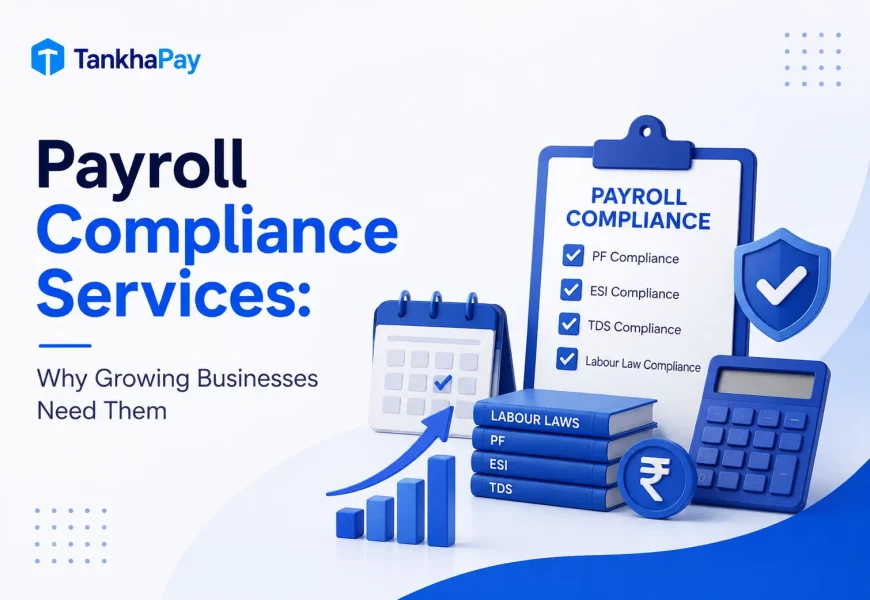
Payroll compliance in India is not one obligation. It’s dozens of them, spread across five authorities, each running its own deadline.
This checklist covers all of them, phase by phase, with the deadline and the penalty attached to each.
What is payroll statutory compliance?
Payroll statutory compliance involves fulfilling all statutory obligations that arise out of remuneration of employees in terms of computation of wages according to the relevant law, deduction of taxes, their deposit within the prescribed time with the appropriate authority, and maintenance of proper registers.
It covers five authorities: EPFO, ESIC, the Income Tax Department, the State Labour Department, and the State Professional Tax Authority.
The distinction that matters: payroll compliance is the calculation and payment. Statutory compliance in payroll is everything that follows, the deposits, registers, returns and inspection readiness. Most penalties arise from the second, not the first.
Quick answer: Payroll compliance checklist in four phases
Compliance of Indian Payroll follows a cyclic process rather than a single deadline. Each stage involves different responsibilities, and an omission from one stage appears in the form of a penalty in the next stage. Below is the entire process in brief, along with the deadline for each stage.
| Phase | What happens | Key deadline |
|---|---|---|
| Pre-payroll | Registrations, employee data, wage structure validation | Before the first payroll |
| Processing | Attendance, wage calculation, statutory deductions | Wages payable by the 7th of the following month |
| Post-payroll | Deposits, registers, payslips | TDS by the 7th, PF and ESI by the 15th |
| Annual | Returns, Form 16 equivalent, bonus, gratuity | Varies, see the calendar below |
Why payroll and statutory compliance are harder than they look
The rules themselves are not complicated. What makes compliance hard is that they change by state, by establishment type and by who is on your premises. Three layers of complexity apply to almost every Indian employer:
Variable wage components. Overtime, allowances, bonuses and reimbursements shift the wage base every cycle, and the Code on Wages changed which components count toward it.
Multi-state operations. Minimum wages, Professional Tax and Labour Welfare Fund all vary by state, on different revision calendars.
Contract labour liability. The principal employer carries statutory compliance responsibility even when a third-party contractor handles the payments and exactly where that liability kicks in has changed for 2026 (more on this below).
Pre-payroll compliance checklist
Most compliance failures are set up before a single salary is calculated. A missing registration, incomplete employee data or a non-compliant wage structure produces errors in every cycle that follows.
Review the three categories prior to your first payroll cycle and thereafter any time there is a change in either headcount or locations.
Registrations and licences
Registration thresholds are based on the headcount and calculated as your business grows. Failing to register after crossing the threshold makes your organization liable from the day you cross it, and not when you realize it. Review these monthly if your headcount is close to a threshold.
- EPFO registration, mandatory at 20 or more employees
- ESIC registration, mandatory at 10 or more employees in most states
- OSH Code (formerly CLRA) registration and Form I for the principal employer centrally triggered at 50 or more contract workers now, up from CLRA’s 20. Most states haven’t yet notified their own OSH Code rules and are still enforcing the old 20-worker trigger, so confirm your specific state’s current position rather than assuming either number applies.
- Contractor’s licence CLRA Form IV, or the OSH Code’s single pan-India licence where your state has adopted it for each location the contractor operates in
- Shops and Establishments Act registration in every state you operate in
- OSH Code (formerly Factories Act) registration where applicable, which changes your entire register set
Employee documentation
Missing employee data is the most common reason a payroll run fails at the deposit stage rather than the calculation stage. Each item below feeds a statutory filing later in the cycle. Collect all of it at onboarding instead of chasing it during a payroll close.
- Numbers from PAN and Aadhaar for all workers
- Creation/Allocation of UAN number for all workers
- Issuance of ESIC IP number for all eligible workers
- Validation of bank account details for payment of salaries through direct payment mode
- Issuance of appointment letters, made mandatory under Labour Codes
- Classification of the worker, whether he is an employee, contract worker, or apprentice. Each one of them has its own responsibility.
Wage structure review
Wage structure determines PF liability, minimum wage category, and overtime basis for you. If there is an error, it gets compounded every month until it is fixed, and it gets fixed retroactively. It is most impacted by the Code on Wages, so check it out before the next cycle.
- Basic plus dearness allowance validated at a minimum of 50% of total remuneration, under the Code on Wages
- Wages checked against the current state minimum wage notification for the applicable trade and skill category
- Structure updated for mid-year minimum wage revisions, which most states issue around April and October

Payroll processing compliance checklist
This is where most non-compliance originates, because it is the phase with the most moving parts and the least time to check them. Attendance, wage calculation, deductions and payment all happen inside a compressed window every month, usually while something else is going wrong.
Attendance and wage calculation
Attendance is not an input in your report. Attendance is the basis on which each salary that you declare is based, and attendance is the very first thing that an employment officer wants to see. Every test here serves a particular requirement and not the process preference.
- Attendance reconciled from biometric attendance sheets or the physical muster sheet, CLRA Form XVI (or the OSH Code equivalent, once your state adopts it)
- Wage calculation based on days worked rather than a presumed 26-day month
- Overtime calculated on double the basic pay per hour after 8 hours per day/48 hours per week
- Time over regular time recorded against the quarterly overtime limit
- Rest day assured for all employees every week
- Wage Register, Form XVII (or the OSH Code equivalent, once your state adopts it), updated prior to wage payment
Statutory deductions
Five deductions apply to most Indian employers, each with a different base, a different authority and a different deadline. Two of them vary by state. The rates below are the standard position and should be confirmed against current notifications before each financial year.
| Deduction | Rate | Applies to |
|---|---|---|
| EPF | 12% employee, 12% employer, on basic plus DA | Establishments with 20 or more employees |
| ESI | 0.75% employee, 3.25% employer | Wages up to INR 21,000 per month |
| Professional Tax | State-specific slabs | States that levy PT |
| TDS | Per the employee’s chosen tax regime | Where income exceeds the exemption limit |
| Labour Welfare Fund | State-specific | Varies: monthly, half-yearly or annual |
Contract workers
Contract workers fall within your compliance boundary and not that of the contracting company. Under CLRA (or the OSH Code in states that have incorporated the same), the principal employer holds liability in the event of a default by the contractor. This makes checking compliance of the contractor a necessity and not a favour.
- Verify the contractor has deposited PF and ESI challans for workers at your premises
- Review the contractor’s wage register before clearing the invoice
- Count contract workers in your ESIC threshold. Eight direct plus five contract workers is thirteen, which crosses the ten-employee threshold
- Confirm minimum wages are being paid to contract workers, because you are liable if the contractor defaults
- Check that the contractor’s licence, CLRA Form IV or the OSH Code equivalent, per your state’s current rules is current for each location
- Retain copies of contractor challans and registers, because an inspector will ask you for them, not the contractor
Wage payment
Wage payment carries its own statutory deadline, separate from and earlier than the deposit deadlines that follow. Employers who track the deposit dates routinely miss this one.
Wages for a monthly wage period are payable by the 7th of the following month for most establishments. Whether the old exception for establishments with 1,000 or more employees (10th day instead of 7th) survives under the Code on Wages is being read differently by different practitioners right now. If you’re at that scale, confirm your specific position rather than assuming either date.
- Payment made by electronic transfer, with the salary credit dated
Post-payroll statutory compliance checklist
After that, the work will then progress into deposits and filings through five distinct agencies, each with their own deadlines, portals, and fines. Failure to meet a single deadline results in compounded penalties because there is interest on the outstanding balance.
| Obligation | Deadline | Authority | Exposure for delay |
|---|---|---|---|
| EPF deposit | 15th of the following month | EPFO | Interest plus damages |
| ESI deposit | 15th of the following month | ESIC | Interest plus prosecution |
| TDS deposit | 7th of the following month | Income Tax Department | Monthly interest |
| Professional Tax | Varies by state | State PT Authority | Interest and penalty per state Act |
| Labour Welfare Fund | Half-yearly or annually | State Labour Department | Penalty per state Act |
| Quarterly TDS return | 31 July, 31 Oct, 31 Jan, 31 May | Income Tax Department | Daily late fee |
Payslip requirements
The payslip is the only compliance document most employees ever see and the one they will produce if a dispute is raised. It also has a prescribed minimum content. Digital issues and retention are now requirements rather than conveniences.
- Payslip issued to every worker showing gross wages, each deduction separately, overtime and net pay
- Payslips maintained digitally, as the OSH Code requires digital record-keeping
- Records maintained for a minimum of seven years and up to ten under some acts
Annual payroll compliance checklist
Obligations that are annual tend to be missed the most since they occur outside the cycle that payroll staffs become used to dealing with. They carry some of the stiffest penalties. Place all these into the calendar instead of waiting for the cycle to bring them up.
- Entries made in the annual PF contributions to be reconciled with the records maintained at the EPFO
- Reconciliation of annual ESI eligibility and contributions
- Certificate of annual salary income TDS given to each employee before 15 June
- Payment of statutory bonus of 8.33% to 20% for eligible employees within eight months of accounting year-end
- Gratuity reconciliation for employees serving fixed term who are eligible on a pro rata basis from the first anniversary of Social Security Code
- Returns filed for OSH code (previously Factories Act and Contract Labour Act) and Code on Wages (previously Payment of Bonus Act)
- Renewal of Shops and Establishments Licence prior to its expiry
Component-level checklists
Inspections and audits normally come from one authority after another. EPFO queries do not ask you about your TDS status, while ESIC visits do not inquire about your PT registration. With these four checklists, you can get ready for one authority without going through the whole process.
PF compliance checklist
PF obligation is the most audited among all five obligations and is the one for which mistakes are corrected on a retrospective basis with interest. Wage base usually becomes the problem area. Go through this list before filing every ECR monthly.
- EPFO Registration Done and Establishment Code is Correct
- UAN Generated & Linked to All Employees
- Calculation done on Basic & DA Basis of 50% Minimum Wages
- ECR Filed and Challan Deposited Till 15th
- Identification of International Workers and Excluded Employees Correct
- Reconciliation Done
ESI compliance checklist
Eligibility for ESI depends on wage changes and staffing changes and thus is the only responsibility in this list that requires monthly recalculation. The threshold test is where the mistake comes from, and the mistake is generally in the form of exclusion rather than incorrect calculation.
- ESIC Registration
- Threshold calculation monthly, including contractual workers
- Reviewing eligibility if salary is above the midpoint ceiling of the year
- Assigning IP numbers and issuing cards
- Contribution to be made before the 15th
- Accident report made
TDS compliance checklist
This system works on a yearly estimate that is determined after making twelve monthly deductions. This renders it the most information-timely obligation. Regime declarations of employees should be collected at the beginning of the year, and investment declarations verified before the last quarter and not during it.
- Collection of employee tax regime declaration at the beginning of the year
- Collection of investment declarations and verification before the last quarter
- Deposits made on the 7th of every month
- Filing of quarterly return on time
- Issuing of annual certificate by 15 June
Professional Tax and LWF checklist
Both are state-level obligations with no central calendar, which is why multi-state employers miss them more often than any central deduction. Every state you operate in is a separate registration, a separate slab and a separate deadline.
- Registration held in every state where employees are based
- Correct slab applied per state, by the employee’s registered work location
- LWF deducted on the correct state frequency
- Deposits made on each state’s own calendar
Six payroll compliance mistakes that trigger penalties
These are the six that constitute most of the results in labor laws and statutory inspections in India. All of these are not mistakes in the mathematical sense. Each one is an erroneous assumption in structure which remains false until checked.
Wrong wage base for PF. PF calculation has been done on basic salary that constitutes 30 to 40% of the CTC. As per the Code on Wages, the minimum proportion of basic salary plus DA should be 50%. Arrears will be calculated backdated from the date of error.
Excluding contract workers from the threshold. The most common ESI failure. Direct and contract headcounts combine for the ten-employee test.
Ignoring state minimum wage revisions. Most states revise twice a year. A multi-state employer running stale rates in even one state is underpaying, and the Code on Wages provides for compensation well above the shortfall.
Missing CLRA or OSH code registers at inspection. The inspector demands three registers to start with: principal employer register, contractor licences, and worker wages register. Assuming that the responsibility of the contractor lies here would be wrong since CLRA (or the OSH Code once your state implements it) imposes dual responsibilities on the principal employer as well.
Incorrect overtime base. Overtime is twice the ordinary rate. The frequent error is applying the multiplier to a stale or reduced wage base rather than the current one.
Paper-only records. The OSH Code requires digital registers for attendance, wages, overtime and employment cards. Authorities can request digital records at short notice through the SHRAM Suvidha Portal.
Internal controls for payroll compliance
Failure to comply with the statutes may occur equally from process weaknesses rather than from ignorance of the rules. A group that is fully aware of all the rules would still miss deadlines if one person did everything. Six controls can prevent all these problems:
- Prepare, approve, and pay separately. One individual should not be responsible for all three.
- Check an exception report once per cycle. Mark any alterations made in bank details, salary, and PF/ESI status before making payments.
- Limit access of payroll data to only specific roles and keep a log of alterations made.
- Reconcile the payroll register with the bank file prior to payment every month.
- Conduct a self-audit quarterly on the above checklist.
- Back up statutory records separately from the payroll system.
The latter is more important than it appears. In the case where your system is the only source of copies for seven years of registers, then a switch of vendors would become a compliance issue. This is where a compliance-based payroll platform such as TankhaPay will make their money by segregating these controls.
Payroll compliance calendar
Compliance problems are generally calendar problems rather than knowledge problems. A set calendar eliminates the necessity of remembering where each responsibility lies within an entire busy month. Paste this into whatever calendar your team is using right now, and allocate one specific person for each row.
| Frequency | Task | Deadline |
|---|---|---|
| Monthly | Update wage register (Form XVII) | Before payment |
| Monthly | Pay wages for the wage period | 7th of the following month |
| Monthly | Deposit TDS | 7th of the following month |
| Monthly | Deposit EPF and ESI | 15th of the following month |
| Monthly | Professional Tax | Per state calendar |
| Quarterly | File TDS return | 31 July, 31 Oct, 31 Jan, 31 May |
| Half-yearly | Labour Welfare Fund, most states | Per state calendar |
| Half-yearly | Check state minimum wage revisions | April and October, typically |
| Annually | Statutory bonus | Within eight months of year end |
| Annually | Issue annual TDS certificate | By 15 June |
| Annually | PF and ESI annual returns | As notified |
| Annually | Renew Shops and Establishments licence | Before expiry |
Why compliance management changed in 2026
Three developments changed payroll compliance this year, and each changes something different. What you calculate, what you file, and which rules actually apply on the ground.
The four Labour Codes came into force at the national level on 21 November 2025, and the states could adopt these codes at their pace. The Code on Wages brought in the 50% wage base criterion. The Industrial Relations Code restricted the period for a full and final settlement. The Social Security Code altered the criteria for fixed-term gratuity from five to one year.
Then, on 8–9 May 2026, the Ministry of Labour and Employment notified the Central Rules under all four Codes. The detailed mechanics that make the November 2025 provisions actually enforceable at the central level. This is the update most payroll guidance written earlier in 2026 has missed. It’s also what moved the OSH Code’s higher contract-labour threshold (50 workers, up from CLRA’s 20) from law-on-paper to something inspectors can actually check against centrally, at least. States are still catching up individually, so don’t assume your state has adopted the new threshold until you’ve confirmed it.
The Income-tax Act, 2025 came up as a separate replacement for the Act of 1961 from 1st April 2026, where the numbering of sections and forms created by the payroll system needs to be updated (the TDS return, Form 24Q, is now Form 138; Form 16 is now Form 130; Form 12BB is now Form 124).
Also, enforcement activities have shifted to digital platforms. Registers are required to be maintained in digital format, and inspections may come through SHRAM Suvidha Portal.
To Conclude
Payroll violations are not violations of ignorance. They are violations of timing and procedures: the deadline that is missed in a busy month, the contract employee that is missed, the amendment to a state law that is not taken into account.
Work through this checklist once a cycle and document that you did. The documentation is what turns an inspection from an investigation into a review.
If you are not certain which Acts apply to each of your locations, that is the place to start. Book a Strategy Call with TankhaPay and we will map your establishments, states and workforce mix against what you are actually obligated to file.
FAQs
These are the questions that come up most often from HR and payroll teams working through this checklist for the first time.
What is payroll statutory compliance?
Meeting every legal obligation attached to paying employees: correct wage calculation, statutory deductions, timely deposits to five authorities, prescribed registers, and required returns. It covers EPFO, ESIC, the Income Tax Department, the State Labour Department and the State PT Authority.
What is a payroll compliance checklist?
List of all legal obligations during each stage of the payroll process – pre-payroll registrations and pay structure, deduction and register processing, post-payroll deposits and filings, and yearly returns. This is to ensure that no step is missed out during a month when some other thing happens.
By when must wages be paid in India?
For a monthly wage period, wages are payable by the 7th of the following month for most establishments. This is separate from, and earlier than, the deposit deadlines for PF, ESI and TDS. Whether a different deadline applies for very large employers is currently interpreted differently across sources, confirming against the notified Wage Code rules rather than assuming.
Does ESI apply to contract workers?
Yes. The contract workers are included along with the other employees for counting the ten-employee criterion and are covered provided their salaries are under the ceiling limit. Their exclusion from the employee number is one of the major problems faced in ESI compliance.
How does the 50% basic wage rule affect payroll?
As per the Wages Act, the basic and dearness allowance should be at least 50% of the total salary payable. Thus, the base for computation of EPF goes up. The structure having a low basic pay in order to lower PF costs needs modification.
What is an HR statutory compliance checklist?
The same obligations viewed from the HR function rather than the payroll function. It adds employment documentation, appointment letters, worker classification, register maintenance and inspection readiness to the deposit and filing obligations covered here.
How long must payroll records be kept?
Seven years for wages registers, attendance registers, CLRA registers, statutory challans, and payslips. Certain statutes provide for retention of records for up to ten years. Under OSH Code, the electronic retention of records is obligatory, not discretionary.
What happens if a labour inspector visits?
The first three documents requested are usually the principal employer registration certificate, contractor licences, and worker wage registers. Records must be produced on demand, which is why a register you can assemble next week is not a register you have.
Who is liable if a contractor fails to deposit PF?
Your main employer. In states where CLRA or the OSH Code is adopted, it imposes similar obligations, and hence a contractor’s default is your responsibility. Clear your contractor challans before you clear the invoice.
Has the threshold for contract labour compliance changed in 2026?
Yes, but this is true at the central level. The OSH Code has increased the threshold from 20 contract workers under the CLRA to 50, and the Central Rules of May 2026 have made this applicable at the central level. Many states have not yet notified their own OSH Code Rules, so make sure to check your own state’s requirements.
Can payroll software handle statutory compliance?
Calculation, registration, and filing are done by it. The tasks of establishment registration, classification of the workers, and attending inspections on your behalf cannot be done by it irrespective of which platform you are using.