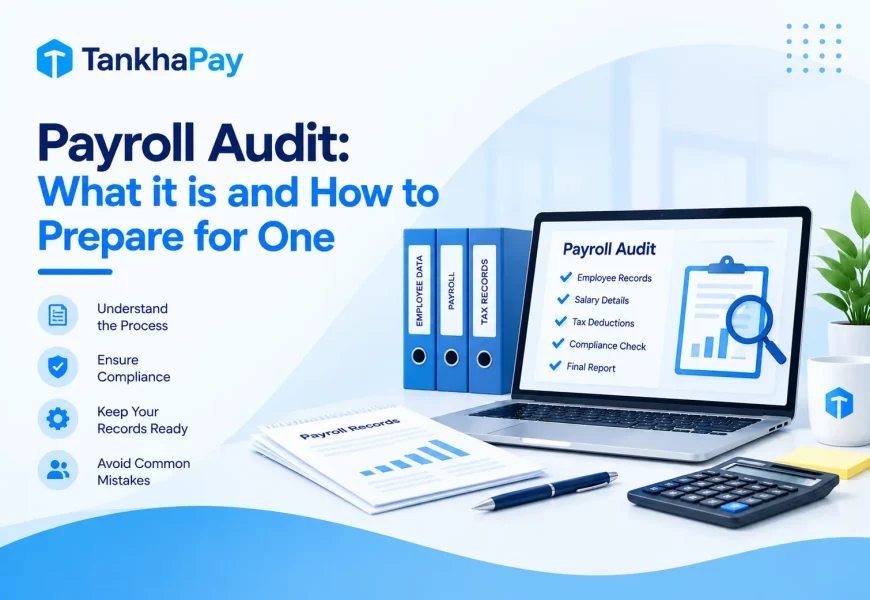
Payroll audit involves systematic examination of payroll documents and calculations to ensure that all employees are being paid rightly and that all statutory liabilities such as PF, ESI, TDS, and Professional Tax are being fulfilled. It catches the kind of small, recurring errors that don’t show up on any single payslip but add up into real financial and legal exposure over a year. Most businesses only think about payroll audits when a statutory notice arrives. By then, the errors it turns up have usually been repeating for months.
What Does a Payroll Audit Actually Cover?
A payroll audit checks whether what payroll calculated matches what the law and your own records require. It’s not just a spot-check on a few payslips; it’s a review of the process that produced them.
Scope generally includes:
- Employee classification accuracy and salary structure accuracy
- Calculation of PF, ESI, TDS, and Professional Tax based on their respective rates
- Compliance with statutory requirements and filing dates
- Reconciliation of attendance and leave with actual payroll payments
- Accuracy of payslips and documentation
- Approval for salary increments and non-periodic payroll payments
Why Do Businesses Need Payroll Audits?
As payroll mistakes are accumulative, not a one-time deal. In case you miscalculate the PF contribution in January, you will have to do the same mistake in February, March and so forth till someone notices it, and the correction will get more expensive each month.
According to Section 14B of the EPF Act, if the amount of PF deposited is delayed or less than it should be, the damages amount to 1% per month of the shortage plus interest according to Section 7Q, which can reach 100% of the shortage, no matter if it was a one-time mistake or an ongoing mistake for the whole year. It is only the audit that will reveal the latter one.
What Are the Different Types of Payroll Audits?
Not every payroll audit is triggered the same way, and knowing which kind you’re facing changes how you prepare.
- Internal audits are run by your own finance or compliance team, usually on a quarterly or annual schedule, to catch errors before anyone outside the company sees them.
- Statutory audits are conducted by EPFO or ESIC inspectors, or as part of a broader tax assessment, and focus specifically on compliance with filing and contribution requirements.
- External or third-party audits are commissioned by the business itself, often ahead of funding rounds, acquisitions, or a major statutory review, to get an independent view before regulators or investors ask for one.
How Do You Prepare for a Payroll Audit?
Preparation mainly involves getting your record-keeping in order prior to when it is requested, rather than trying to create it after.
An appropriate starting checklist:
- Compare your previous year’s payroll record-keeping against bank disbursements
- Ensure that PF, ESI, and TDS calculations are done using the latest rates and limits
- Ensure that statutory submissions have been made in a timely fashion, not just the calculations
- Verify attendance and leave details against payments made
- Make sure that all salary increments have appropriate approvals and not merely system entries
- File Form 16 (revised to Form 130) and other statutory forms for each individual per period
Running through this list once a quarter, rather than only before an audit, is what actually keeps it short.
What are Common Payroll Audit Red Flags?
Auditors tend to find the same handful of issues repeatedly, which means they’re also the fastest things worth checking yourself first.
- PF has been computed based on incorrect wages following salary increment
- TDS has been deducted following an obsolete section or slab reference
- Professional Tax has not been revised even if the employment location or state has changed
- Mis-match between attendance records and payroll data
- Change in salary without any approval records
- Incomplete filing of statutory forms acknowledgement forms
None of these individually is unusual. Two or three showing up together, across multiple cycles, is usually what turns a routine review into a longer one.
Does Payroll Software Reduce Audit Risk?
It could, but only if there is proper data and proper setup. Software does not take away the need for a review; it takes away the need to manually enter all the data where most mistakes occur. Automating the calculations, uniform use of the law, and having an actual audit trail makes the review process quicker because the data is already compiled.
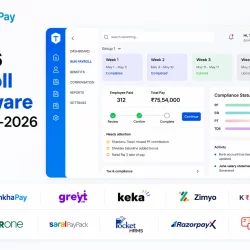
If you’re evaluating options, TankhaPay’s roundup of top payroll software in India compares 16 platforms specifically on compliance depth, which is the part of the software that actually matters for audit readiness, not just interface or price.
Considering a Payroll Risk Assessment?
If it’s been a while since your payroll process was reviewed end to end, a structured risk assessment is a faster way to find gaps than waiting for a statutory notice to find them for you. Request a Risk Assessment to see where your current process actually stands.
FAQs
How often should a business conduct a payroll audit?
Annually at the very least, or even on a quarterly basis for companies operating in several states, having fast-growing headcounts or regularly changing salaries.
What triggers a statutory payroll audit in India?
The common causes of stress in the form of audits include EPFO or ESIC audits, income tax audits, or employee complaints regarding the amount deducted by the company.
Which documents will be required during a payroll audit?
Payroll register, Bank payments, Attendance/leaves data, PF, ESI, TDS, PT returns confirmation, Increment in salary approval, and Employee master data.
Can payroll software prevent audit issues entirely?
Nothing can eliminate the necessity of review. Automation minimizes mistakes and helps keep track of records, but there will be no precision without proper set-up and verification of results.
What’s the difference between a payroll audit and a payroll review?
A payroll review is an informal procedure that implies periodic sampling of records. Payroll auditing is a more thorough process and sometimes a statutory one.