“Most of the companies who received EPFO notices, labor inspection fines, and ESIC arrear notices had been paying their employees, but they had not been managing their payrolls; they had been processing them.”
FuturexSolutions, Payroll Management System Guide 2026
The simple sentence above clearly demonstrates that the majority of payroll issues that occur in India are not because of any mathematical mistakes. These mistakes come from processing errors. The salary has been paid out. The PF has been deducted. However, the base of the salary is incorrect. Or the ESI limit has been exceeded, but there was no update done to the system.
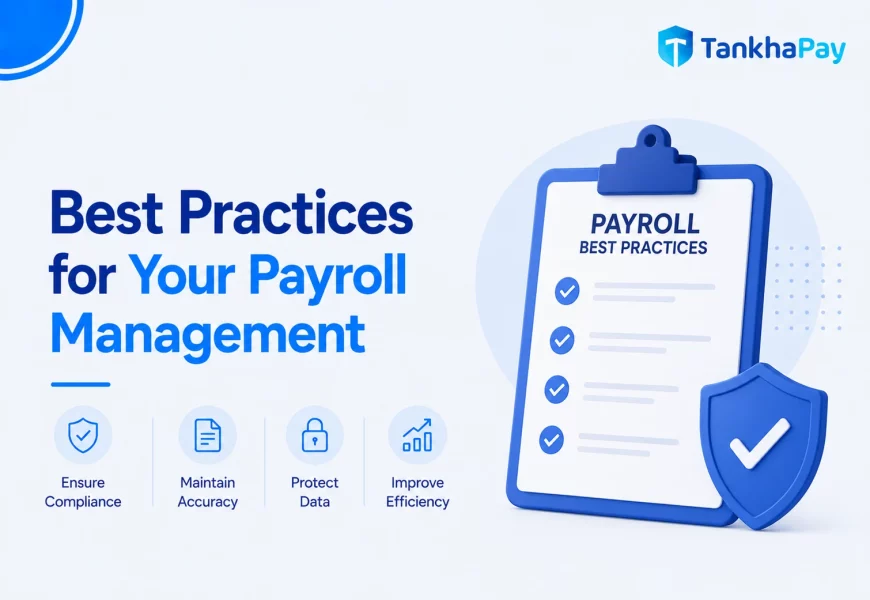
The payroll management practices for India in 2026 are not about working harder at closing payroll month-end. Rather, they are about creating a system that checks for the most common areas of failure before getting penalty notice letters.
Here are the ten practices that separate businesses that receive EPFO notices from the ones that don’t.
What Is Payroll Management and Why It Is Not the Same as Payroll Processing
Payroll management is the complete system of policies, processes, and controls that govern how a business calculates compensation, deducts statutory obligations, verifies accuracy, disburses salaries, and files government returns, all within legal deadlines.
Payroll processing is just the calculation and disbursement step.
A business that processes payroll every month but does not update salary structures for the Labour Codes, does not check the ESI wage threshold for employees who received increments, and does not verify the minimum wage applicable in each state is running payroll but not managing it. The difference only becomes visible when a notice arrives.
10 Best Practices for Your Payroll Management in India (2026)
1. Build a Payroll Calendar With Buffer Days, Not Deadline Days
For the practice of payroll management in India, the statutory dates are defined and cannot be changed: PF and ESI by the 15th, TDS by the 7th, PT by the last day of the month. Most of the payroll departments aim at this date. Better-managed departments aim at three to four days before this date.
If the payroll cycle ends on the 12th, it allows making corrections in case of mistakes before the date when one can make corrections on the EPFO website. If the payroll cycle ends on the 14th, it does not give any chance to correct mistakes.
What to build: Set your internal payroll cycle close date at least three business days before each statutory deadline. Treat that internal close date as the real deadline.
2. Enforce the 50% Basic Wage Rule in Every Salary Structure
The Code on Wages, effective from November 2025, mandates basic pay along with DA to constitute a minimum of 50% of CTC. It is important to note that this is not a recommendation; rather, it is a statutory provision which altered the PF contribution base of most Indian workers.
If you had your pay structure made prior to November 2025 and it has not been updated, then you have had the wrong amount of PF all these months from the day the code came into force. Interest and damages keep building up every month that this remains unresolved.
What to do: Review every active salary structure. Identify employees where basic+DA is below 50% of CTC. Restructure before the next cycle runs, not after the next audit.
3. Update TDS References Before Filing — Not After Getting a Notice
The Income Tax Act 2025 went live on April 1, 2026. TDS on salary moved from Section 192 to Section 392(1). Form 24Q is replaced by Form 138. Form 16 is replaced by Form 130.
Any payroll system generating old form numbers or old section references after April 2026 is filing non-compliant returns. Non-compliant returns trigger validation errors on the income tax portal and can result in penalties under Section 234E (₹200 per day until corrected).
What to verify: Contact your payroll software company or managed payroll firm and get written confirmation that returns prepared beginning in April 2026 will be prepared using Section 392(1) and form 138. Don’t assume the issue is resolved since the software company hasn’t warned you about it.
4. Run a Pre-Payroll Data Audit Every Single Month
“Payroll management goes far beyond crunching numbers; it brings together the people behind those numbers: your team, your business, and your reputation.” Playroll, Payroll Management Best Practices 2026
Best payroll management tip for every system: validate your inputs prior to processing.

Prior to each payroll close: new recruits with appropriate salary and tax information; exit processes done with calculation of LOP and generation of final settlement process initiated; new revised salaries implemented this month accounted for; tax declarations done by employees validated; incremented letters with new CTC structure validated.
Most payroll errors originate in this pre-payroll phase, not in the calculation engine. Garbage in, accurate calculation out, still produces the wrong number.
What to build: A formal pre-payroll sign-off checklist that your HR and finance leads both sign before the payroll engine runs. Not optional. Not skippable when it is a busy month-end.
5. Separate Your Compliance Calendar From Your Payroll Calendar
Payroll processing has its own timeline, while compliance filing has its own. These timelines align at certain points, but there is a difference in treatment of both.
Optimizing payroll processes from a systems perspective requires the following to be tracked separately: payroll cycle closure date, salary disbursement date, PF/ESI deposit cut-off, TDS deposit cut-off, TDS return filing quarter cut-off, PT return filing dates as per states, and LWF deposit cut-offs.
In case this is owned by one individual or group only on one calendar, things tend to slip in times of heavy work. If the compliance calendar is owned separately, either by the same group or as individuals, then accountability is easier.
What to build: Compliance calendar with individuals who own compliance obligations that are different from the payroll processing calendar.
6. Automate Statutory Threshold Tracking
Three thresholds change regularly and affect compliance applicability:
- ESI threshold: ₹21,000 gross/month — employees who cross this during a contribution period must remain covered until the period ends, then exit
- PF wage base: Must reflect 50% of CTC under the Labour Codes (no upper cap applies to the wage definition change)
- Minimum wages: State-specific, revised two to four times a year in most states
Any manual system that tracks these factors as your workforce expands creates the precise types of errors that cause EPFO notices. Make sure the payroll software or payroll service you choose actually automates all of these aspects, not just claims to do so in a demo.
7. Build a Post-Payroll Verification Checklist
Processing is not completed when salaries are paid out. Good practices in payroll systems include a payroll verification process post payroll, which most teams don’t do since the salary is already released.
Post-Processing of Month End: Total payroll expense = Finance-budgeted payroll expense; Total ECR = Total PF deducted; This month TDS deducted = Total TDS for financial year; ESI amount is consistent with eligible employees on current salary rates; PT deduction is correct as per the state law.
It will cost a correction and notification if a discrepancy is caught the day after disbursal. It will cost penalties, interest, and an accountant’s fees if it is caught six months later in an audit.
8. Track Minimum Wage Revisions by State Every Quarter
There is no specific national minimum wage that applies to every worker in India. The rate of minimum wage varies across states. While Maharashtra updates it twice a year, Karnataka does it irregularly, while Delhi updates it every quarter.
For a business with employees in four states, that means up to eight minimum wage revision events per year that need to be reflected in payroll before the effective date, not after.
Most payroll processes check minimum wages once a year during the salary revision cycle. This is insufficient. Any employee whose gross wages fall below the revised minimum wage at the current period’s effective date creates a violation, regardless of what they were paid previously.
Practical fix: Schedule a quarterly reminder on your calendar to confirm the minimum wage rates of each of the states in which you have employees.
9. Maintain a 90-Day Audit-Ready Record Stack
At any time, your payroll data should be ready to answer an EPFO or ESIC notice within 48 hours, by having the following documents organized:
- The PF challan and ECR for the past 90 days.
- ESI challans and contribution statements.
- TDS deposit challans and Form 138 returns.
- PT receipts for each of the states.
- Attendance sheets tallying with payroll calculations.
Neither paper file systems nor PDFs received through email in an HR inbox are ready for auditing. A proper record-keeping system that allows searchability is what constitutes the norm. The record may either be in your payroll system or in a compliance folder.
10. Run an Annual Compliance Audit — Even If You Outsource Payroll
Best practice for your payroll management means auditing your own payroll, whether you run it in-house or outsource it.
Outsourcing payroll does not transfer your statutory obligations. The EPFO, ESIC, and Income Tax Department issue notices to your company, not your vendor. An annual audit that cross-checks vendor filings against portal records, verifies ECR totals, and confirms TDS return filing under the correct forms is the minimum verification any principal employer should run.
Once a year. Every year. Regardless of how good your vendor is.
Regulatory Updates Every Best Practice Must Reflect
Must Read: 10 Payroll Best Practices for Indian SMEs (2026 Guide)
The Bottom Line
Best practices for payroll management in India for 2026 are very straightforward. They are very exact. The deadlines are well-defined. The limits are clear. The forms are clear. What doesn’t work is the system that must ensure compliance for all of them, every month, before the 7th, before the 15th, before the quarterly filing deadline.
If your current payroll setup cannot confirm that all ten practices above are running every month-end, TankhaPay’s managed payroll service handles every step as a built-in part of the service, not as a checklist your team must remember.