Quick Answer
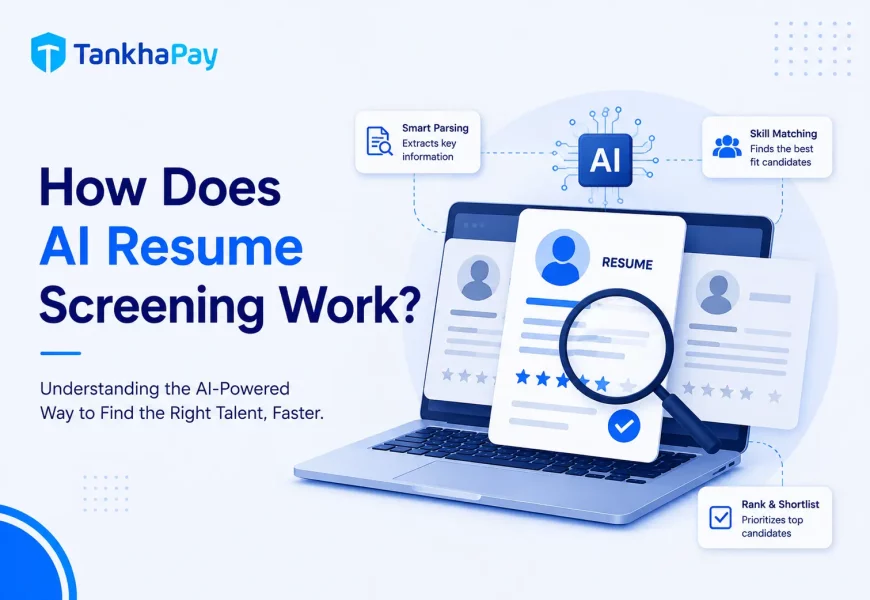
AI resume screening works in four steps: parsing resumes into structured data, matching skills and experience against the job description using semantic analysis (not just exact keywords), scoring and ranking candidates by fit, and in more advanced systems, evaluating career progression patterns to predict likely success in the role.
See this applied to high-volume Indian hiring: Explore TankhaPay’s AI Recruitment & Staffing Services.
What is AI Resume Screening?
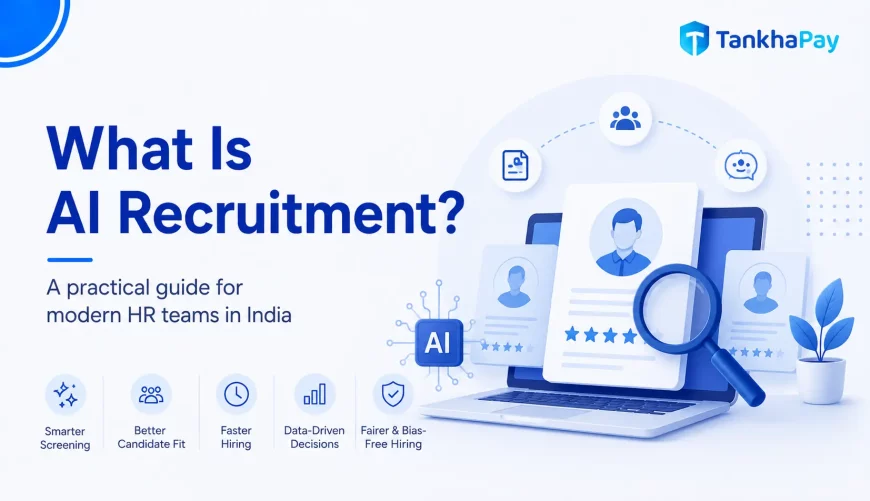
AI resume screening involves the employment of artificial intelligence technology in scanning, assessing, scoring, and ranking candidates’ resumes in relation to the demands of the position being applied for. This is a shift from the manual process of resume screening to an automated one.
It is different from previous applicant tracking systems, which discarded resumes if they did not include a specific keyword, because it uses natural language processing which understands that “Python” is related to software engineering regardless of the term “software engineer” appearing on the resume.
The result is a ranked shortlist with a score behind every candidate, built from the same criteria applied consistently across every application, not a recruiter’s read on each resume individually.
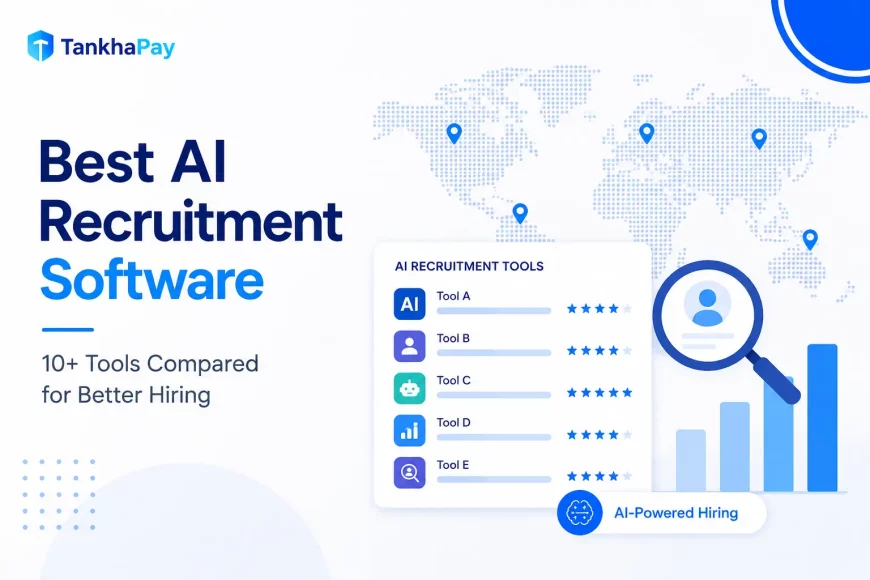
AI resume screening is one part of the broader AI recruitment process, which uses artificial intelligence across multiple stages of hiring. If you’re evaluating platforms that combine AI resume screening with sourcing, interview scheduling, candidate matching, and analytics, explore our guide to the Best AI Recruitment Software in India to compare leading solutions for businesses of all sizes.
4-Step AI Resume Screening Process
The process of AI resume screening can be divided into four phases, starting from the unstructured form of the resume till a ranked list.
- Resume parsing. Here, the resume is read by the system as an unstructured text and then transformed into a structured one, including work experience, skills, educational background, certificates, and contact details. The accuracy of parsing defines the limit of everything else.
- Semantic analysis and skills matching. The data is compared with the requirements of the job. Since the tool employs NLP, it understands that concepts are linked and can find different forms of skill names rather than look for an exact match, and this is what sets it apart from old-fashioned tools relying on keywords only.
- Scoring and ranking. The tool provides a score indicating how well the candidate fits the job. Candidates whose scores fall under a certain level get filtered out automatically while high-ranking candidates get selected for further evaluation by humans. Good tools always give reasons for their score, not just a number.
- Pattern recognition. Some predictive software takes even more sophisticated approach by assessing career progress – the type of organizations the person worked for, speed of promotion and whether this pattern matches the one of successful candidates who previously held the same position.

Manual Review vs. ATS Filters vs. AI Screening
These three approaches get used interchangeably, but they work very differently.
| Manual Review | ATS Keyword Filtering | AI Resume Screening | |
|---|---|---|---|
| Speed | Minutes to hours per resume | Seconds per resume | Seconds per resume |
| Evaluation depth | High in theory, shallow under real workload | Shallow, exact-match only | Deep, semantic and contextual |
| Consistency | Varies by reviewer and time of day | Rigid but consistent | Consistent and context-aware |
| Handles non-standard resumes | Yes, with effort | Poorly, rejects on phrasing alone | Yes, reads meaning across fields |
| Scales with volume | Scales with headcount only | Scales volume, not quality | Scales volume and depth together |
An ATS without AI is still a filing system with a workflow attached. AI resume screening usually sits on top of an ATS, adding the analysis and ranking layer the ATS alone can’t provide.
Why Recruiting Teams Are Adopting AI Resume Screening
Teams that switch to AI resume screening report gains that cluster into five categories.
Faster screening at volume. Processing hundreds of resumes happens in minutes instead of the hours manual review requires, which is the single biggest driver of faster time-to-hire. For the fuller picture on Indian hiring timelines, see TankhaPay’s guide to average time-to-hire in India.
Consistent evaluation criteria. Every resume is judged against the same standard, removing the variation that comes from different recruiters, different moods, and different times of day.
Better identification of transferable skills. Semantic matching surfaces candidates whose experience is a strong match even when their resume doesn’t use the exact job title or terminology in the posting.
Structured data recruiters can act on. Instead of a raw pile of resumes, teams get a ranked list with scores and reasoning attached, so recruiters spend time on the strongest candidates first.
Reduced administrative load. Less time on manual triage means more recruiter time for interviewing, candidate conversations, and closing offers.
Indian Hiring Contexts Where AI Screening Pays Off Most
Most content on this topic is written for white-collar, English-first hiring in the US and Europe. That framing skips over where AI resume screening matters most for Indian employers.
High-volume and blue-collar hiring. Jobs within manufacturing, retail and logistics in India will often yield hundreds of applications for just one job opening. Manually screening at such volumes will be precisely where recruitment takes the longest and where the benefits of AI resume screening pay off the biggest.
Regional language and document variation. Applications and resumes in India vary in both format and, many times, regional languages. Screening software created to accommodate a monolingual and uniform-format application will fail to identify candidates which a local system would find.
Document and eligibility verification. Blue-collar hiring in India carries compliance requirements white-collar hiring doesn’t, including PF and ESI eligibility and document verification. Screening built for the Indian market checks these from the sourcing stage rather than treating them as a separate step after someone is hired.
Handoff into payroll. Once a candidate is screened and selected, the same data used to evaluate them (documents, eligibility, compliance status) needs to flow into payroll setup without being re-entered. TankhaPay’s AI Recruitment & Staffing Services connect screening directly to payroll and compliance activation, which is not something a pure screening tool without a payroll platform behind it can offer.
Where AI Resume Screening Falls Short
A credible look at this technology has to include what it doesn’t do well.
Bias in training data. AI systems trained on historical hiring data can replicate whatever bias existed in that data. This is a documented risk, not a hypothetical one, and it’s why regular audits of screening outcomes matter more than the technology itself.
Data privacy under the DPDP Act. Compliance with the fundamental obligations related to notification, consent, and disclosure for candidate data set out in the Digital Personal Data Protection Act will be phased in over time, with full compliance due by May 2027, although the vast majority of recruitment and employment-related data processing is currently covered by the legitimate use exemption in the Act.
Over-reliance on automated scores. A score should be a starting point for recruiter review, not the final word. Treating an AI score as the decision itself, rather than an input to one, is the most common way these systems get misused.
Limited assessment of soft skills. AI is able to assess the skills and experience of an individual based on the records. However, it lacks the ability to assess how an individual fits into the organizational culture.
Buying Criteria: What Separates a Strong Tool From a Weak One
If you’re comparing AI resume screening tools, a few criteria separate the platforms worth paying for from basic automation.
Transparent, explainable scoring. Every ranked candidate should come with a reason attached to their score. If a vendor can’t show you why a candidate scored the way they did, the platform won’t hold up to a hiring manager’s questions or a bias audit.
Semantic depth, not just keyword matching. Ask if the system understands context within the entire resume or merely matches keywords. This is evident in the selection of qualified candidates that will be overlooked.
Compliance posture for the Indian market. Don’t ask only about the platform’s privacy policies but inquire about its approach to handling data in accordance with the DPDP Act.
Integration with your existing workflow. Screening results should flow into your ATS and, ideally, into onboarding and payroll setup, not create a separate system recruiters have to check independently.
Bias auditing. Ask for evidence that the vendor regularly audits screening outcomes for bias, not just a claim that the system is “fair by design”.
Frequently Asked Questions
Is AI resume screening the same as an ATS?
No. An ATS filters resumes using exact keyword matches and manages the hiring workflow. AI resume screening is a separate evaluation layer, usually sitting on top of an ATS, that reads resumes for meaning and produces a ranked, scored shortlist.
Will AI resume screening eventually replace recruiters?
No. It removes the repetitive work of reading hundreds of resumes by hand. Final hiring decisions and judgement calls on fit and potential still belong to human recruiters.
Is AI resume screening legal in India?
Yes. The provisions of the Digital Personal Data Protection Act will regulate the usage, storage, and disclosure of candidate data obtained from screening processes; however, full compliance with the regulations contained in the Act is yet to be enforced until May 2027. Other employment data processes, including recruitment, will fall under the scope of the legitimate use exception under the Act.
Can AI resume screening be biased?
Yes, if it’s fed with biased data or if it’s not audited at all. That’s the reality we need to pay attention to, rather than assume a one-time configuration will suffice forever.
Does AI resume screening work for blue-collar and high-volume roles?
Yes, it can, and that’s where it works best, because that’s when manual screening fails fastest.
Bottom Line
The process of screening through AI involves changing an indecipherable bunch of resumes into an organized shortlist by parsing, semantic matching, and scoring resumes with some systems also using pattern matching on career history.
For Indian companies hiring at volume, the real gains come from a system that understands Indian compliance requirements and connects screening results directly into payroll once a candidate is hired, not just a faster way to sort resumes.
TankhaPay, developed by Akal Information Systems (est. 2000, CMMI Level 5, ISO 27001), is India’s only payroll platform combining payroll software, managed payroll outsourcing, domestic and international EOR, NATS apprenticeship management, and global talent mobility under one platform. Trusted by 1,000+ enterprise clients, including Bank of Baroda and UIDAI.