TL:DR
- In India, most organizations follow a process of approximately 35 to 45 days from the time that a requisition is authorized till the offer is accepted; however, no research has been conducted in the country to record the time frame for all industries.
- Retail and e-commerce fill fastest (14–20 days); BFSI and healthcare run closer to 45–49 days; senior AI/ML and cybersecurity roles stretch to 50–70 days. But for international companies hiring in India without a local entity, the recruitment clock is only half the story.
- A second clock, the time it takes to legally employ the person you’ve found, can add weeks or months unless you’re working through an Employer of Record.
- The two biggest levers for a faster recruitment cycle: fixing the 5–10 day approval delay before sourcing even starts, and replacing manual resume screening with structured, AI-assisted evaluation.
If you have ever asked, “Is our hiring process too slow?” the honest answer starts with a number: most companies in India take 35 to 45 days to fill a role, counting from the day a requisition is approved to the day a candidate accepts an offer. That is the national average. Whether your own hiring cycle is a problem depends on your industry, the seniority of the role, and where in that 35-to-45-day window the delays are actually happening.
This article breaks down what “normal” looks like across Indian industries in 2026, where the time actually goes, and what a shorter, more disciplined hiring process looks like in practice.
What is the Average Time-to-Hire in India in 2026?
Time-to-hire measures the days between an approved requisition and an accepted offer. It is different from time-to-fill, which starts earlier, at the point a role is first identified as open, and includes internal approval delays before sourcing even begins.
Across India, the national average time-to-hire sits at 35 to 45 days. That figure moves a lot once you break it down by sector and seniority:
| Industry | Typical Time to Hire |
|---|---|
| Retail and e-commerce | 14–20 days |
| Manufacturing | 25–44 days |
| IT and software | 35–44 days |
| BFSI (banking, financial services, insurance) | About 45 days |
| Healthcare and pharma | Around 49 days |
| Senior AI/ML or cybersecurity roles | 50–70 days |
| Executive and leadership roles | 120+ days |
India doesn’t have a single independent, standard national study that analyzes time to hire by sector and level as SHRM does for America. These ranges are based on consistent findings reported by recruiters and industry experts, and not on an independent benchmark published in a peer-reviewed journal. They should be taken as a guideline, and when using them as benchmarks for your hiring process, give your past experience higher weightage than the numbers in this guide.
Both seniority and industry are of equal importance.
- Jobs with high volumes and entry-level positions take only two or three weeks to fill up.
- Mid-level jobs take five to seven weeks to fill up.
- Senior and specialized positions could take two to three months depending on the number of interviews and pay discussions.
Two factors outside the table above are worth naming directly, because they are becoming bigger drivers of hiring delays than most companies plan for.
Competition from Global Capability Centers. Google, Microsoft, Amazon, and dozens of other multinationals have built large in-house teams in India, and they are hiring aggressively from the same talent pool as everyone else. For mid-size and growing companies, this means your open roles are competing directly against GCC offers, which typically come with stronger compensation and brand recognition. This pushes out both your time-to-hire and the salary it takes to close a candidate.
Location. Cities like Bengaluru, Hyderabad, Pune, and Chennai have the strongest talent pools in the country, implying quicker recruitment but also the greatest competition for the same set of talent. Tier-2 cities might offer less competition along with a reduced cost but would need a longer recruitment process due to the smaller local talent pool.
Employer confidence in India is high right now. Naukri’s JobSpeak index recorded 8% growth in white-collar hiring in FY26, the strongest year in three. But that demand hasn’t made hiring easier.
ManpowerGroup’s 2026 Talent Shortage Survey found that 82% of Indian employers struggle to fill roles, well above the 72% global average, with AI, digital, and data skills identified as the single biggest constraint.
Busy hiring markets and long hiring cycles are happening at the same time, and one is making the other worse: the longer a role stays open, the more likely a qualified candidate is to take a competing offer before you can close it.
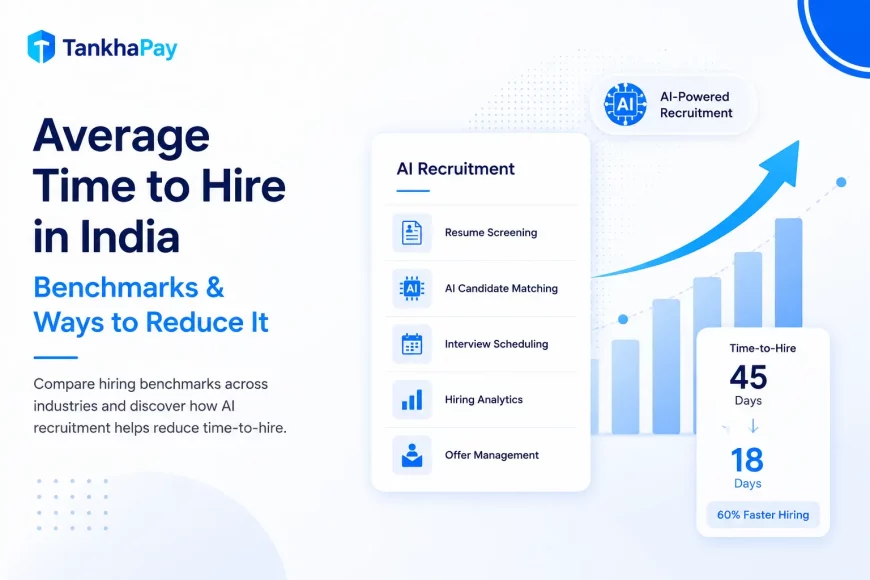
If your hiring cycle is longer than the industry average, AI-powered recruitment can significantly reduce sourcing and screening time while maintaining candidate quality.
Where the Time Actually Goes
A 35-to-45-day hiring cycle rarely fails because every step is slow. It fails because a handful of specific stages each eat several days that don’t need to be that long.
- Internal approvals (5-10 days). For any sourcing to begin, requisition normally awaits budget approval. This lag occurs prior to reaching out to any candidates, and it is mostly unnecessary if done right.
- Sourcing and application volume (1-3 weeks). Most Indian HR teams post across three to five job boards and then wait for enough relevant applications to build a shortlist. For senior roles, where the strongest candidates are usually not actively job-hunting, this wait often produces very few qualified applicants regardless of how long it runs.
- Manual resume screening (1-2 weeks). Reading through hundreds of resumes by hand is slow and inconsistent. Two recruiters screening the same stack of resumes will often shortlist different candidates, not because one is wrong, but because manual screening doesn’t apply criteria the same way every time.
- Interview coordination (1-3 weeks). It takes additional days for every round to synchronize the schedules of a candidate, the hiring manager, and two or three panel members of the interview process, even more so if there are interviews in multiple locations and departments.
- Offer and negotiation (3-7 days). The process of negotiating on the salary package, perks, and start date usually takes less time than any previous step, but it shouldn’t be underestimated.
- Notice periods (30-90 days). This is India-specific and easy to underestimate. Notice periods for freshers typically run 30 days. For mid-level and senior roles, 60 to 90 days is standard, and roughly one in three IT roles carries a 90-day notice period. During that window, a candidate keeps receiving competing offers, which is a major reason offer acceptance rates for senior roles hired through traditional channels sit at only 55 to 65% in India, compared to a US average of 74%.
Add the first five stages together and an efficient process can move in three to five weeks. The notice period is what pushes the realistic end-to-end timeline for mid-to-senior hires closer to two to four months, which is why it deserves separate planning rather than getting lumped in with “the hiring process”.
Most hiring delays occur during the sourcing of the right candidates, screening of their resumes, and coordinating interviews. Recruitment by AI technology is a way to automate all these processes and give recruiters time to deal only with competent candidates.
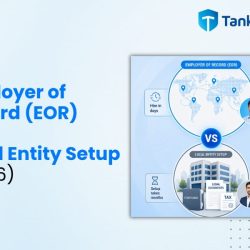
Second Clock: Recruitment Time vs. Employment Time
Every benchmark in this article, and every one you’ll find elsewhere, measures the same thing: the time between opening a requisition and getting a candidate to say yes. For a company that already has an Indian entity, that’s the whole story. For an international company that doesn’t, it’s only half of it.
- Now that the candidate has accepted, you also need to hire them in a compliant manner; that is, you need to register them on payroll, PF and ESI; get professional tax registration (which is state-specific, whereas PF and ESI are centrally registered); make a compliant hiring offer; and set up a bank account to pay Indian payroll.
- The second clock is going to take several more weeks to months, on top of the recruitment cycle of 35-45 days you have already taken, provided that you are planning to establish your own entity.
What the New Labour Codes Mean for Your Hiring Timeline
The four Labour Codes of India, which were enacted on 21 November 2025, include Code on Wages, Industrial Relations Code, Code on Social Security, and the Code on Occupational Safety, Health and Working Conditions. The new Codes have integrated 29 labour laws into four Labour Codes of India.
There are two major modifications which specifically concern the recruitment process and are not limited to HR administration only: appointment letters must be issued for all employees and not only for certain categories, and fixed-term employment entitles one to gratuity on a proportionate basis within a year from the previously required five years.
As of mid-2026, central rules under the codes are still being finalized and state-level rules are rolling out unevenly; some states have notified final rules, and others are still in draft. This doesn’t change your recruitment timeline, but it does change what your offer letters and appointment documentation need to include, and it’s worth building into your hiring process checklist now rather than after the rules fully settle.
How to Actually Reduce Time-to-Hire
Reducing time-to-hire is not about rushing decisions or lowering your evaluation standards. It’s about removing the delays that don’t add any value to the decision itself.
Fix the approval bottleneck first. If a requisition takes a week just to be approved before sourcing starts, it is one of the most economical delays to get rid of. Pre-approval of manpower for recurring positions eliminates this issue altogether.
Build a pipeline before the role opens. Counting on candidates coming in after you post a job opening is certainly not one of the quickest methods to attract candidates, especially for highly specialized and high-level positions where those who fit the bill tend not to apply proactively.
Apply consistent, structured screening. Even if you use some kind of application for this task, what really matters is that all candidates should be screened using the same criteria and in the same sequence, and therefore, their chances shouldn’t depend on the particular recruiter who will screen their resume.
Reduce the number of scheduling handoffs. Every email correspondence that tries to agree on a time suitable for four people takes one or two days. Systematic scheduling or assigning a person to this task reduces all this trouble.
Don’t let entity setup be the timeline nobody accounted for. If you’re hiring an employee in India for the first time and do not have an existing business entity in the country, then this, not the hiring process itself, usually ends up deciding your starting point.
Track offer acceptance and source-of-hire every month, not just annually. High-volume recruiting companies tend to improve their hiring process by pairing skilled recruiters with AI-based recruiting and efficient hiring processes, rather than solving speed and accuracy as separate issues.
For a closer look at how a modern hiring process is typically structured end to end, TankhaPay’s guide to the recruitment process and the AI hiring process walk through each stage in detail.
Want to Reduce Your Hiring Time?
If your organization encounters more than one of the above bottlenecks, then a quicker hiring process will most likely be achieved by resolving multiple issues at once rather than through a single quick fix. This is done by:
- Quicker candidate sourcing without the need to wait for weeks for the number of applications to grow.
- Resume screening using AI-based software, which treats all candidates the same way.
- Improved candidate matching resulting in smaller shortlists.
- Less work for recruitment specialists when performing administrative duties.
- Faster interview scheduling, with less back-and-forth communication via email.
- Higher hiring quality due to structured evaluation.
None of this requires cutting corners on how carefully you evaluate candidates. It requires removing the delays that were never part of the evaluation to begin with.
Frequently Asked Questions
What is a good time-to-hire benchmark to aim for?
For mid-level roles, under 25 days is strong performance in most Indian sectors. For senior roles, under 30 days is competitive. Retail and e-commerce roles should aim for under 14 days given how fast that sector typically moves.
Does AI recruitment actually reduce notice period delays?
Not really, and any such statement needs to be taken with caution. Notice periods are the duty of the candidate to their present employer, and there is nothing that the recruitment process can do to cut down on that time. All that an AI-based recruitment process can do is cut down the time leading up to the offer of employment.
How is time-to-hire different from time-to-fill?
The time-to-hire period runs from the approval of a requisition to the acceptance of an offer. The time-to-fill period begins much sooner, starting the moment the need for the position is identified until the hiring of the candidate, including the delay in approval before beginning the search process.
Does using an Employer of Record reduce time-to-hire in India?
An EOR does not help in faster recruitment; however, the process of recruiting, screening, and interviewing the candidate takes the same period of time. It is the second clock which goes away in case there is no Indian entity because with an EOR, weeks or months spent on company incorporation and registration become history.
Why do offer acceptance rates matter for time-to-hire?
If the offer has been refused, the organization will return to the process of sourcing, essentially resetting the clock. The traditional recruitment in India has around 55-65% acceptance rates for senior positions; such well-matched recruitment processes are expected to be more efficient since the candidate would be more suitable for the job at that moment rather than being just one left after a tedious process.
How are India’s new Labour Codes affecting the hiring process in 2026?
Labour codes became effective from 21 November 2025, and there have been two important modifications regarding recruitment. These include that appointment letters must be issued to each and every employee and the fixed-term employees will get gratuity on a pro-rata basis after serving for one year rather than five years. Rules to implement these codes at central and state levels are being finalized up till 2026.
Average time-to-hire in your industry can be a starting point, but it’s not the end of the problem. The key question you have to ask yourself is whether your own hiring process wastes any unnecessary days: the approval stage, candidate sourcing, interview scheduling, the unexpected notification period, or even the setup of a legal entity you weren’t planning on. Most organizations who managed to cut their hiring cycle managed to do it by addressing 2 or 3 of these aspects at a time.
If you’re ready to see where your own hiring process is losing time, TankhaPay’s AI Recruitment & Staffing Services can walk through your current hiring timeline and show you exactly where a structured, AI-assisted process and, if you need it, a compliant employment structure already in place would close the gap.