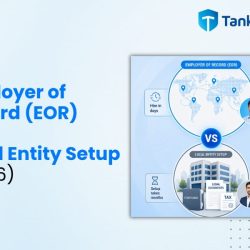
A staffing company provides clinical or support staff and allows you to remain the main employer through the Contract Labour (Regulation and Abolition) Act 1970. According to Sections 20 & 21, if there is any default by the staffing company in terms of payment of PF, ESI or Minimum Wages, it will be your company that has to make up for this shortfall and not the staffing company. However, an Employer of Record company works differently – in India, TankhaPay becomes the legal employer while the healthcare provider is not the main employer.
The CLRA Misconception Most Healthcare Operators Have — and What It Actually Costs
When a staffing agency defaults on PF contributions for nurses it supplied to your hospital, the hospital pays the outstanding amount under Section 20 of the Contract Labour (Regulation and Abolition) Act 1970. Under Section 21, that liability is joint and several. The hospital pays regardless of whether the agency is solvent. The indemnity clause in a staffing agency contract does not change this. Section 14B of the EPF and Miscellaneous Provisions Act 1952 adds damages of 5 to 25 % of arrears on top of the outstanding contributions.
Most hospitals using staffing agencies believe the opposite: that the agency bears the compliance burden because the agency is the employer. Under CLRA 1970, the principal employer is the establishment in whose premises or on whose behalf contract labourers perform work. For a hospital whose agency-supplied nurses work in its wards, the hospital is the principal employer. For a pharma company whose contract lab technicians work in its facility, the pharma company is the principal employer. For a CRO whose agency-sourced trial monitors work on its protocols, the CRO is the principal employer. These are statutory definitions. No commercial contract between the hospital and the agency reclassifies them.
Is there any way to shield the hospital from liability under CLRA when a staffing agency is used? No. The Section 20 and Section 21 liability applies depending on the nature of the work arrangement rather than the commercial one. In case an inspector discovers that there have been ESI contributions made by the hospital for nurses from a staffing agency, the hospital makes the contribution along with the penalty stipulated under the ESI Act 1948, Section 85 which includes jail term of up to two years and/or fine of up to INR 10,000.
Under the Clinical Establishments Act 2010, Hospitals Are Directly Liable for Contract Staff Competence — Regardless of Who Employed Them
Under the Clinical Establishments (Registration and Regulation) Act 2010, a hospital or nursing home is legally responsible for ensuring that every clinical staff member working within its premises holds active registration with the relevant professional council. This obligation does not pass to the staffing agency that supplied those clinical staff. It sits with the hospital regardless of the employment arrangement.
The majority of the recruitment firms in India do not follow a process of checking the live registration with the National Medical Commission, the State Nursing Council, or the Pharmacy Act 1948 while employing the clinical staff. This is how it is structured, and it is not intended as an indictment of the recruitment agencies. The purpose of a recruitment firm is to provide labour. Checking whether there is live registration with the statutory bodies is not what recruitment firms are structured to do.
In the case of an error caused by a contract nurse from the staffing agency, the liability flows under the Clinical Establishments Act 2010 concerning the competence of staff, the Consumer Protection Act 2019 regarding deficiency of medical services and, if proved, gross negligence as per the Indian Penal Code. In all three cases, the hospital is the principal stakeholder. No contract from the staffing agency offers any protection for any of these liabilities. TankhaPay’s EOR structure, with the prior validation and documentation of the NMC and state council verification of nurses, makes this process possible.
NABH Accreditation and the Staffing Agency Documentation Gap
An NABH audit report for non-compliance of a nurse, who has not maintained her registration with the State Nursing Council, is made against the hospital rather than the recruitment agency that has placed her in the hospital. According to NABH accreditation guidelines, it is required for the hospital to show at each annual or triennial review process that all its clinical staff have valid registrations with their respective professional associations. If nurses are provided by agencies which do not follow up on this, then NABH documents will be based on unverified information.
According to the Clinical Establishment Act 2010, the hospital would be the responsible establishment, and according to NABH Standards, the hospital would be the assessment entity. Under both regimes, the contract provided by the staffing agency offers no protection at all. The TankhaPay platform incorporates State Nursing Council Verification for every clinical onboarding process as a prerequisite before an employment contract can be offered.
How CLRA Liability Plays Out Differently for Each Healthcare Sub-Vertical
The principle of employer liability under the CLRA 1970 is universal in nature. The distinction is in the additional layer of regulation that magnifies it in hospitals, pharmaceutical firms, and CROs, along with the particular cost involved when there is a discrepancy found during an audit.
Hospitals and Nursing Homes: The ESI, PF, and Patient Safety Chain
Is the hospital liable if a staffing agency fails to pay PF for nurses in India? Yes — and the liability runs through two penalty structures that stack on each other. Under CLRA Section 21 combined with ESI Act 1948 Section 85, the hospital is liable for outstanding ESI contributions for agency-supplied nurses plus a penalty of imprisonment up to two years, a fine up to INR 10,000, or both. Under CLRA Section 21 combined with EPF Act 1952 Section 14B, the hospital faces PF arrears plus damages of between 5 and 25 % of those arrears. A hospital that has used agency-supplied nursing staff for several years without auditing EPFO registration could face a Section 14B assessment materially larger than the original arrears it covers.
Hospitals empanelled under the Pradhan Mantri Jan Arogya Yojana carry a further consequence most compliance reviews miss. The National Health Authority conducts periodic empanelment audits of PM-JAY hospitals. CLRA compliance failures, non-registration under Section 7, and outstanding PF or ESI liabilities that appear in NHA audit findings and affect empanelment status. For a hospital where PM-JAY patients represent a significant share of admissions, that is a business continuity issue.
Pharmaceutical Companies: PLI Risk and Production Staff Liability
In case of pharmaceutical manufacturing units, the liability of the principal employer as per CLRA 1970 is concurrent with the liability of the Factory Act 1948. The non-payment of statutory contributions by the staffing firm for laborers engaged at the laboratory/production units makes the firm liable for both acts.
For clinical affairs and regulatory affairs staff involved in CDSCO submissions, credential verification gaps in staffing agency placements create a separate exposure. If CDSCO questions the qualifications of clinical affairs staff who contributed to a regulatory submission, the submission itself can be challenged. For a detailed walkthrough of how NMC and professional council verification applies to clinical roles in India, see how to hire doctors and nurses in India without setting up your legal entity.
PLI Scheme Disbursement Risk: The CLRA Compliance Exposure Most Pharma HR Teams Have Not Mapped
If a pharma company violates CLRA at PLI-eligible factories, then it will lose the PLI disbursement. The Department of Pharmaceuticals evaluates the PLI disbursements for bulk drug manufacturing, medical devices, and API manufacturing at periodic intervals. The violation of CLRA in eligible factories, PF liabilities under section 14B of the EPF Act, ESI liabilities under Section 85 of the ESI Act, and lack of principal employer registration under CLRA Section 7 can be highlighted in this process.
The majority of pharma HR teams have not drawn this link between the two. If TankhaPay is an Employer of Record at PLI-eligible factory, then the pharma company enjoys no principal employer status under CLRA 1970 and has no CLRA-related PLI disbursement liability.
Clinical Research Organisations: ICH-GCP Documentation, FDA, and CDSCO Principal Employer Exposure
The question of the principal employer’s CRO liability per CLRA 1970 regulations and ICH-GCP documentation compliance is connected in such a way that audit compliance risks arise on top of the labour compliance risks. According to the ICH-GCP regulation framework, which is implemented by CDSCO as the standard for conducting clinical trials in India, the employment documentation for the personnel involved in the clinical trials should be available, up-to-date and auditable upon inspections. In case the monitors, data managers and biostatisticians have been hired from staffing firms, the documentation passes through the agency. The failure of an agency to provide the relevant employment documentation may result in incomplete documentation of the clinical trial.
If any clinical trial is being performed that requires submission to US FDA, EMA, or PMDA, then GCP of ICH also requires proof of qualification and training of personnel who will be participating in the study. The administrative process followed by any agency will generally not have any mechanism that can enable quick access to documents in the case of a regulatory inspection. If TankhaPay is acting as the Employer of Record, all the documents related to employment of clinical trial staff are centrally stored within the entity of TankhaPay.
EOR vs Staffing Agency: The Complete Liability Comparison
Under Indian law, EOR transfers the status of an employer legally. On the other hand, a staffing agency does not do so. The healthcare company continues to be the main employer according to CLRA 1970, despite the agency relationship.
A staffing agency enters into a contract for the supply of workers. CLRA 1970 determines who the principal employer is based on the work relationship, not the commercial agreement. Sections 20 and 21 liability does not respond to indemnity clauses. When the agency defaults, the statute determines who pays.
When TankhaPay is engaged as an India Employer of Record, TankhaPay becomes the legal employer of the clinical or support staff. TankhaPay’s entity holds the EPFO registration, the ESIC registration, the employment contracts, and the professional licence verification records. The healthcare operator is not a party to the employment relationship under CLRA 1970. Principal employer status does not attach to them.
For a complete overview of EOR services for healthcare operators, see EOR for healthcare companies in India.
The table below maps 12 liability dimensions across both models. For each dimension, it identifies who bears the risk and under which statutory provision. Run this against your current staffing agency arrangement before your next labour inspection, NABH audit, or PLI disbursement review.
EOR vs Staffing Agency: Liability Comparison for Healthcare Operators in India
| Liability Dimension | Staffing Agency Model | EOR Model (TankhaPay) |
| Principal employer status under CLRA 1970 | Healthcare operator is the principal employer — CLRA Sections 20-21 apply in full | TankhaPay is the legal employer — healthcare operator holds no principal employer status |
| PF contribution liability if agency defaults | Hospital/pharma company liable for arrears plus damages up to 25% under EPF Act Section 14B via CLRA Section 21 | TankhaPay holds EPFO registration and bears full PF obligation — zero exposure for healthcare operator |
| ESI contribution liability if agency defaults | Healthcare operator liable for outstanding ESI contributions plus penalties under ESI Act Section 85 (imprisonment up to 2 years, fine up to INR 10,000) via CLRA Section 21 | TankhaPay holds ESIC registration and bears full ESI obligation — zero exposure for healthcare operator |
| Minimum wage liability if agency defaults | Healthcare operator pays the wage shortfall to workers under CLRA Section 20 | TankhaPay is the paying employer — Minimum Wages Act 1948 obligation sits entirely with TankhaPay |
| Professional licence verification (NMC, State Nursing Council, Pharmacy Act) | Not performed by staffing agencies as a standard step — gap creates Clinical Establishments Act 2010 exposure for hospital | TankhaPay conducts NMC, State Nursing Council, and Pharmacy Act verification before contract issue as a mandatory onboarding step |
| Clinical Establishments Act 2010 staff competence obligation | Hospital remains responsible for staff competence regardless of staffing agency arrangement | NMC and council verification documentation maintained by TankhaPay satisfies establishment’s audit trail requirement |
| Patient safety incident liability exposure | Hospital exposed under Clinical Establishments Act 2010, Consumer Protection Act 2019, and potentially Indian Penal Code | Verification documentation provides defensible compliance record — clinical competence confirmed before employment commences |
| Labour inspection exposure | Outstanding PF, ESI, or wage liabilities surface under CLRA Sections 20-21 during labour department inspection | No CLRA principal employer liability for healthcare operator to surface during inspection |
| CLRA Section 7 principal employer registration | Healthcare operator must register with state labour authority if using 20 or more contract workers — most have not done this | No Section 7 registration required for healthcare operator — TankhaPay holds all employer-of-record registrations |
| PLI audit risk for pharma companies | CLRA violations at PLI-eligible facilities can affect disbursement eligibility under Department of Pharmaceuticals review | Zero CLRA principal employer liability means no CLRA-based PLI audit exposure |
| ICH-GCP documentation for CROs | Employment documentation runs through agency — inconsistent availability during CDSCO, FDA, and international site inspections | Employment documentation maintained by TankhaPay — consistently available for regulatory audit |
| Exit settlement liability under Payment of Wages Act 1936 | Healthcare operator liable for any exit settlement default by the agency under CLRA Section 20 | TankhaPay manages all exit settlements directly — no exposure for healthcare operator |
When a Staffing Agency Is Acceptable and When It Creates Unmanageable Risk
Staffing agencies are appropriate for housekeeping, canteen, and security staff. Non-clinical support roles where patient contact is indirect, where no professional registration under the Clinical Establishments Act 2010 is required for the specific function, and where the NABH competence obligation does not apply. These roles do not require NMC registration, State Nursing Council registration, or Pharmacy Act 1948 licensing.
However, even for such non-clinical positions, the liability of principal employers on PF, ESI, and minimum wages according to CLRA 1970 stays the same. Staffing agency for non-clinical support services is a good option only if the healthcare provider independently audits whether the staffing agency adheres to the statutes at regular intervals and not when the provider thinks it is the responsibility of the staffing agency.
The issue is much easier for the clinical position because if the position demands professional registration with NMC Act 2019, the Indian Nursing Council Act 1947, the Pharmacy Act 1948, or any qualifications required by the National Accreditation Board for Laboratories and the staffing agency does not have the mechanism to verify the registration of such professionals in their placement process, then there will be an unmanageable liability for the agency under CLRA 1970 and the Clinical Establishments Act 2010. The verification cannot be done via periodic auditing; there should be an employment model which facilitates it right from Day 1.
CLRA Section 7 Registration: Why Most Hospitals Have Never Done It and What That Means
Under Section 7 of the Contract Labour (Regulation and Abolition) Act 1970, any establishment that employs or has employed 20 or more contract workers on any day in the preceding twelve months must register as a principal employer with the relevant state labour authority, before those contract workers begin work. Most hospitals, pharma companies, and CROs using staffing agencies at any significant scale have never done this.
Under CLRA Section 30, operating without that registration is a criminal offence: imprisonment for up to three months, a fine of up to INR 1,000 per day of default, or both. A labour inspector can issue a Section 30 notice independently of any compliance finding against the staffing agency. A hospital with a fully compliant agency can still face a Section 30 penalty for not registering as a principal employer under Section 7.
Section 7 registration creates three standing obligations. Under CLRA Rule 25, the principal employer must display the contractor’s licence details at the worksite. Under CLRA Form XII, the principal employer must maintain a register of all contractors at the establishment. Under CLRA Rule 82, the principal employer must file annual returns with the state labour authority. Most healthcare operators using staffing agencies meet none of these requirements because they do not know registration under Section 7 creates them.
Where TankhaPay acts as the Employer of Record, the healthcare provider will not be considered the main employer as per CLRA 1970. There will be no requirement to have Section 7 registration. The display of information on Rule 25 will not be necessary. Form XII register will not be applicable. Rule 82 Annual Return will not be applicable.
Moving Clinical Staff from Staffing Agency to EOR: How the Transition Works
EOR transformation from staffing agency begins with a position audit; the process involves identification of positions that go through the agency system, analysis of contracts for notice periods and termination clauses, and finally validation of the period of advance notice needed to terminate the arrangement. Commercial contracts for staffing agency run on 30-day notice periods. EOR conversion process can run alongside these notice periods or coincide with them depending on the terms of the contract. Click here to learn about EOR process in India.
Onboarding of the clinical or support staff happens directly with TankhaPay as employees since the very day of transition. Compliances like EPFO registration and ESIC enrollment, including setting up of TDS, begin right from the first day of employment of EOR’s. There is no gap in PF and ESI during transition period.
Clinical staff whose professional registration with the NMC, a State Nursing Council, or a State Pharmacy Council has lapsed during the agency arrangement must be verified and current before TankhaPay issues employment contracts. This is the liability-clearing step the staffing agency arrangement was never performing. Under the Clinical Establishments Act 2010, that verification is the hospital’s obligation. The EOR transition is when it gets done, documented, and placed on file for audit.
Employees in non-clinical areas such as medical coding professionals, health technology operation employees, RCM analysts, among others, are transitioned to EOR employment in 2 to 3 days. Employees in clinical areas who require verification from professional council take 3 to 7 days. It is based on the verification process of the professional council rather than the internal processes of TankhaPay. Complete control of operations remains with the hospital or pharmaceutical firm. There is no change in terms of supervision, shifts, and reporting systems.
CLRA 1970 Principal Employer Liability Reference Table
CLRA 1970 Principal Employer Liability: What Healthcare Operators Are Responsible For Under Staffing Agency vs EOR Arrangements
| Obligation | Under CLRA 1970 | With Staffing Agency | With EOR (TankhaPay) |
| Wage payment if contractor defaults | Section 20: principal employer liable for unpaid wages in full | Hospital/pharma company liable for full wage payment to all contract workers | TankhaPay is the paying employer — healthcare operator not exposed under Section 20 |
| ESI contribution liability | ESI Act 1948 Section 85 plus CLRA Section 21: principal employer bears joint liability | Healthcare operator liable for outstanding ESI contributions plus Section 85 penalties | TankhaPay holds ESIC registration and pays contributions — zero ESI liability for healthcare operator |
| PF contribution liability | EPF Act 1952 Section 14B plus CLRA Section 21: damages of 5-25% of arrears in addition to contributions | Healthcare operator liable for PF arrears plus Section 14B damages | TankhaPay holds EPFO registration and pays contributions — no EPF exposure for healthcare operator |
| Minimum wage compliance | Minimum Wages Act 1948 plus CLRA Section 21 | Healthcare operator liable for the wage shortfall between what agency paid and the minimum wage floor | TankhaPay manages all payroll including minimum wage compliance per state schedule |
| Principal employer registration | CLRA Section 7: registration required before work begins if 20 or more contract workers employed | Most healthcare operators have not registered — Section 30 criminal penalty exposure per day of default | No Section 7 registration required for healthcare operator — TankhaPay holds all registrations |
| Display of notice board at workplace | CLRA Rule 25: principal employer must display contractor’s licence details at worksite | Healthcare operator must display agency’s CLRA licence at every worksite — most do not | No display obligation for healthcare operator |
| Maintenance of register of contractors | CLRA Form XII: principal employer must maintain register of all contractors at the establishment | Healthcare operator must maintain Form XII for all staffing agency engagements — most do not | No Form XII obligation for healthcare operator |
| Clinical staff professional registration | Clinical Establishments Act 2010: establishment responsible for staff competence and registration | The hospital remains responsible for competence irrespective of staffing agency provision arrangement | TankhaPay conducts NMC, State Nursing Council, and Pharmacy Act verification before contract issue as a mandatory step |
| Patient safety incident liability | Consumer Protection Act 2019 and Clinical Establishments Act 2010 | Hospital is the primary exposed party in any deficiency of medical service claim | Documented verification before employment provides defensible compliance trail |
| Annual return filing obligations | CLRA Rule 82: principal employer must file annual returns with state labour authority | Healthcare operator must file annual returns for contract labour | No annual return obligation under CLRA for healthcare operator |
The Inter-State Migrant Workmen Act 1979: The Healthcare Compliance Obligation Nobody Discusses
The Inter-State Migrant Workmen (Regulation of Employment and Conditions of Service) Act 1979 applies to any establishment employing five or more workers who have migrated from one Indian state to another for employment. For most hospitals in Maharashtra, Karnataka, and Delhi NCR, this is not a marginal scenario. Maharashtra hospitals employ nursing staff from Kerala, Goa, and Puducherry. Karnataka hospitals draw from Tamil Nadu and Andhra Pradesh. Delhi NCR hospitals employ nurses from Bihar, Uttar Pradesh, Jharkhand, and Himachal Pradesh. When those nurses are supplied through a staffing agency, the ISMW Act obligations sit with the hospital as principal employer under CLRA 1970.
Under the ISMW Act 1979, the hospital’s obligations include registration with the state labour authority, maintenance of a Form XI register of all interstate migrant workers, payment of a displacement allowance equal to 50 % of monthly wages at the point of recruitment, and provision of annual return journey fare from the employment location to the worker’s home state. Most hospitals employing agency-supplied interstate migrant nurses are meeting none of these requirements and are unaware the obligation sits with them.
In the case that TankhaPay becomes the Employer of Record, then TankhaPay will be responsible for registration under the ISMW Act, holding Form XI registers, payment of the displacement allowance, and return fare arrangements. The ISMW Act liability of the hospital is zero.
What Does EOR Cost Compared to a Staffing Agency for Healthcare Operators in India?
Staffing agencies charge 8 to 15 % of a placed worker’s gross salary as their service margin. TankhaPay charges a flat monthly fee per employee. For nursing and clinical roles above INR 40,000 gross per month, the flat fee is cost-neutral or marginally cheaper than the agency margin on the same role.
The more significant number is the liability the staffing agency arrangement already carries without appearing as a line cost. If a hospital employs 50 agency-supplied nurses and the agency has not deposited PF for 12 months, the retrospective liability is outstanding contributions plus damages of 12 to 25 % under EPF Act 1952 Section 14B — the hospital’s obligation under CLRA Sections 20 and 21, not the agency’s. At INR 1,800 per month in PF contributions per nurse (12 % of INR 15,000 basic), 50 nurses over 12 months generates INR 10.8 lakh in arrears, plus up to INR 2.7 lakh in Section 14B damages, plus the cost of the legal dispute.
The staffing agency arrangement does not cost less. It carries an unbooked liability that the EOR arrangement does not. For a comparison of EOR service providers operating in India.
Frequently Asked Questions: EOR vs Staffing Agency for Healthcare in India
If our staffing agency fails to pay PF or ESI for contract nurses, are we as the hospital liable?
Yes. According to Section 20 of the Contract Labour (Regulation and Abolition) Act 1970, in case of non-payment of wages and statutory contribution within the stipulated time period, the principal employer shall make full payment of the balance due. The hospital is the principal employer of the nurses supplied by the agency according to CLRA 1970. Liability is considered to be joint and several under Section 21, which implies that the payment would be made by the hospital regardless of the fact that it has not been involved in the breach. In case of any ESI breach, the hospital would be penalized as per Section 85 of the ESI Act 1948. Regarding any PF breaches, 5% to 25% compensation applies as per Section 14B of the EPF & MP Act 1952.
What does "principal employer" mean under the Contract Labour Act and does it apply to hospitals?
Under the Contract Labour (Regulation and Abolition) Act 1970, the principal employer is the establishment in whose premises or on whose behalf contract labourers perform work. Any hospital where agency-supplied nurses, technicians, or support staff perform work within the facility is the principal employer under CLRA 1970. The definition rests on the work relationship, not the commercial arrangement. It does not depend on hospital size, the number of contract workers engaged, or what the staffing agency contract says. Every healthcare establishment using contract workers through staffing agencies is the principal employer and carries the wage, PF, ESI, and minimum wage liabilities under Sections 20 and 21.
Does using an EOR instead of a staffing agency really eliminate our liability as a hospital?
Yes. When TankhaPay is the Employer of Record, TankhaPay is the legal employer of the clinical staff under Indian law. TankhaPay possesses the EPFO registration, the ESIC registration, and all the employment agreements. The hospital is not a part of the employment relationship as per CLRA 1970 and does not enjoy the principal employer position. Liability for Sections 20 and 21 does not arise for the hospital since the hospital is not the principal employer in the relationship.An indemnity clause in a staffing agency agreement cannot achieve the same result — it is a contractual term, not a change in the statutory relationship. TankhaPay has operated across 500+ client companies since 2000 with zero CLRA Section 14B damage assessments, zero ESI Act Section 85 penalty notices, and zero Clinical Establishments Act compliance failures for clinical staff.
How does the Contract Labour Act apply to pharmaceutical companies using contract lab technicians or medical representatives?
A pharma company using agency-sourced laboratory technicians, medical representatives, or production workers is the principal employer under CLRA 1970 for all of them. For lab and production staff at manufacturing facilities, the pharma company carries dual exposure: principal employer liability under CLRA 1970 and factory occupier liability under the Factories Act 1948 — both attaching simultaneously, not sequentially. Pharma companies operating under the Production Linked Incentive scheme carry an additional risk: CLRA violations at PLI-eligible facilities — outstanding PF or ESI liabilities, unregistered principal employer status under CLRA Section 7 — can be flagged in Department of Pharmaceuticals disbursement reviews and affect PLI eligibility.
What is the Clinical Establishments Act risk for hospitals using contract nurses from a staffing agency?
Under the Clinical Establishments (Registration and Regulation) Act 2010, a hospital is responsible for ensuring all clinical staff working within it hold active professional council registration. This obligation does not transfer to the staffing agency that placed them. If a staffing agency supplies a nurse whose State Nursing Council registration has lapsed, the hospital is liable under the Clinical Establishments Act 2010 — regardless of whether the hospital had any role in the hiring. Staffing agencies do not systematically verify live council registration before placement. The verification obligation sits with the hospital under the Act, and the hospital carries it irrespective of how the worker was engaged.
What is CLRA Section 7 registration and does our hospital need to have it if we use contract workers?
Under Section 7 of the Contract Labour (Regulation and Abolition) Act 1970, any establishment that has employed 20 or more contract workers on any day in the preceding twelve months must register as a principal employer with the relevant state labour authority before those workers begin work. Most hospitals using staffing agencies at scale have not done this. Under CLRA Section 30, operating without that registration is a criminal offence: imprisonment up to three months, a fine of up to INR 1,000 per day of default, or both. A labour inspector can issue a Section 30 notice for non-registration independently of any compliance finding against the staffing agency. When TankhaPay is the Employer of Record, the hospital is not the principal employer and has no Section 7 registration obligation.
How quickly can clinical staff be moved from a staffing agency arrangement to TankhaPay EOR?
Non-Clinical healthcare professionals like Medical Coders, Health Technology Operations professionals, and RCM Analysts are hired under the TankhaPay Employer of Record in just 2 to 3 days along with EPFO, ESIC, and TDS registration since Day 1 only. On the other hand, the clinical professionals needing verification from the respective professional council take 3 to 7 days for onboarding. The verification process from the respective professional council would determine the exact period between these days depending on the professional license verification process and not based on the TankhaPay process. The hospital or pharmaceutical company retains full control over the employees during and after this transition process.
Does NABH accreditation require hospitals to verify the professional registration of contract nurses from staffing agencies?
Yes. According to NABH standards, hospitals must show proof that the professional registrations of their clinical staff have not expired during a periodic review. When the nurses come through an agency that does not confirm the State Nursing Council registration as part of their routine process, the NABH compliance for the hospital is done based on the documents which have not been verified by the agency. Should any nurse's lapsed registration be found in a NABH audit, it is noted against the hospital. As per the Clinical Establishment Act 2010, the establishment is the hospital itself.
How does the ISMW Act 1979 apply to hospitals employing nurses from other states in India?
The ISMW Act, 1979 is applicable to any establishment which has an employment of five or more workmen who have migrated from another Indian state in order to seek employment. In other words, the Act is applicable to the hospitals in Maharashtra recruiting nurses from Kerala, the hospitals in Karnataka recruiting nurses from Tamil Nadu and hospitals in Delhi NCR recruiting nurses from states like Bihar, UP, or Jharkhand. In cases where the said nurses are recruited through any agency, the responsibility for the ISMW Act requirements, including registration with state labor authority, maintenance of Form XI register of migrant workers, payment of displacement allowance of 50% of the monthly wages and annual fare for journey back, rests on the hospital as the Principal Employer as per CLRA, 1970.
What does EOR cost compared to using a staffing agency for hospital nurses in India?
Staffing agencies charge 8 to 15 percent of placed worker gross salary as a service margin. TankhaPay charges a flat monthly fee per employee. For nursing and clinical roles above INR 40,000 gross per month, the flat fee is cost-neutral or marginally cheaper than the agency margin on the same role. The more material number is the unbooked liability the staffing agency arrangement carries: a single EPFO inspection finding for 50 nursing staff with 12 months of missed contributions generates approximately INR 10.8 lakh in arrears plus up to INR 2.7 lakh in EPF Act Section 14B damages — the hospital's obligation under CLRA Sections 20 and 21, not the agency's. The EOR model eliminates this liability entirely.