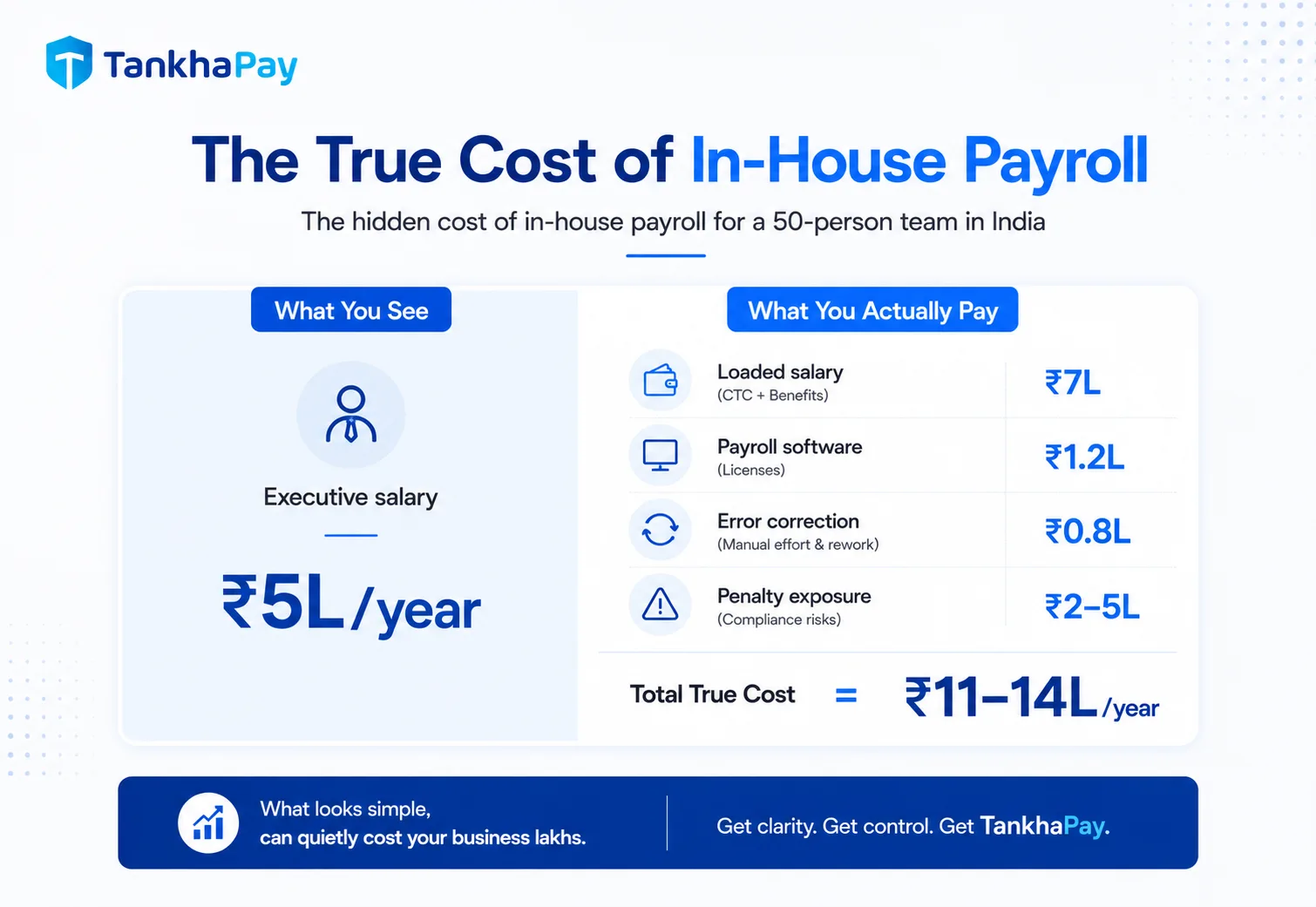
Your payroll executive’s salary is ₹5 lakh a year. That is the number most founders see.
The real number, once you add employer PF contributions, software costs, compliance training, error correction time, and that one PF filing penalty from last April, is closer to ₹14 to 18 lakh per year.
The same payroll, fully outsourced, costs ₹8 to 12 lakh. Before you factor in the penalties you are no longer paying.
This is the in-house payroll vs outsourcing calculation most Indian founders never run. This guide runs it for you.
What Is the Difference Between In-House and Outsourced Payroll?
In-house payroll means your internal team handles salary calculations, statutory filings, and payslip generation using either manual methods or in-house payroll software. ‘Outsourced payroll’ means a third-party provider takes over the entire process, from salary calculations to EPFO filings on your behalf.
It is not just an issue of who performs the task. It is an issue of who assumes the liability for compliance.
In-house payroll management puts all the liability on your company for all of the filings, deadlines, and calculations. Outsourcing payroll makes it a shared liability between you and the specialized firm based on the terms of the service agreement.
There is also a compromise route. The hybrid route involves performing salary processing in-house while outsourcing the statutory compliance to a specialized firm. It is ideal for large firms with specialized HR departments that want to manage the data but not the filings.
Most Indian businesses start in-house and evaluate outsourcing only after a compliance problem forces the question. The smarter move is to evaluate before that moment.
True Cost of In-House Payroll in India
The majority of entrepreneurs focus on one figure, that is the salary of the payroll executive. It is a wrong figure to look for.
1. The HR Salary Is Only Part of the Cost
The salary of the payroll executive in India ranges between ₹3.5 and 6 lakh per annum. The employer’s PF is added to this amount, which is 12% of basic salary, followed by the ESIC contributions, gratuity and annual bonus. This makes the total cost ₹5 to 8 lakh per annum.
2. Software and Infrastructure
For in-house payroll software in India, the monthly fees vary from ₹3,000 to ₹15,000 based on the number of employees and the functionalities. Add to that the cost of integration with your attendance management system, HRMS, and accounting software. Some companies operate their payroll management using Excel. In that case, the software fee is low, but the risk of errors becomes much higher.
3. Compliance Penalty Exposure
This is the cost that most startups underestimate since it only comes up once it is too late.
Failure to pay PF contributions incurs a fine equal to 100% of the outstanding amount as per the Section 14B of the EPF Act. TDS error leads to 1.5% interest per month and possible income tax notices. For a team of 50 people, the compliance penalties may be more than ₹3 to 5 lakhs per annum.
4. The Single Point of Failure
The entire payroll operation depends on either one or two persons. If either of them leaves the organization, falls sick, or joins another company, payroll will still be due at the end of the month.
This is the risk everyone ignores. Payroll done in-house creates an operational bottleneck that will be completely eliminated through outsourcing. As an entrepreneur managing a growing business, this is not a hypothetical risk but a highly probable one.
“Every month you build payroll around one person, you are one resignation letter away from a payroll crisis.”
Sarabjit Singh, Managing Director, Akal Information Systems (TankhaPay)
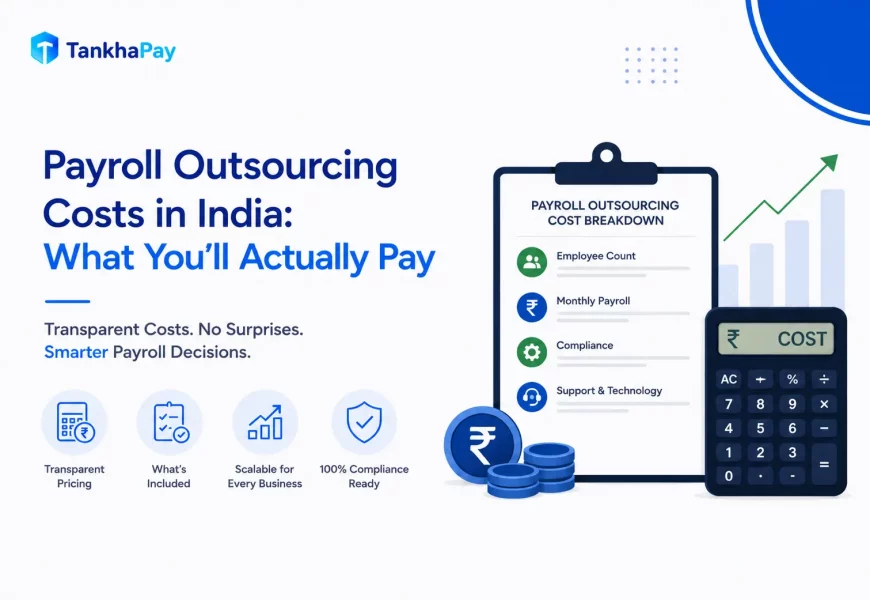
What Outsourced Payroll Solutions Actually Cost
Outsourced payroll solutions are not one product. They come in tiers. Here is what each tier covers and costs in India in 2026.
Tier 1: Basic Processing (₹150 to 400 per employee per month) Covers salary calculation, payslip generation, and bank transfer file. Does not include statutory compliance filings. Best for businesses that have an in-house compliance team but want to automate the calculation workload.
Tier 2: Full Payroll and Compliance (₹300 to 800 per employee per month) Covers everything in Tier 1 plus PF ECR filing, ESIC, TDS returns, and PT. This is the most used tier for Indian SMEs. At 50 employees, this costs ₹15,000 to 25,000 per month total, significantly less than a dedicated in-house setup at a comparable scale.
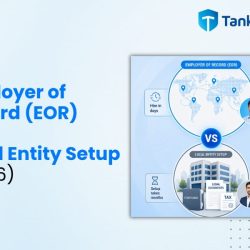
Tier 3: Managed Payroll with EOR (₹800 to 2,500 per employee per month) This includes contract labor, multi-state employment, and shifting statutory obligations. The service provider will be the Employer of Record.
What outsourcing does not give you:
- Control over sensitive salary information of employees
- Instant results in case of payroll processing off-cycle
- Guarantee that there will be no system breakdown on the provider’s side
These are some actual compromises. A low-cost service with slow support will produce as much frustration as late filing done by you. The quality of services provided by various companies differs greatly.
In-House Payroll vs Outsourced Payroll: Direct Comparison (2026)
| Factor | In-House Payroll | Outsourced Payroll Solutions Recommended |
|---|---|---|
| Cost per employee per month (all-in) | ₹870 to ₹1,800 | ₹150 to ₹2,500 |
| Setup time | 2 to 4 months | 2 to 4 weeks |
| Compliance accuracy | Depends on team expertise | Provider’s core responsibility |
| Labour Code readiness | Manual updates required | Automatic via provider |
| Scalability | Requires additional staff | Adjust employee count with provider |
| Penalty liability | Borne by your company | Shared or transferred to provider |
| Single point of failure | High | Eliminated |
| Best for | 200+ employees, stable team, single state | Under 200 employees, multi-state, compliance-heavy |
Who Should Choose What — The Decision Framework
This is the section most comparison articles skip. Here is a clear answer by headcount.
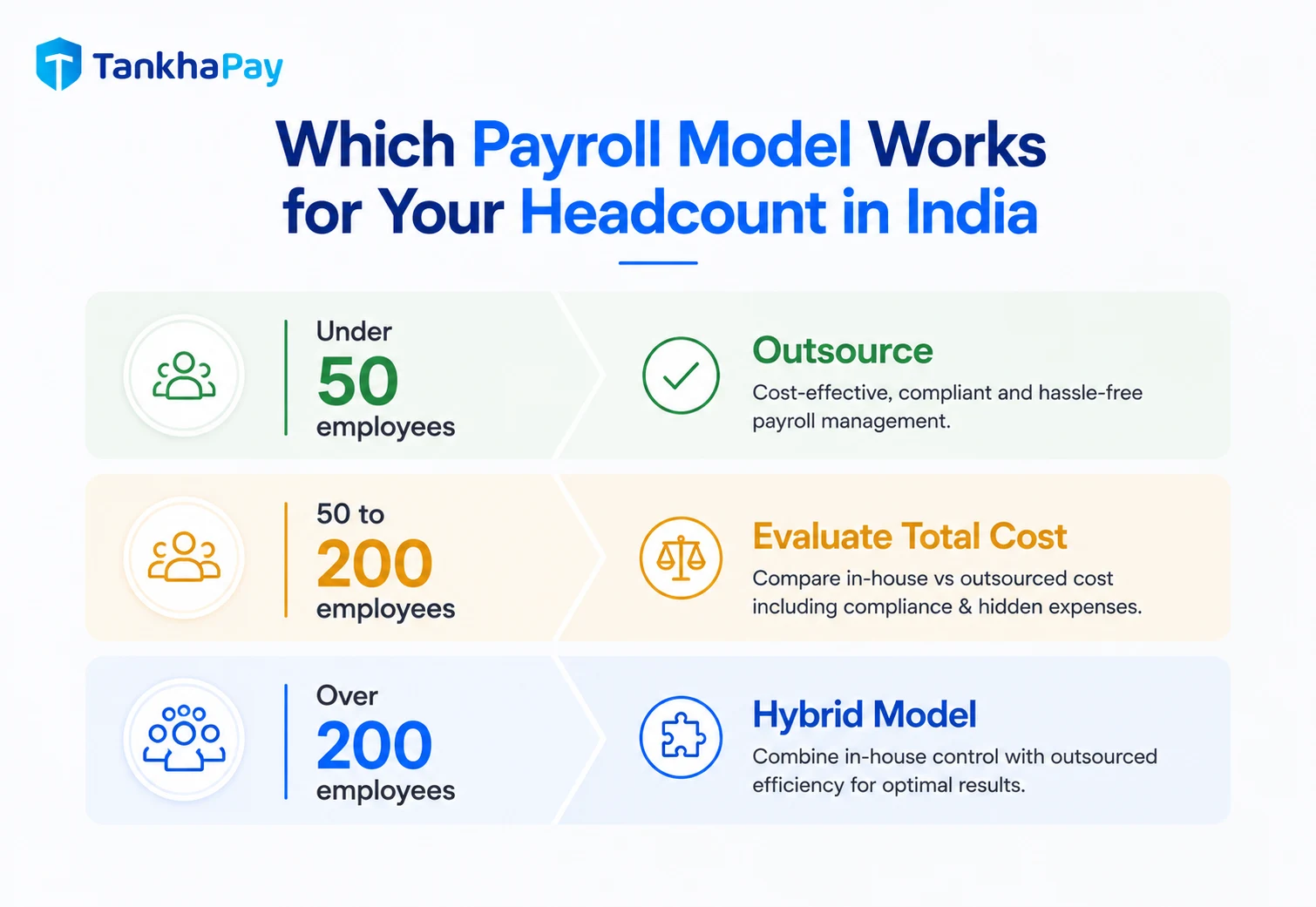
Under 50 Employees: Outsource
At this size, one payroll person manages everything. That creates the single point of failure with no backup and no redundancy. Outsourced payroll solutions at this scale cost ₹7,500 to 25,000 per month. Significantly less than a dedicated hire, with better compliance coverage.
You have increasing compliance risk exposure but do not yet have sufficient size to warrant having an internal team. This is the category for which outsourcing provides the most obvious benefit.
50 to 200 Employees: Evaluate Honestly
You likely have a small HR team. The question is whether they are actually doing payroll well.
Run the total cost calculation: HR salary loaded + software + last 12 months of corrections and penalties. If that number exceeds ₹40,000 per month, and for most companies it does, outsourcing is cheaper and more reliable.
At this scale, Labour Codes compliance and DPDP data security also become board-level concerns, not just HR concerns.
Over 200 Employees: Consider a Hybrid Model
At scale, dedicated in-house payroll software with a trained specialist team can work. Even at 500 employees, though, most Indian companies outsource statutory compliance while keeping salary processing in-house.
The hybrid model gives you control over data and the speed of in-house processing without the compliance liability.
“Every employer in India who currently processes payroll in-house should re-evaluate the model in 2026. The compliance landscape has fundamentally changed with the Labour Codes.”
Patron Accounting India Payroll Guide, 2026
What the New Labour Codes Change About This Decision
Three specific changes from the new Labour Codes make in-house payroll harder in 2026.
The 50% basic wage rule: Under the Code on Wages 2019, allowances above 50% of CTC are included in the PF wage base. Most salary structures built before 2024 are calculating PF on the wrong base. If your in-house team has not updated salary templates, your PF contributions are likely wrong right now.
Two-day Full and Final Settlement: The new labour codes cut down the F&F settlement periods to two days. It is difficult for an in-house payroll system to meet this requirement in peak attrition seasons.
DPDP Act 2023: Keeping the salaries of the employees in the form of spreadsheets or with the help of software creates the problem of data fiduciary. Third-party software with security architecture will avoid these problems. [Statutory Compliance]
These three changes individually create compliance risk. Together, they shift the calculus against in-house payroll for any business under 200 employees that has not invested heavily in software and specialist staffing.
The Bottom Line
Whether payroll should be handled by your business in-house or whether it should be outsourced is not a matter of personal choice. This is a matter of the real costs involved, compliance risks, and how your resources can best be spent.
For the majority of Indian entrepreneurs who operate companies employing less than 200 individuals, the reality of the situation is that outsourced payroll is the more logical option. Not out of fashion but out of sheer financial necessity.
TankhaPay manages payrolls, statutory compliances, and other services of all companies across India. No matter whether your company consists of 15 employees or 500, the entire process begins from one point instead of three different systems.