Quick Answer
- Payroll outsourcing does not improve employee retention by itself, because employees do not know or care who processes payroll.
- What affects retention is accuracy, timeliness, and whether payroll questions get answered quickly.
- Outsourcing improves retention only when it fixes a specific failure you already have, such as thin statutory expertise or a single point of failure.
- A well-run in-house payroll outperforms a badly-run outsourced one every time.
- Before deciding, measure your own query volume, resolution time, and settlement cycle for a quarter so you know which problem you are actually solving.
No employee has ever resigned because payroll was in-house. They resign because their salary was short, late, or wrong three months running, and nobody could tell them why.
Why does payroll affect employee satisfaction at all?
Because payroll is not a benefit. It is the transaction the entire employment relationship rests on.
Benefits are appreciated when present and tolerated when absent. Payroll is the opposite. Nobody thanks HR for a correct payslip. Everybody notices a wrong one.
This is the entire basis of the asymmetry. Payroll cannot make people happy. The most it can do is not make them unhappy or not do so in a way that makes you lose someone.
Practical effect of this?
Payroll is not an engagement tool. Improving it won’t increase your satisfaction scores, but breaking it will reduce them drastically.
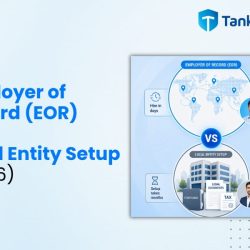
In-house versus outsourced Payroll: What actually changes
| Payroll managed in-house | Payroll outsourced | Impact on employees | Impact on HR | Business outcome | |
|---|---|---|---|---|---|
| Accuracy | Depends entirely on one or two people’s expertise | Depends on the provider’s process and your data quality | Same either way if both are done well | In-house carries the error; outsourced carries the escalation | Neither is inherently more accurate |
| Timeliness | Vulnerable to a single person’s leave or exit | Contractual, with an agreed cycle | Salary date reliability is what employees actually notice | In-house HR absorbs the crunch each month | Outsourcing removes the single point of failure |
| Query handling | Direct, informal, usually fast | Routed through a process, sometimes slower | This is where outsourcing most often gets worse | HR stops answering, or becomes a relay | Depends entirely on the SLA you negotiate |
| Compliance | Requires in-house statutory expertise | Provider carries the knowledge | Invisible until something breaks | Removes the expertise burden | Outsourcing wins where expertise is thin |
| HR capacity | Payroll consumes several days a month | Freed for other work | Indirect, and only if HR redeploys the time | Real, if the time is actually redeployed | Often the strongest business case |
| Cost | Salary of the payroll owner, plus tooling | Per employee, higher headline | None | None | Outsourcing buys expertise, not savings |
A note on the cost row: The fair cost comparison is not of the outsourcer’s price per employee versus nothing. The cost comparison should be made between the price per employee and the total cost internally; the proportion of the salary of the payroll owner, the tooling, and the risk of statutory penalties due to lack of expertise. In case of an average-sized company in India, this cost internally comes up to several lakhs before the first penalty. Outsourcing may not beat it on cost.
How does payroll accuracy affect employee trust?
An employee cannot audit your compliance function. They cannot verify your PF filings or your Professional Tax remittances. The payslip is the only evidence they have that the organisation is competent.
So a payslip error is not read as a payslip error. It is read as a signal about everything they cannot see.
That is why the third error costs so much more than the first. The first is an accident. The second is bad luck. The third is a pattern, and the conclusion the employee draws is about the organisation, not the spreadsheet.
How late salary payments affect retention
Late salary is a separate mistake, different from an incorrect one, and even more dangerous.
A mistake has an effect on one number only. But a delay has a negative impact on the employee, his duties, payment of EMIs, rental charges, tuition fee for children anything that he planned based on a particular date that you told him to plan on.
There are three consequences that ensue, in this order:
- First delay: The employee is affected but does not tell anyone.
- Second delay: The employee plans without taking your payday into consideration.
- Third delay: The employee decides to take up the job temporarily.
By the time it reaches HR as a complaint, it has usually already reached the resignation stage for someone else who never complained.
What does the employee payroll experience actually look like?
Most HR teams see payroll as one monthly event. The employee experiences six touchpoints, and only one of them is the salary credit.
| Stage | What the employee experiences | Where it goes wrong |
|---|---|---|
| Offer the first salary | Waiting to see whether the offer was real | First salary short or delayed because onboarding data arrived late |
| Monthly credit | Money arrives, or does not, on the expected date | Cut-off missed, attendance data late, bank file rejected |
| Payslip access | Finding the payslip when needed for a loan or visa | No self-service, so every request goes through HR |
| Query | Asking why a number changed | Nobody can explain the deduction, or the answer takes a week |
| Tax season | Investment declarations and Form 16 (or its successor form under the Income-tax Act, 2025) | Declaration window too short, form issued late |
| Exit | Full and final settlement | The single most damaging stage, and the most neglected |
Exit deserves attention it rarely gets. A departing employee talks. The process of his settlement turns into something that his former coworkers hear, that job candidates hear, and which makes it to the reviews. Moreover, the statutory position is unambiguous: by virtue of Section 17(2) of the Code on Wages, 2019, which came into force on 21 November 2025, the wages payable upon the worker’s departure need to be paid within two days of the resignation, termination, or retrenchment of employment.
Payroll pain points and what employees actually feel
Competitors list problems. The useful version connects each to the emotional response, because the response is what drives the resignation.
| Payroll problem | What the employee concludes |
|---|---|
| Salary credited late without notice | “They do not respect my obligations.” |
| Deduction the employee cannot explain | “Something is being taken, and nobody will tell me what.” |
| Payslip can be accessed only upon requesting from HR. | “I do not have access to my own record.” |
| Query unanswered for a week | “I am not important enough to answer.” |
| Correction promised in the coming month | “My money is their float.” |
| Form 16 issued late | “Their deadline is important; mine isn’t.” |
| Full and final delayed after exit | “They only cared while I was useful” |
Notice that only two of the seven are calculation problems. Five are communication and access problems, and outsourcing does not automatically fix any of them. It can worsen several.
How payroll outsourcing frees HR to focus on engagement
This is the most defensible argument for outsourcing, and it is usually made badly.
A payroll cycle consumes several working days a month for whoever owns it. In a small HR team that is a meaningful share of total capacity, it is spent on a function that produces no differentiation when it goes right.
It all depends on whether the time is being redirected. Most firms outsource their payroll, maintain a constant number of employees, and allocate that time to administration. No capacity increase occurs, but the cost does.
Before considering outsourcing, you need to define what you will use the freed time for and who will own that result. If there is no answer, it means that the firm will not benefit from employee engagement but from costs.
When payroll outsourcing does not improve satisfaction
That part which all competing papers miss out on.
- When you have got a data problem, not an operations problem. If the attendance data comes too late or the onboarding data is insufficient or the approvals are delayed, then outsourcing takes care of the operations but not the cause.
- When query handling gets slower. Employees who used to walk to a colleague’s desk now raise a ticket. Unless the SLA is explicit and short, the felt experience gets worse even as accuracy improves.
- When nobody in-house understands payroll any more. Complete knowledge transfer to a provider means nobody can sanity-check the output or answer an employee properly. Retain enough internal capability to challenge what you receive.
- When the transition is badly run. The first two cycles after a migration are the highest-risk payrolls you will ever run. A botched transition can undo years of accumulated trust in eight weeks.
- When the real problem is compensation. No payroll process fixes a salary that is below market. If people are leaving over pay levels, payroll operations is the wrong project.
How do you know payroll is already hurting retention?
The indicators never come as a formal complaint. They build up gradually during exit interviews and casual chats until somebody at the higher level puts two and two together. Here are the seven indicators that are worthy of investigation for this week:
- Payroll queries are a recurring theme in exit interviews
- Corrections are routinely deferred to the following month
- HR cannot explain a deduction without contacting someone else
- Employees ask colleagues rather than HR about their payslips
- Full and final settlement regularly exceeds the two-working-day statutory window
- Payroll depends on one person, and their leave is a known risk
- The salary date has moved more than once in the last year
Three or more of these means payroll is already a retention issue, whether or not anyone has said so.
KPIs to measure payroll’s impact on satisfaction
Six metrics worth tracking monthly. The healthy directions below are recommended targets, not industry averages; no credible published benchmark exists for most of them.
| Metric | How to measure | Recommended target |
|---|---|---|
| Payroll accuracy rate | Payslips with no correction, as a share of total | Above 99%, trending up |
| On-time payment rate | Cycles paid on the committed date | 100%, no exceptions |
| Query volume per 100 employees | Payroll queries raised each cycle | Falling |
| Query resolution time | Median hours from raised to resolved | Under 24 hours |
| Full and final cycle time | Working days from exit to settlement | Within the two-working-day statutory window |
| Payroll mentions in exit interviews | Share of exits citing pay administration | Falling, and tracked at all |
Start with query volume and resolution time. They are the fastest to collect, they move quickly when something improves, and they correlate with the employee experience better than accuracy alone.
Track these for one quarter before deciding whether to outsource. You will then know which problem you are actually solving, which is the difference between a fix and an expensive lateral move.
Questions to ask before outsourcing payroll
Typically, an evaluation of a vendor begins with the cost and geographic coverage. This evaluation should begin with the following questions because their answers will decide whether the experience of employees will improve or deteriorate.
- What specific failure are we trying to fix, and what does the data say about it?
- What is the query SLA in hours, and what happens when it is missed?
- Who answers an employee’s question, us or them?
- What data do we still have to supply, and by when each cycle?
- Who will be responsible in case the filing is not done on time?
- What will the transition process be like, and how many cycles at the same time?
- What ability do we retain internally to question the outcome?
- What is the exit strategy, and who holds our data?
Question two is the one most organisations skip and most regret.
Best practices for a transition that does not damage trust
A payroll transition is judged by employees on exactly one criterion: did anything change for me? The practices below exist to make the answer no, visibly and deliberately, through the two cycles where trust is most at risk.
- Run at least two parallel runs. Both systems, in the same month, reconciled prior to go-live.
- Communicate to your employees prior to the first outsourced payroll run, not after. Silence makes a typical transition variance into a rumor.
- Keep the salary date consistent throughout the transition. Vary one variable at a time.
- Develop a process for queries on day one. The employees have to know where to go before they have to ask.
- Over-resource the first two pay cycles. It is where you lose the trust, and it can be regained slowly.
- Audit the third cycle independently. Not the first, which everyone watches. The third, when attention has moved on.
How to choose a payroll outsourcing partner
Evaluate on three things, in this order. Price is deliberately not one of them, the cost difference between competent providers is small, and the cost of choosing on price alone is not.
- Statutory depth in your states and your establishment type. If a provider is strong in one state but weak in the other, that will be an issue you inherit. Get clear answers on the following items, specifically multi-state Professional Tax, Labour Welfare Fund, and the registers required by your establishment statute.
- Query handling, contractually. Ask for the SLA in hours, who answers employees directly, and what the remedy is when it slips.
- Whether they can also give you the software. Some organisations need a managed service permanently. Others need it for two years while they build capability. Providers such as TankhaPay that offer both the platform and the managed service let you change routes without changing vendors.
For a broader view of the market, see payroll outsourcing companies in India. If you are still deciding between the two routes, payroll software vs payroll outsourcing, compare them on expertise rather than price.
Conclusion
Payroll cannot make employees happy. It can only stop making them unhappy.
That means the question is not whether to outsource. It is which specific failure you have: accuracy, timeliness, query handling, statutory expertise, or capacity. Outsourcing addresses some of those well and others not at all.
Measure your own numbers for a quarter before deciding. If you are not tracking query resolution time and full and final cycle time today, you do not yet know which problem you are buying a solution for.
If you would like help working out which of those it is, Book a Strategy Call. We will look at your current cycle before recommending anything, including the possibility that you do not need to change providers at all.
FAQs
Does payroll outsourcing improve employee satisfaction?
Not directly. Employees do not know who processes payroll. Outsourcing improves satisfaction only when it fixes an existing accuracy, timeliness or query-handling failure. A well-run in-house payroll performs just as well from the employee’s perspective.
Can payroll errors cause employees to leave?
Repeated errors can. A single mistake is absorbed. A pattern is read as a signal about the organisation’s competence, and it is one of the few operational failures that appears in exit interviews without being asked about.
How do late salary payments affect retention?
Greater than that of errors. Delay impacts the employee’s own obligation. The natural progression is of silent absorption followed by withdrawal of trust and viewing the employment as temporary. Very few times does it manifest in a complaint before it manifests in a resignation.
What is the statutory timeline for full and final settlement in India?
Two working days. Section 17(2) of the Code on Wages, 2019, which became effective from 21st November 2025, states that the wages payable on the removal, dismissal, retrenchment or resignation must be paid within two working days after the termination of employment. Earlier, settlements used to take 30 to 45 days.
Does outsourcing payroll free up HR time?
Yes, usually it saves a few days every month. The benefit will be felt only when that time is allocated to something else. Companies that outsource and do not allocate their extra resources end up using them in general administration.
When does payroll outsourcing not help?
When the root cause is upstream data, when query handling becomes slower, when all internal payroll knowledge is lost when the transition is rushed or when the actual problem is that compensation is below market.
What should we measure to see if payroll affects retention?
Queries per 100 employees, resolution time of queries, accuracy rate, timely payment rate, total and final cycle time, and mention of payroll in exit interviews. Query volume and resolution time are easy to implement and change very quickly.
Should employees be told payroll is being outsourced?
Yes, before the first outsourced cycle. Employees notice format changes and timing variances. Told in advance, it is a transition. Discovered afterwards, it becomes a rumour about the company’s finances.
Is payroll outsourcing cheaper than in-house?
Normally not an item of headline price. It brings statutory expertise and removes a single point of failure. Companies which base their justification for outsourcing on savings generally end up disappointed, and negotiating away the query SLA which really counted.