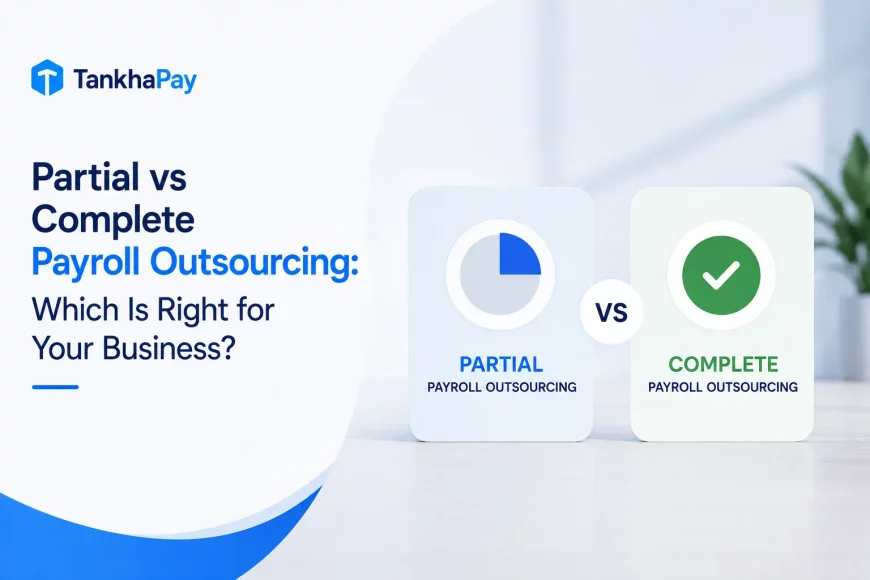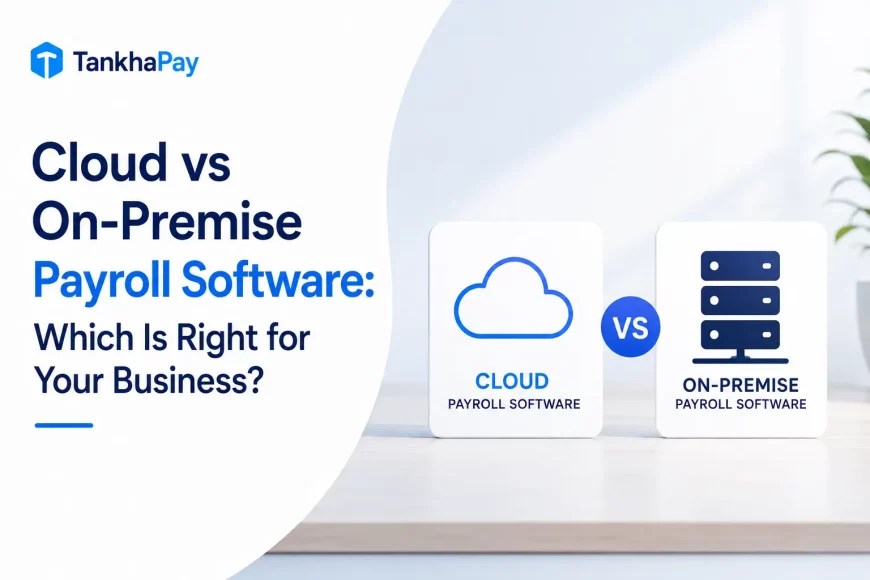
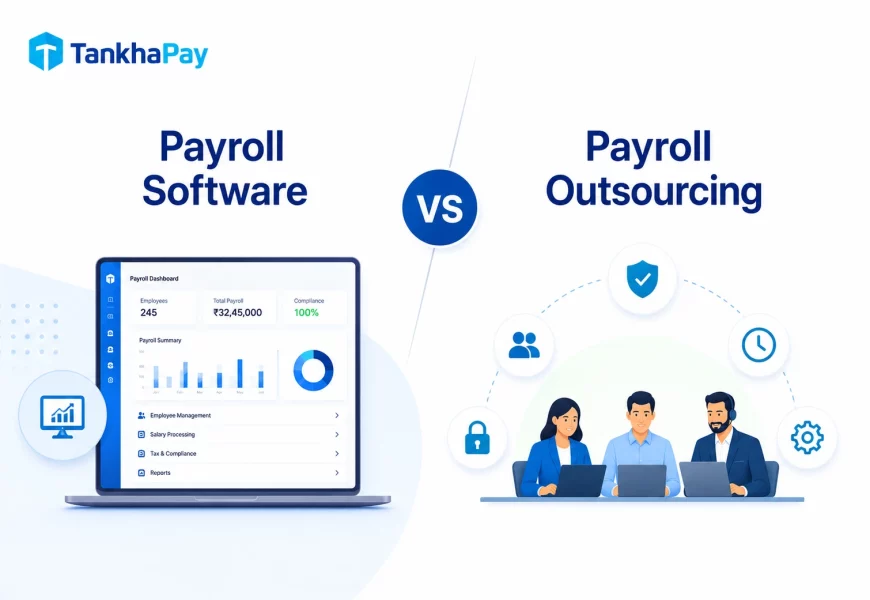
In-house and outsourced payroll models both support compliant payroll processing; the difference lies in where responsibility sits and how work is distributed
It is not usually the case that any firm will make an intentional mistake. This mistake is made by firms because the comparison is easy to make on a pricing page: software costing ₹200 per head per month compared to ₹800 per head per month for payroll management. The choice of software comes about, and then six months down the line, the HR department is working overtime.
The real comparison in payroll processing is not the cost of software versus the cost of outsourcing. The reality is the overall cost of payroll processing for the month, including any time spent by HR, compliance risks, errors, and audits compared to outsourcing payroll processing entirely.
“The number one reason businesses cite for outsourcing payroll is compliance risk reduction, not cost savings. When you ask what they were trying to fix, it is almost never the invoice.”
CIPP (Chartered Institute of Payroll Professionals), Global Payroll Survey 2025
What Is Payroll Software vs Payroll Outsourcing?
Payroll software is a digital platform your internal team operates to calculate salaries, manage deductions, generate payslips, and file statutory returns, giving you full control over every step of the payroll cycle.
A payroll outsourcing process involves the use of a managed service where a third party will be responsible for processing the payroll on your behalf, while you will provide data and validate the results.
The functional difference is ownership of execution. Both models can produce compliant, accurate payroll. The question is whether your internal team does the work, or a specialist provider does.
What Payroll Software Gives You and What It Doesn’t
Online payroll services and cloud-based software platforms give you something outsourcing cannot: direct control over every number, every change, and every approval in real time.
What you get with payroll software
Full visibility: All calculations, deductions, and payments are recorded in your system. The HR and finance departments have full visibility to generate reports, track figures, and make changes on-the-spot without going through any provider support queue.
Faster corrections: An employee is notified about a mistake in a salary deduction at 9 AM. Using payroll software, the problem can be solved within just an hour or two. In case of outsourcing, you file a ticket and wait for their turnaround time of 24–48 hours.
Integration with your HRMS: Your payroll software must integrate seamlessly with your attendance system, leave management, and HR modules. There is automatic data flow, and nothing needs to be transferred manually by you to the provider.
Cost efficiency at lower headcount: For businesses under 50 employees with straightforward salary structures, software is significantly cheaper per employee than managed payroll.
What payroll software does not give you
Expertise when you need it most: Software calculates correctly, but it cannot tell you that a new ESIC threshold revision happened last Tuesday, that Karnataka just changed its PT slab, or that your classification of a contractor as an employee has created retrospective PF liability. Regulatory interpretation requires expertise the software does not provide.
Time back for your HR team: Someone has to run the software. That means 3–8 days a month of an HR or finance person’s time on payroll, time they are not spending on hiring, performance, or strategy.
Outsourced Payroll Benefits and the Trade-offs Nobody Mentions
What you get with payroll outsourcing
Compliance expertise, continuously updated: A managed payroll provider’s business model requires staying current on every regulatory change. When Section 192 became Section 392(1) in April 2026, managed payroll clients had their system updated before the next cycle. Businesses running their own software were tracking the change themselves.
Time back for your team: Your HR team gives input data, reviews output, and authorizes. Processing, filing, generation of ECRs, making TDS deposits. The payroll processing service does it. Month-end becomes a process of reviewing instead of performing operations.
Scalability without headcount: Adding 100 employees to an outsourced payroll programme is a data update. Adding 100 employees to an in-house payroll process may require another HR hire, more software training, and more manual coordination.
Geographic expertise: For Indian companies looking to expand into the UAE, Singapore, and Japan – or for foreign companies trying to enter India advantages of outsourcing payroll services include specialized knowledge about the countries that any in-house payroll team does not possess.
What outsourcing does not give you
Transfer of legal liability: This is easily the most misunderstood item of all payroll processing comparisons. Legal notices from EPFO, ESIC, and the Income Tax Department are sent to your firm, not your service provider. In case of any non-filing or incorrect filing, you have to pay the penalty. With outsourcing, the process gets outsourced, but not the liability.
Real-time control: Have to do a payroll correction for one of your employees who has escalated the issue at 6 pm? You are looking at the processing time of the service provider. Software works instantly. Outsourcing adheres to SLAs.
Full data visibility: Some managed payroll providers operate on their own systems. Getting a detailed payroll register, a headcount breakdown by department, or a multi-period comparative report may require a request and a wait, not a click.
The break-even point becomes very different once you take into account the risks associated with penalties of non-compliance. A single notice from the EPFO/Income Tax for under-deductions spanning 12 months is likely to cost more than 12 months of outsourcing expenses for a company with 100 employees.
5 Questions That Decide Which Model Fits Your Business
- How complex is your compliance footprint? One state, no complicated payroll, fewer than 50 people, and software probably sufficient. Multiple states, contractors, foreign workers, or restructuring of the Labour Code in progress → outsourcing or hybrid solution may be justified due to increased cost per employee.
- Does your internal team have dedicated payroll expertise? If your “payroll team” is an HR generalist who also handles recruitment and onboarding, payroll software is running on borrowed time. A dedicated payroll specialist changes this equation; a generalist doing everything does not.
- How fast is your headcount growing? A business adding 10 employees a month is outgrowing its payroll capacity monthly. Outsourcing scales automatically. Software scales only as fast as the team operating it can adapt.
- How much real-time control does your finance team need? CFOs requiring access to real-time payroll information, real-time headcount costs by department, and real-time modification capabilities will require software. Finance teams that have periodic information requirements can utilize outsourced payroll with the help of its service level agreement-defined visibility.
- Are you expanding to new states or countries? With every additional state in India comes the PT scheme of that state, the LWF contribution requirement, and the minimum wage structure of that state. With every additional country comes an entire new compliance framework. Providers with experience in multi-state and international payroll can speed up this process considerably.
Hybrid Model – When Both Answers Are Correct
The most important insight in any honest payroll processing comparison: For many companies with over 100 employees, the best solution is neither a payroll software model nor an outsourcing one.
Here’s how a blended approach can help: you own the payroll infrastructure, that is, your HRMS, attendance management, and accounting systems are tightly integrated; your company controls the reporting and approvals process; and you have access to all information. The outsourcing partner will control the compliance and execution layer, taking care of calculations, filing BOAT/EPFO/ESIC/TDS and complying with regulations before every payroll cycle.
The benefits of the hybrid approach include the ability to have a centralized payroll system in terms of data integrity, process management, reporting and integration, as well as managed payroll in terms of execution, validation or local knowledge. The HR and finance departments still have oversight and sign-off capabilities.
This is how TankhaPay’s managed payroll service is structured. You have access to the platform, the reporting, and the approval workflow. TankhaPay handles the compliance execution, ECR generation, TDS deposits under Section 392(1), Form 138 quarterly returns, and multi-state PT management – as a built-in service.
Final Thought
Payroll software and payroll outsourcing don’t have an objectively correct choice; it all comes down to how many employees you have, the knowledge of your team, the degree of regulatory compliance, and the level of real-time control your financial department needs.

The one constant thing is that basing the choice of solution on cost going for software due to its lower price per employee or outsourcing due to perceived simplicity without considering the costs associated with HR and compliance risks results in a bad choice. It is the companies who perform proper cost calculation that make the right decision.