Ask most HR managers in India what the difference between NAPS and NATS is, and you will get one of two answers: a confused look or a confident but incorrect one. Most people assume NAPS is for manufacturing and NATS is for IT. Or that NATS is newer. Or that they are basically the same programme with different names.
None of that is accurate.
NAPS and NATS are governed by different ministries, operate on different portals, target different candidate profiles, and offer different financial structures. Using the wrong one means either enrolling candidates who do not qualify, missing government reimbursements you are legally entitled to, or both.
“Smart manufacturing and engineering organizations in India have started using the NAPS program for bulk entry-level hiring and the NATS program for technical recruitment pipelines. These two programs do not contradict each other but rather complement each other.”
Yoma Business Solutions: NAPS vs NATS Employer Guide 2026
This guide covers the NAPS vs NATS comparison from the employer’s perspective: what each scheme actually is, what the government pays you back, which roles go on which scheme, and what changed in 2026 that most existing comparisons have not caught up to.
What Is the Difference Between NAPS and NATS?
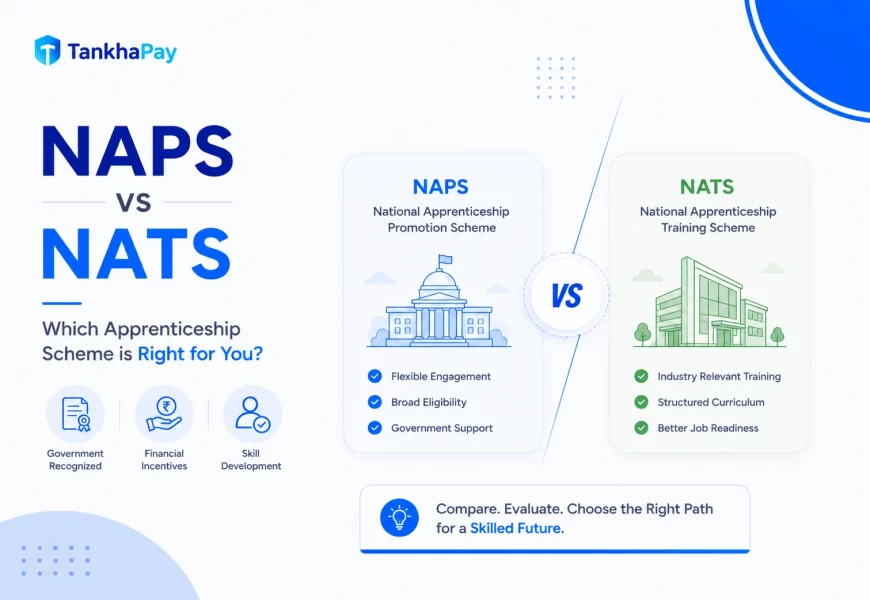
NAPS (National Apprenticeship Promotion Scheme) is a scheme under the Ministry of Skill Development and Entrepreneurship designed to promote apprenticeship training across all industries and candidate types, with direct stipend reimbursement to employers.
The National Apprenticeship Training Scheme (NATS) is a program within the Ministry of Education meant to offer training to graduates and diploma holders, starting out by focusing on technical stream and now including general stream graduates as well since 2026.
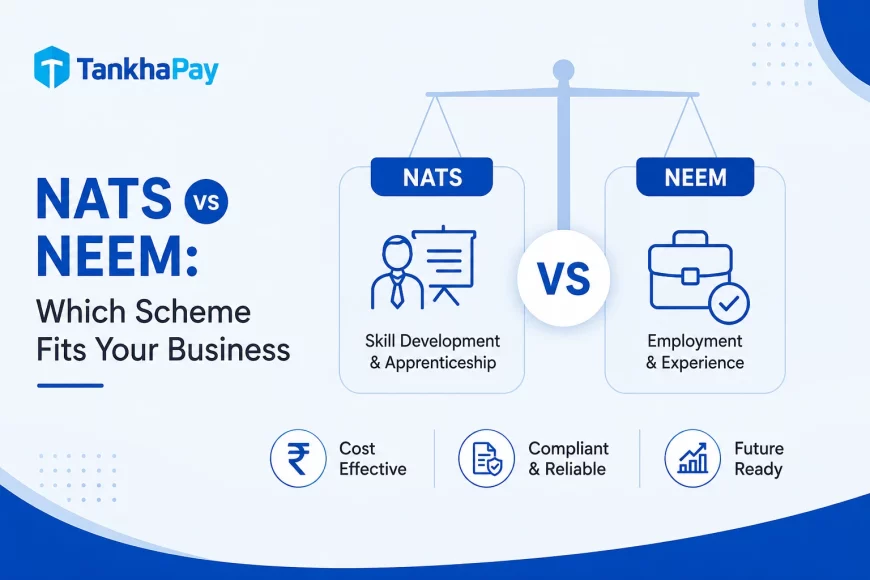
The simplest rule of thumb: if the candidate has an engineering degree or diploma, they go on NATS. If they are an ITI pass-out, school leaver, or non-technical fresher, they go on NAPS.
But the two schemes are not mutually exclusive, and 2026 has blurred the boundary significantly.
NAPS – National Apprenticeship Promotion Scheme
What NAPS Covers
NAPS is the broader of the two schemes. It covers the full spectrum of apprenticeship categories:
- ITI pass-outs (trades designated under the program)
- Freshers (optional trades)
- Vocational trainees for specific sectors
- Candidates who have not done ITI but receive basic training
This apprenticeship programme is run via apprenticeshipindia.gov.in and is regulated under the Apprentices Act, 1961, by MSDE.
Training duration under NAPS typically runs from 6 months to 1 year for most engagement types.
What Employers Get Back Under NAPS
This is the part most Indian businesses are not fully using.
The government reimburses 25% of the prescribed stipend paid to each apprentice, up to a maximum of ₹1,500 per apprentice per month. Additionally, for fresher or non-ITI candidates who require basic training before placement, the government reimburses basic training costs of up to ₹7,500 per candidate (for 500 hours of training).
For an employer running 100 NAPS apprentices at a ₹6,000 monthly stipend, the ₹1,500/month cap means a maximum reimbursement of ₹18 lakh per year, before accounting for EPF and ESI savings on top.
Who Should Consider NAPS
NAPS is the right solution for most Indian companies, especially MSMEs. It works well for:
- Manufacturing, logistics, and FMCG companies that require blue-collar workers
- Retail and hospitality companies that need to grow their entry-level workforce
- Healthcare companies and facilities management organizations
- All companies that wish to rapidly build an entry-level pipeline [Link: contract staffing India]
NATS – National Apprenticeship Training Scheme
What NATS Covers
NATS is administered by the Board of Apprenticeship Training (BOAT) through four regional boards in Chennai, Kolkata, Kanpur, and Mumbai. The portal is nats.education.gov.in.
The scheme was originally designed for engineering and technology graduates and diploma holders. But the 2026 update significantly broadened the eligible candidate pool.
2026 Change: NATS now includes general stream graduates; BA, BSc, and BCom degree holders can now register for NATS apprenticeships. This means businesses in IT services, finance, analytics, and BPO operations can put non-engineering graduates on NATS for the first time.
Another 2026 change: In addition to the above, another requirement for 2026 is that the APAAR ID is now compulsory for registration on NATS. Those who do not have an APAAR ID will not be able to register on NATS.
What Employers Get Back Under NATS
The government makes a contribution to pay for the stipend. Employers are advised to check the current contribution rates on the regional BOAT portal before registering apprentices because contribution levels are different depending on the region and type.
The training period according to the NATS framework is one year. The end result is a National Apprenticeship Certificate that is issued by the Government of India and is recognized as work experience.
Who Should Consider NATS
NATS is suitable for firms which require a pipeline of technical manpower, namely the following:
- Firms which produce IT/software requiring a supply of engineering/diploma graduates
- Firms which have manufacturing/engineering divisions developing technical manpower at the junior levels
- Infrastructure and energy businesses requiring formally trained technical apprentices
- Large enterprises that want structured, certified on-the-job training for their graduate intake
EPF + ESI exemption (additional saving): Apprentices under both NAPS and NATS are exempt from EPF and ESI contributions. For 100 apprentices at ₹10,000/month stipend, employers additionally save approximately ₹18.3 lakh per year in EPF (12%) and ESI (3.25%) contributions. Combined with NAPS reimbursement, a 100-apprentice programme can return ₹36 lakh or more annually compared to equivalent permanent headcount.
Hidden Financial Case No One Explains
Every NAPS vs NATS comparison article explains the government reimbursement. Very few explain the EPF and ESI exemption, which, for most employers with large apprentice batches, delivers a larger financial benefit than the stipend reimbursement itself.
According to the Apprentices Act, 1961, establishments do not contribute to EPF and ESI for the registered apprentices. The apprentice does not fall under the coverage of EPFO or ESIC during the period of apprenticeship.
In a company which has 200 apprentices on NATS with a stipend of ₹10,000 per month,
- Saving towards EPF (Employer’s share at 12%): ₹2,40,000/month
- Saving towards ESI (Employer’s share at 3.25%): ₹65,000/month
- Total savings per month towards EPF & ESI: ₹3,05,000
- Total annual saving on just EPF & ESI: ₹36.6 lacs
Which Scheme Should Your Business Use?
Use NAPS if:
- The requirement in your recruitment process is ITI pass-outs, school dropouts, or vocational candidates
- Your business is in manufacturing, logistics, retail, FMCG, healthcare, or hospitality sectors
- Your organization requires bulk hiring of entry-level employees with direct payment by government
- Your MSME requires an effective option for permanent staffing
Use NATS if:
- You recruit engineering graduates, diploma candidates, or (starting 2026) BA/BSc/BCom graduates
- You require an organized process for technical training of your recruits
- Your business involves IT, engineering, manufacturing (technical roles), infrastructure, or financial services
- You seek formally certified apprentices who receive the Government of India NAC at the end of their program
Use both if:
- You are a large enterprise with both technical and non-technical hiring needs at scale
- You run manufacturing operations that need NATS for your engineering graduate intake and NAPS for your shop-floor and trade trainee intake simultaneously
Wrapping Up
From the examples presented above, one thing is quite clear; NAPS and NATS are two different schemes altogether, and which one to opt for depends on your candidate profile and not the industry you operate in.
While NAPS offers broadness to your candidate intake by providing an opportunity to recruit any candidate for any trade in any industry and get the government rebate right from Day 1, NATS offers depth to your recruitment through training.
Most Indian businesses that have not built an apprenticeship programme yet are leaving government reimbursements unclaimed and paying full EPF and ESI on entry-level headcount that could be structured differently. For a complete walkthrough of the claims process, see our nats stipend reimbursement guide.

TankhaPay’s NATS Apprenticeship Management service handles every step of the NATS registration, compliance, and management process from portal registration and APAAR ID verification through stipend processing and NAC certificate tracking so your team does not manage the programme manually.