Payroll problems facing Indian businesses include Multi-State Professional Tax & Labour Welfare Fund compliance, contract labour liabilities arising from the OSH Code, 2020, differences in establishment law under the OSH Code and the Shops Act of each State, wage structure changes under the Code on Wages, and system fragmentation. These are mostly process and timing issues, not lack of knowledge issues.
A company running payroll in one state with fifty employees has one set of problems. The same company in four states, with contract workers on site, has a different set entirely.
Most payroll advice treats these as the same problem at different scales. They are not.
What is a payroll challenge?
The term gets used loosely, which makes it hard to act on. A useful definition separates the symptom from the cause.
A payroll challenge is a recurring failure in the payroll function that produces financial exposure, statutory risk or employee impact, and that cannot be fixed by correcting a single cycle.
The distinction matters because a one-off calculation error is a mistake. A calculation error that recurs every month because the wage base was configured wrong is a challenge.
Payroll compliance challenges vs payroll processing challenges
These two terms get used interchangeably, and they describe different failures. Knowing which one you have determines what you fix.
Processing challenges are operational. Compliance challenges are regulatory. In practice payroll compliance penalties begin life as an undetected processing error.
| Payroll processing challenges | Payroll compliance challenges | |
|---|---|---|
| What fails | Calculation, integration, data, timing | Deductions, deposits, registers, filings |
| Who notices first | Employees | Authorities, usually months later |
| Typical cause | Manual steps, disconnected systems, late data | Wrong wage base, missed threshold, stale state rules |
| Detection | Immediate, through queries and complaints | Delayed, often at audit or inspection |
| Cost | Trust, HR time, rework | Interest, penalties, retrospective liability |
| Fix | Process and system change | Structural correction plus back-dated remediation |
The reason this matters: a business that fixes processing problems and assumes compliance follows will still fail an inspection. The reverse is also true.
Payroll challenges Indian businesses face
These seven are specific to operating in India. They are also the ones who most globally skip all payroll content entirely.
Each has a common failure mode, and in most cases the failure is silent until an authority surfaces it.
1. Multi-state Professional Tax
Professional Tax is levied by state, at state-specific slabs, on state-specific calendars. Some states do not levy it at all.
A business operating in four states holds four registrations, four slab tables and four remittance schedules. There is no central calendar and no central notification.
- The common failure: applying the head office state’s slab to every employee, regardless of registered work location. This became far more common after 2020, when employees relocated and never returned.
- What it costs: interest and penalty per state Act, calculated retrospectively from the date of the error.
2. Labour Welfare Fund calendars
- LWF also operates on a state-by-state basis, and its cycle is less consistent compared to that of PT, ranging from monthly to yearly cycles.
- The threshold level is also variable. The variation in the threshold is not often communicated in a manner that reaches the payroll team.
- The common mistake made is failing to make a payment on the half-yearly cycle because of a twice-a-year payment cycle that cannot develop into a habit.
- What it costs: a penalty under the applicable state Act, and it compounds quietly because nobody checks between cycles.
3. Contract labour and principal employer liability
In the OSH Code, 2020, replacing the Contract Labour (Regulation and Abolition) Act, 1970 with the coming into force of the Labour Codes on 21 November 2025, and in the Code on Social Security, 2020, the employer-in-principle is liable if the contractor does not pay the wages, PF, or ESI to his workers. The primary regulations for the OSH Code, issued on 8 May 2026 through G.S.R. 345(E), increased the threshold for contractor licensing from 20 to 50, so any business that had assessed itself on the basis of the lower figure was doing it incorrectly.
Most businesses treat the contractor’s obligations as ending with the contractor. The law does not.
- The common failure: eight direct employees and five contract workers is thirteen, which crosses the ten-employee ESI threshold. The business registers for neither.
- What it costs: you incur the statutory obligations that have not been paid by the contractor in addition to your threshold breach.
4. Establishment law variation
The factory is governed by the OSH Code, 2020, which subsumed the Factories Act, 1948 on 21st November 2025. The office is governed by the state Shops and Establishments Act, which remained untouched in the Labour Codes. Different registers, different hours of work, different overtime and different inspection systems.
A manufacturer with a corporate office runs both at once, in the same organisation, under the same payroll team.
- The common failure: applying one register set across all locations, or assuming the law that governs the head office governs the plant.
- What it costs: registers cannot be made in the specified form during the time of inspection, which converts a routine visit into another whole finding.
5. Wage restructuring under the Code on Wages
The Code on Wages mandates that basic wages along with DA should constitute at least 50% of total wages. Wage structures that deliberately set low basic wages to save PF expenses are now obsolete.
The four Labour Codes became operational centrally from 21 November 2025, while each state continues to notify its own rules on various schedules.
- Common mistake: Taking this to be just another year-end revision. PF calculations are done each cycle on the basis of wage structure, so an incorrect structure will result in a shortfall each month.
- What it costs: PF back dues are calculated from the date of incorrect calculations, along with interest and penalties.
6. Form and section renumbering under the Income-tax Act 2025
The Income Tax Act, 2025, replaced the 1961 Act from April 2026, renumbering the sections and forms that payroll systems generate and that employees receive.
It is a purely administrative change with operational impacts on all templates, correspondence, employee communications and system configurations.
- The common failure: systems and documentation updated at different times, so a payslip references one numbering scheme and the annual certificate another.
- What it costs: there is no fine, but rather confusion among employees and unnecessary calls at tax time.
7. Minimum wage revision tracking
Minimum wage notifications are provided based on skill categories and updated at regular intervals for the dearness allowance portion, normally at April and October.
A multi-state business will have a different revision cycle for each state, based on skill category, without any consolidated feeds.
- Common failure: revising the states you remember and underpaying the other.
- What it costs: underpayment, and according to the Code on Wages, the fix for it is much more than that.
Payroll challenge severity matrix
Not all payroll challenges deserve equal attention. Some are expensive and obvious; others are cheap to fix and easy to miss until they compound.
This matrix ranks them on three things: what the failure costs, how hard it is to spot before an authority does, and what fixing it takes.
| Challenge | Financial exposure | Detection difficulty | Fix cost | Priority |
|---|---|---|---|---|
| Contract labour liability | High, contractor’s dues become yours | High, invisible until inspection | Medium, process and verification | 1 |
| Code on Wages restructuring | High, PF arrears retrospective | Medium, surfaces at audit | High, affects every structure | 2 |
| Multi-state Professional Tax | Medium, interest and penalty per state | High, silent until a state queries | Low, configuration | 3 |
| Minimum wage revisions | High, remedy exceeds shortfall | High, nobody notices a missed notification | Low, tracking process | 4 |
| Establishment law variation | Medium, inspection findings | Medium, surfaces on a visit | Medium, register setup | 5 |
| Data quality and integrity | Medium, compounding errors | Medium, employees surface it | Medium, standardisation | 6 |
| System fragmentation | Medium, hidden in HR time cost | Low, everyone knows | High, platform change | 7 |
| Labour Welfare Fund cycles | Low, penalty per state Act | High, twice-yearly builds no habit | Low, calendar | 8 |
| Payroll talent concentration | Medium, continuity risk | Low, but ignored | Medium, documentation | 9 |
| Data security and DPDP | High if breached | Low until it happens | Medium, controls | 10 |
| Form renumbering | Low, mostly administrative | Low, visible immediately | Low, template update | 11 |
The first four rows represent your initial working priority. These rows have a commonality, that id’s, high exposure along with high detectability. It is this combination that makes an otherwise manageable issue into a liability.
Payroll challenges that apply everywhere
Six challenges are not India-specific but hit Indian businesses hard, usually because they compound the statutory ones above.
They are ordered by how often they turn out to be the root cause of something else.
System and vendor fragmentation
Most medium enterprises carry out payroll within a payroll system, an attendance system, leave tracking system, and one or more reconciliation spreadsheets.
As per the PayrollOrg’s Global Payroll Week report, around 57% of organizations claimed to use a single payroll system in 2024 as compared to 44% in 2023. This report is for global enterprises and not restricted to India, hence, consider this as general guidance regarding the magnitude of the issue.
The consequence is not just effort. Compliance updates made in one system do not propagate to the others, and audit records become difficult to assemble.
Data quality and integrity
The Dayforce Future of Payroll Survey, run with the American Payroll Association and the Global Payroll Management Institute and again global rather than India-specific, found that 69% of companies report at least one payroll data problem, and one in four lacks adequate tools for data analysis.
The root cause is usually definitional rather than technical. The “salary” field in the HRMS does not mean the same thing as the “taxable salary” field in payroll.
Leadership assumes payroll is running correctly because payments go out. Errors in deduction logic and allowance categorisation accumulate silently underneath.
Software underutilisation
Buying payroll software does not solve payroll challenges if the software is not used. The same Dayforce survey found 37% of organisations admit they do not use all the functionality they have, and 34% still carry significant manual effort despite owning automation.
This is expensive in both directions. You pay for capability you do not use, while carrying the cost and risk of the manual process it was bought to remove.
The fix is rarely a new system. It is usually an implementation review, user training and someone owning adoption.
Payroll talent concentration
Most small and mid-sized businesses depend on one or two people who carry the payroll knowledge. That knowledge is rarely documented.
When that person leaves, the organisation does not just lose a resource. It loses its compliance memory: which state rules were configured how, which historical decisions were made and why.
This belongs in a business continuity risk register, not an HR one.
Payroll data security
Payroll holds salary data, bank details, identity numbers and tax records. That combination makes it a higher-value target than most other business systems.
The Digital Personal Data Protection Act, 2023, and the DPDP Rules, 2025, which are used to implement the act, provided a consent and purpose framework for processing such data, and the responsibility is placed on the employer irrespective of who processes the payroll.
The practical question to answer: who can see payroll data, who can change it, and is there a log of both?
Payroll cost visibility
Labour is a primary cost in most Indian businesses, and payroll holds the only real-time view of it.
Overtime patterns by department, contractor spend by function, and workforce cost as a share of revenue all sit in payroll data and are rarely reported upward.
The businesses that connect payroll to finance reporting get a planning advantage. Most treat payroll as a transaction and never look.
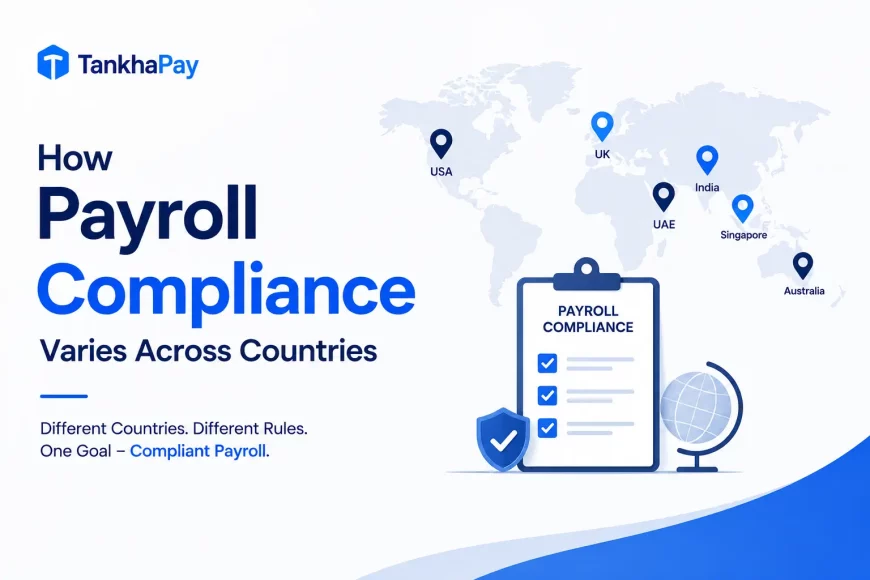
If you operate across borders
Multi-country payroll adds a different layer: tax withholding models, social security funding, statutory benefits and reporting cadence all vary by country.
That is a separate problem from the ones above and is covered in how payroll compliance varies across countries and in multi-country payroll.
How to fix the most common payroll problems
Every challenge above has an immediate fix and a structural one. The immediate fix stops the bleeding. The structural fix stops it recurring.
The third column is the honest one: some of these cannot be solved without either software or outside expertise.
| Problem | Immediate fix | Structural fix | Needs software or a provider? |
|---|---|---|---|
| Wrong PT applied | Reconfigure by registered work state | State-wise rule table, updated centrally | Software |
| Missed LWF cycle | Deposit with interest, document it | Standing compliance calendar with owners | Either |
| Contract worker exposure | Collect contractor challans and registers now | Verification built into invoice approval | Process, then software |
| Wage base below 50% | Restructure and compute arrears | Structure validated at offer stage | Software |
| Stale minimum wages | Check every state notification since last review | Subscribed feed or provider responsibility | Provider |
| Register gaps | Assemble what exists, identify what is missing | System that generates registers in prescribed form | Software |
| Recurring calculation errors | Pre-payroll validation checks | Single data source, defined master data standard | Software |
| Payroll depends on one person | Document the current configuration | Cross-training plus system-held logic | Either |
| Late attendance data | Move the cut-off, escalate exceptions | Attendance integrated directly to payroll | Software |
| No compliance memory | Write down what is configured and why | Provider carries the knowledge contractually | Provider |
For the full statutory calendar behind most of these, work through the payroll compliance checklist.
Payroll challenge self-diagnostic
Most businesses know something is wrong with payroll and cannot name it. This is a fifteen-question check to find out which challenge you actually have.
Answer honestly rather than optimistically. Count your yes answers in each section.
Statutory exposure
Five questions about where your liability really lies:
- Are there employees at your company in multiple states?
- Have contract workers been hired by your company at any of your sites?
- Have there been any changes to minimum wage laws in any state that you work in during the past year?
- Is basic plus DA below 50% of total remuneration for any employee?
- Could you produce your statutory registers, in the prescribed form, tomorrow morning?
Process integrity
Five questions to test the validity of your month-to-month process:
- Is attendance information always available post-payroll cut-off date?
- Are adjustments made always postponed until next month?
- Do you reconcile payroll information in more than one system each time?
- Can a single person edit salary information without any second approval?
- Has anybody checked the exception report before payment?
Continuity and control
Five questions related to survival of the payroll function upon exit or audit:
- Can the payroll function operate smoothly in case your payroll owner quits today?
- Have you documented the logic used to create your existing statutory structure?
- Are you aware of all parties who can access payroll data, and do you track modifications?
- Have you received any notice from EPFO, ESIC, a labour department or the income tax department in the last two years?
- Do you review payroll cost against revenue at the leadership level?
When to fix internally, when to buy, when to outsource
This will depend upon where you scored lowest in the diagnostic, not on how many people you have.
Companies tend to reach for software when what they really need is expertise or outsourcing when they really need better upstream data.
If the problem is on the process side, solve it inside. It is too early to even consider software if the problem starts before the pay cycle starts.
Buy software when calculation, state rules, register generation or system fragmentation are the constraints. These are configuration problems with a technology answer. See the best payroll software in India for a scored comparison.
When expertise is the problem and not capacity, then expertise in statutory knowledge from state to state, registration forms, and labour codes means outsourcing is suitable. This is the real reason for having outsourced payrolls in India.
Do nothing yet if you are under fifteen employees, in one state, with fixed salaries and someone reliable maintaining the process. Not every payroll needs an intervention.
In-house vs managed payroll: how each handles these challenges
The choice is usually framed as cost. It is more accurately a question of where the expertise sits and who carries the risk.
This comparison assumes both are run competently. A badly run managed service is worse than a well-run in-house team.
| Challenge | In-house | Managed |
|---|---|---|
| Multi-state PT and LWF | Manual state-by-state tracking | Within service scope |
| Minimum wage revisions | Depends on someone noticing | Provider obligation |
| Contract labour verification | Often assumed to be the contractor’s job | Part of scope, if contracted for |
| Labour Code interpretation | Depends on team awareness | Pre-implemented by specialist |
| Register generation | Depends on the system you bought | Contractual deliverable |
| Payroll continuity | Concentrated in one or two people | Provider carries the knowledge |
| Data security | Depends on internal controls | Provider infrastructure, plus your DPDP obligation |
| Problem resolution time | Varies with team capacity | SLA-governed |
The row worth negotiating hardest is the last one. Query resolution is the one thing managed payroll frequently makes slower, and the SLA is where you prevent that.
Final perspective
Payroll issues seldom boil down to knowledge issues. Every business knows that Professional Tax is state-wise and that contract employees are considered for the ESI cap.
They get it wrong with calendar handling, transfer handling, and even the basic premise that what works fine now has always worked fine since two years ago.
The diagnostic above is the fastest way to find out which of those applies to you. If several sections scored badly and you would like a second opinion before deciding what to change, Request a Risk Assessment and we will map your locations, worker categories and statutory position against what you are actually obligated to file.
FAQs
What are the biggest payroll challenges for Indian businesses?
Multistate Professional Tax and Labour Welfare Fund monitoring, liability for contractual labor under the OSH Code 2020, difference in the law for establishment under the OSH Code and state Shops Acts, restructuring of wages under the Code on Wages, and revision of minimum wage across states.
What is the difference between payroll compliance and payroll processing challenges?
The processing problems are of an operational nature, such as calculation errors, integration errors, and delayed data; whereas the compliance problems are of a regulatory nature, for example, incorrect deductions, failure to deposit, and incomplete registration records. The majority of the compliance problems initially start out as processing errors.
Which payroll challenges are most expensive to get wrong?
Contract labor liability and the wage base mistake under the Code on Wages. Both have retrospective exposure calculated based on the date of the mistake and not the date of detection, and both are difficult to identify prior to an investigation.
How do you fix payroll problems?
Identify whether the cause is process, configuration or expertise. Process problems are fixable internally. Configuration problems need software. Expertise problems need a provider. Applying the wrong remedy is the most common mistake.
Is it hard to run payroll in-house in India?
It is more difficult. Special expertise in the Labour Codes, renumbering of the Income Tax Act 2025, professional tax and Labour Welfare Fund in multiple states, and contract labour provisions in the OSH Code is needed. Such knowledge cannot be acquired by any ordinary human resource team.
What payroll risks belong in a risk register?
Statutory non-compliance and risk of penalties, violation of employee data confidentiality, loss of payroll knowledge due to attrition, payroll system downtime during payroll processing, and damage to reputation due to errors in payments. The third is the most commonly overlooked.
What are the main payroll processing challenges?
Post-cut-off period attendance data, reconciling in disconnected systems, transferring attendance data manually to the payroll system, postponing correction until next month, and no exception checking prior to payment.
At what point should a business stop fixing payroll internally?
If the same problem is recurring despite having solved it, if it is taking more than two people to close the loop, or if the answer to a statutory question cannot be provided without outside help, then any one of those three is the indicator.
Why do companies outsource payroll?
Since the internal team cannot cope with changing regulations, since there is a cost attached to errors, and since it is costly to maintain statutory knowledge for multi-states. Outsourcing changes a compliance risk into a contractual obligation.
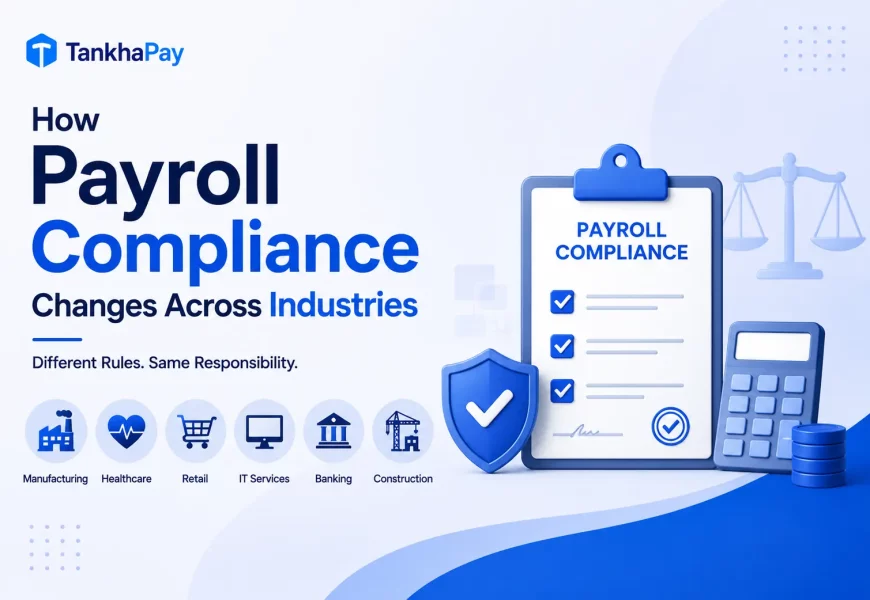
Do payroll challenges differ by industry?
Significantly. There are significant differences in terms of registers and overtime policies between a factory governed by the OSH Code, 2020 and an office governed by a state Shops Act, with the latter having primary employer liability that the former does not have.