TL;DR
- Four new Labour Codes of India are reshaping how wages, PF, gratuity, and bonus are calculated.
- Payroll errors can trigger employee complaints, TDS mismatches, delayed Form 16, and EPFO scrutiny.
- Global mobility payroll for both inbound and outbound employees requires specialized software and DTAA expertise.
- EOR providers can deploy talent in India within 5-10 business days, avoiding 3-6 months of entity setup.
- HR Managed Services reduce payroll processing costs by 27-32% versus fully in-house operations (Gartner).
A payroll mistake can cost a business more than the time and effort it takes to fix it. It can result in TDS mismatches, delays in issuing Form 16, frustrated employees, and even scrutiny from the Employees’ Provident Fund Organisation (EPFO).
For a country where the New Labour Codes are changing the rules for compliance and hiring people from other countries is becoming easier, getting payroll right is no longer optional.
Businesses in India, from Bengaluru-based startups to Mumbai-based companies, are under more pressure than ever before in 2026. Statutory compliance, global mobility structures, and the rise of remote hiring have made payroll systems a core part of workforce strategy.
This guide explains in detail why payroll software is so important to workforce management in India and what HR and finance leaders need to know to stay ahead.
What Modern Payroll Systems Do for Indian Businesses
The traditional payroll system in India involved spreadsheets, manual PF challan submission, and last-minute stress about Form 16 at the end of the year. Modern payroll systems automate all of this and integrate everything into a single solution.
Core Functions of an Indian Payroll System in 2026
India’s payroll process is complex. Beyond calculating salary, a payroll module must also handle:
- Automated TDS calculation under the Old and New Tax Regime (Section 115BAC)
- EPF and EPS contribution computation and EPFO challan generation
- ESIC deduction and monthly contribution filing
- Professional Tax (PT) computation across different states
- Gratuity provisioning under the Payment of Gratuity Act, 1972
- Leave encashment calculation and tax treatment
- Monthly TDS filing along with Form 16 and 24Q
- Payslip generation compliant with the Shops & Establishment Act
For a deeper comparison of manual versus automated payroll, see Payroll Software in India: A Complete Guide.
Payroll as a Strategic Data Layer
Payroll data feeds critical business decisions:
- CTC vs. take-home
- Calculation of Cost per employee
- Attrition correlation to salary bands
- Headcount budget
In the absence of a unified payroll system, HR and finance operate on inaccurate figures.
Why Indian Payroll Compliance is More Complex
Payroll systems must be updated continuously to reflect these changes. India does not have a single unified payroll law. Compliance obligations arise under various central and state laws that change frequently.
New Labour Codes and their key Payroll Impact
Businesses must be prepare now, as Indian government has merged 29 central labour laws into four codes. While full implementation is still pending across all states.
| Labour Code | Primary Payroll Impact |
|---|---|
| Code on Wages | Redefines ‘wages’; raises base calculation for PF, gratuity, and bonus. Companies with structured CTCs face increased costs. |
| Code on Social- Security | Expands ESIC and EPF coverage to gig and platform workers. Payroll systems must handle contract workforce contributions. |
| Code on Industrial Relations | Changes to retrenchment and layoff compliance, directly affecting final settlement calculations. |
| Code on Occupational Safety | Impacts working hours and overtime pay computation. |
Compliance Note: The 50% basic wage rule under the Code on Wages is the most immediate payroll restructuring requirement. Any CTC where basic is below 50% of gross must be revised. For a full compliance update, see Payroll Compliance Changes in India.
State Level Compliance:
| State | Professional Tax (Monthly Max) | PT Applicability Threshold |
|---|---|---|
| Karnataka | ₹200 | Salary above ₹15,000/month |
| Maharashtra | ₹200 | Salary above ₹7,500/month |
| Tamil Nadu | ₹208 | Salary above ₹21,000/month |
| West Bengal | ₹200 | Salary above ₹10,000/month |
| Delhi | Nil | PT not applicable |
Managing Payroll for Global Teams in India
Global Mobility in the Indian context works in two directions: Indian professionals going abroad on assignment and foreign nationals coming to work in India. Both scenarios create payroll complexity that manual processes cannot handle.
Global Mobility
When an employee goes abroad for work, payroll becomes a split system, a part paid in India in rupees, the balance in foreign currency. Key payroll issues include:
- Establishing residential status under the Income Tax Act (Resident, NOR, or Non-Resident)
- Proper application of the Double Taxation Avoidance Agreement (DTAA)
- Calculating hypothetical taxes and tax equalisation
- Foreign currency payments under FEMA provisions
- Continuation of PF deductions under international worker provisions
What Payroll Challenges Foreign Employees Faces in India
Foreign employees in India are subject to Indian TDS and, in few cases, PF contributions under the International Workers category:
- Shadow payroll in India for taxation purposes
- FRRO registration for employment
- 12% PF contributions on total salary
- DTAA Application & Tax residency status
Payroll Software and Global Mobility in India
Advanced payroll management platforms handle payrolls, DTAA calculations, theoretical tax calculations, and multi-currency payslips from a single application. Without purpose-built software, Global Mobility payroll requires additional compliance specialists and manual reconciliations.
| Global Mobility Scenario | India Payroll Complexity | Key Requirement |
|---|---|---|
| Indian employee on short-term foreign assignment | Medium | DTAA application, residential status tracking |
| Indian employee on long-term deputation abroad | High | Split payroll, tax equalisation, FEMA compliance |
| Foreign national working in India | High | Shadow payroll, International Worker PF, TDS |
| Remote worker outside India, employed by Indian entity | Very High | PE risk, FEMA remittance, dual tax exposure |
What Are HR Managed Services?
Definition: HR Managed Services in India refers to outsourcing payroll processing, statutory compliance, and HR administration to a specialist third-party provider.
For growing businesses – especially those expanding to new states or managing large contract workforces – this model reduces compliance risk and operational cost significantly.
What Indian HR Managed Services Cover
Payroll processing & compliance includes:
- PF, PT, and ESIC challan preparation and submission
- Monthly payroll processing and payslip preparation
- TDS calculation, quarterly 24Q filing, and Form 16 issuance
- State Labour Welfare Fund
- Final settlement calculation
- Contract workforce payroll and compliance under the Contract Labour Act
- Statutory bonus calculation under the Payment of Bonus Act
For a complete statutory compliance checklist, see Payroll Compliance Checklist for Indian Businesses.
When Should Indian Businesses Consider HR Managed Services?
HR Managed Services make clear business sense in specific situations:
- Operations across multiple states: Own minimum wages, LWF obligations, and PT rates
- Your headcount has crossed 20, which is when ESIC becomes applicable
- You have a large number of contractors or gig workers, each on different salary structures
- No in-house payroll professional on the team
- Foreign companies establishing India operations for the first time
Data Point: Gartner estimates that organisations using HR Managed Services reduce payroll processing costs by 27–32% compared to fully in-house operations while improving statutory compliance accuracy.
What Is an EOR in India?
Definition: An Employer of Record (EOR) in India is a legally registered Indian company that employs workers on behalf of a foreign or domestic company – managing employment contracts, payroll, PF, ESIC, TDS, and statutory compliance so the client company can deploy talent in India without incorporating locally.
Why Is India One of the Top EOR Markets Globally?
India is among the most in-demand EOR markets worldwide for three reasons:
- A large, skilled English-speaking workforce
- Lower employment costs than Western markets
- Complex legal requirements that make direct incorporation slow and risky for foreign companies
An EOR is commonly used by foreign companies in India to:
- Hire software engineers, analysts, or BPO staff without a local entity
- Test the India market before fully incorporating
- Manage a small team of 2–15 employees without the cost and complexity of setting up a legal entity.
Speed advantage: In India, EOR onboarding typically takes 5–10 business days.
Approximate employer-side statutory charges in India:
| Contribution | Rate |
|---|---|
| EPF (Employer) | 12% of basic salary |
| ESIC (Employer) | 3.25% of gross salary (where applicable) |
| Gratuity provision | ~4.81% of basic salary |
| Statutory bonus | 8.33% of basic salary (Payment of Bonus Act, 1965) |
EOR vs. Setting Up an Indian Entity
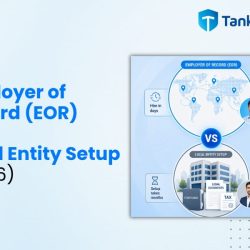
| Factor | EOR in India | Incorporating in India |
|---|---|---|
| Time to first hire | 5–10 business days | 3–6 months |
| Incorporation cost | None | ₹1–3 lakh+ (legal, ROC, professional fees) |
| Ongoing compliance | Managed by EOR | In-house or outsourced |
| Payroll & statutory | Fully handled | Self-managed |
| Ideal team size | 1–20 employees | 20+ employees |
| IP and contract control | Limited | Full |
EOR and Payroll Software Integration
Leading EOR providers in India integrate directly with payroll platforms, enabling consolidated reporting across EOR-employed and directly employed workers. This gives HR and finance leaders a single view of total workforce cost – essential for accurate India headcount planning.
Before You Pick a Payroll System
A lot of companies end up with software that looks fair in a demo but struggles with the real work — ECR uploads, Labour-Code changes, state specific Professional Tax. That gap shows up later, usually at a deadline. Always ask the vendor to walk you through how they handle these.
Essential Features of Indian Payroll Software
| Feature | What to Look For |
|---|---|
| EPFO Compliance | Direct challan generation and ECR file upload |
| ESIC Compliance | Eligibility check, contribution calculation, returns generation |
| Multi-State PT | State-specific PT slabs with automatic updates |
| Form 16 / 24Q | Automated TDS certificate and quarterly return generation |
| Full and Final Settlement | Gratuity, leave encashment, notice pay, and bonus calculations |
| Labour Code Readiness | Built-in wage redefinition under new Labour Codes |
| Multi-Location Payroll | Separate payroll registers by state, branch, or entity |
For an in-depth review of attendance and payroll software integration, including how leave management connects to payroll deductions, see the linked guide.
Basic vs. Advanced Indian Payroll Software
| Feature | Basic Tools | Advanced Indian Payroll Platform |
|---|---|---|
| Old vs. New Tax Regime | Manual toggle | Employee-wise automated selection |
| EPFO challan generation | Manual | Automated ECR file |
| Multi-state PT | Manual update | Auto-updated by state |
| Labour Code readiness | None | Built-in wage redefinition |
| Global Mobility support | None | Split payroll, DTAA logic |
| EOR integration | None | Direct API sync |
| Form 16 / 24Q | Basic | Automated with digital signature |
| Contract workforce payroll | None | Full support |
Payroll Data as a Workforce Strategy Tool in India
Indian HR leaders are increasingly using payroll data beyond compliance. The shift from cost centre to strategic function is visible in how leading organisations use their payroll systems.
How Indian Businesses are Putting Payroll Data to Work:
- CTC structure that works for both sides: Test different salary breakups to see how much more your employee takes home without changing what it costs you as an employer.
- What each city is really costing you: Know the actual cost difference between your Chennai, Pune, and Hyderabad teams before you decide where to grow next.
- Where talent is actually walking out: Pinpoint which salary bands are losing the most people, a pattern that hits Indian IT and BFSI teams hardest.
- Increment planning before the room fills up: Model what your appraisal cycle costs across the full team before anyone walks into the review meeting.
- The employer cost beyond gross salary: See how much EPF, ESIC, gratuity, and statutory bonus add on top of every rupee you are paying in salary.
Conclusion:
Payroll used to be simpler. Calculate salaries, file returns, repeat. That version is gone. New Labour Codes, employees across multiple states, contractors, expats, and gig workers have each added a layer most businesses did not see coming. Many realise how much has changed only when something goes wrong. Payroll outsourcing services exist for exactly this — so your HR and finance teams are working with accurate numbers and someone else is tracking the compliance deadlines.
From managing TDS across two tax regimes and filing returns with EPFO, to structuring Global Mobility arrangements, delivering HR Managed Services, and enabling EOR operations for international companies entering India. the scope of payroll infrastructure is expanding significantly.
The right payroll solution provides compliance assurance, reliable workforce data, and the scalability to grow without operational friction.
Whether you are an Indian company running payroll across multiple states, a foreign organisation using EOR services, or a startup exploring HR Managed Services – the quality of your payroll infrastructure determines how safely and confidently you can run your business.
Review your payroll infrastructure against India’s 2026 statutory requirements. Start with a payroll compliance checklist to identify your current gaps.
TankhaPay, developed by Akal Information Systems (est. 2000, CMMI Level 5, ISO 27001), is India’s only payroll platform combining payroll software, managed payroll outsourcing, domestic and international EOR, NATS apprenticeship management, and global talent mobility under one platform. Trusted by 1,000+ enterprise clients including Bank of Baroda and UIDAI.