Treating Payroll as a Cost Center Is a Financial Mistake
“Payroll is just a utility” is something that comes up a lot in boardroom talks. You plug it in, it works, and you don’t think about it until the end of the month.
That thinking made sense maybe a decade ago, when payroll’s job was narrowly defined to calculate earnings, deduct taxes, disburse salaries, and file compliance reports. Done. But the world of work has fundamentally changed, and so has what payroll can and should do for an organisation.
Today, payroll sits at the intersection of three of the most critical business functions:
- Finance
- HR
- Operations
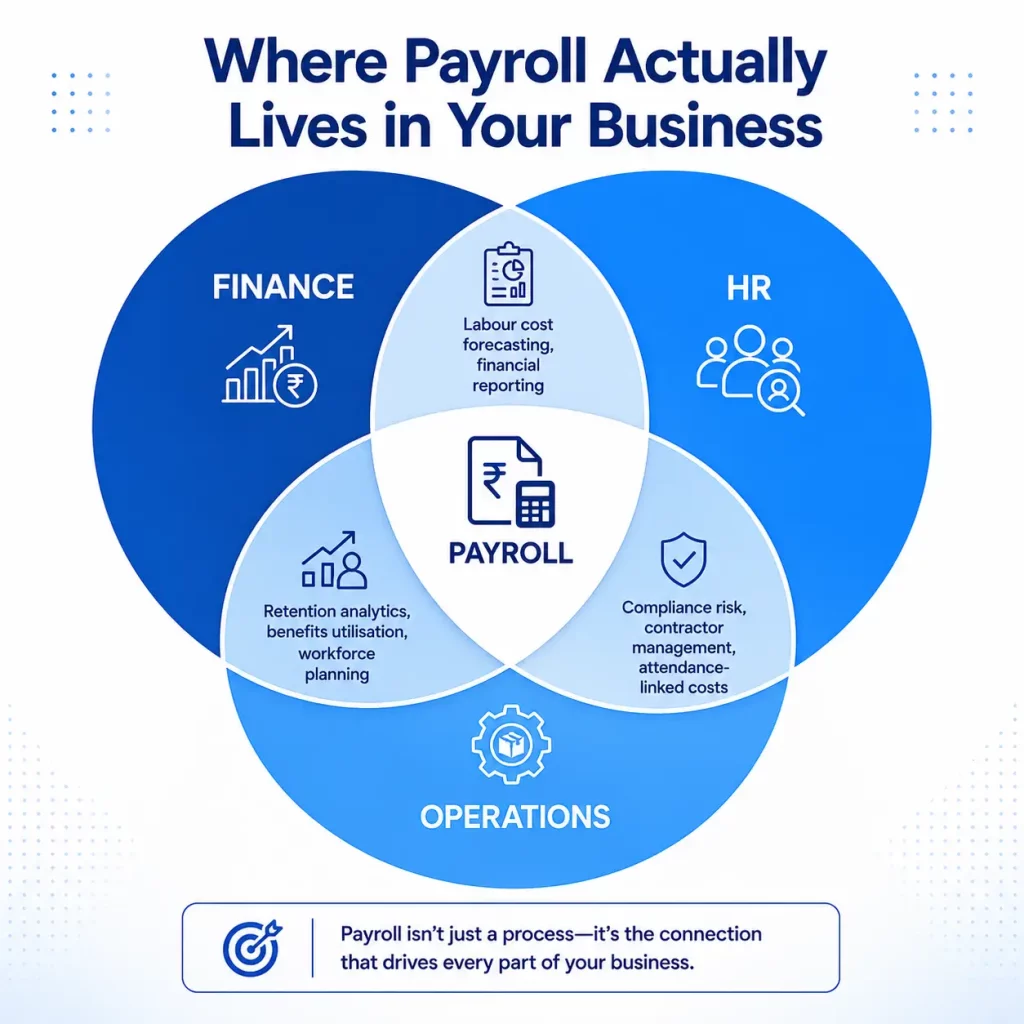
The data it generates touches labour cost forecasting, retention analytics, benefits utilisation, compliance risk, and workforce planning. And yet, according to HR.com’s Future of Payroll research report, only 6% of organisations have reached the highest maturity level, where payroll actively contributes to workforce planning and broader business objectives. A full 23% of companies are still operating in “ad-hoc” or “reactive” stages.
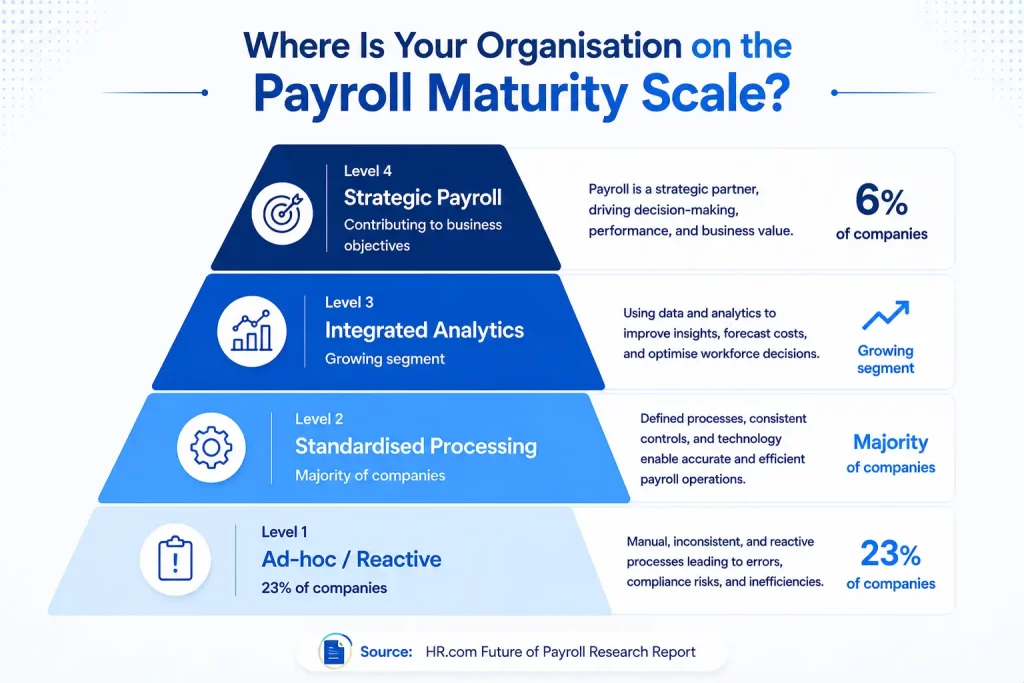
That’s not a technology problem. It’s a strategic vision problem.
Why CFOs Are Paying Closer Attention in 2026
The pressure on CFOs has never been more multidimensional. Economic uncertainty, rising operational costs, talent scarcity, and tightening compliance environments are converging at once.
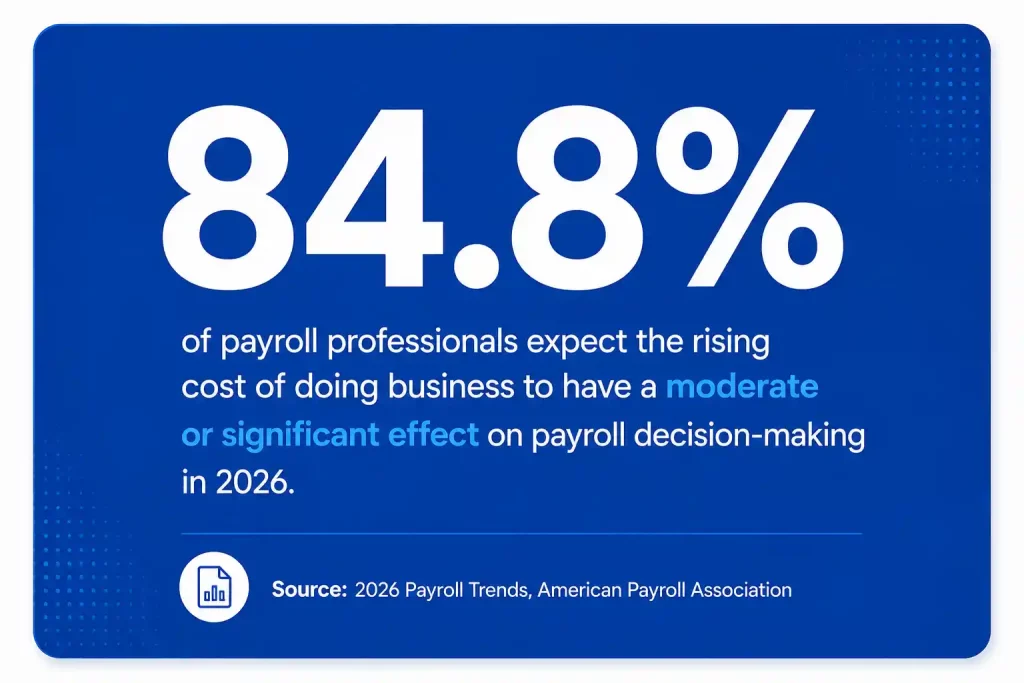
In fact, a recent survey found that 84.8% of payroll professionals expect the rising cost of doing business to have a moderate or significant effect on payroll decision-making in 2026. Meanwhile, 86% of business leaders named economic uncertainty as their primary challenge for the year ahead.
CFOs can’t afford to keep payroll separate in this climate. The numbers clearly show that companies that see payroll as a strategic function do better than those that don’t. Companies with strong people analytics skills, which are mostly based on payroll data, have 8% more sales growth and 24% more net income than their competitors.
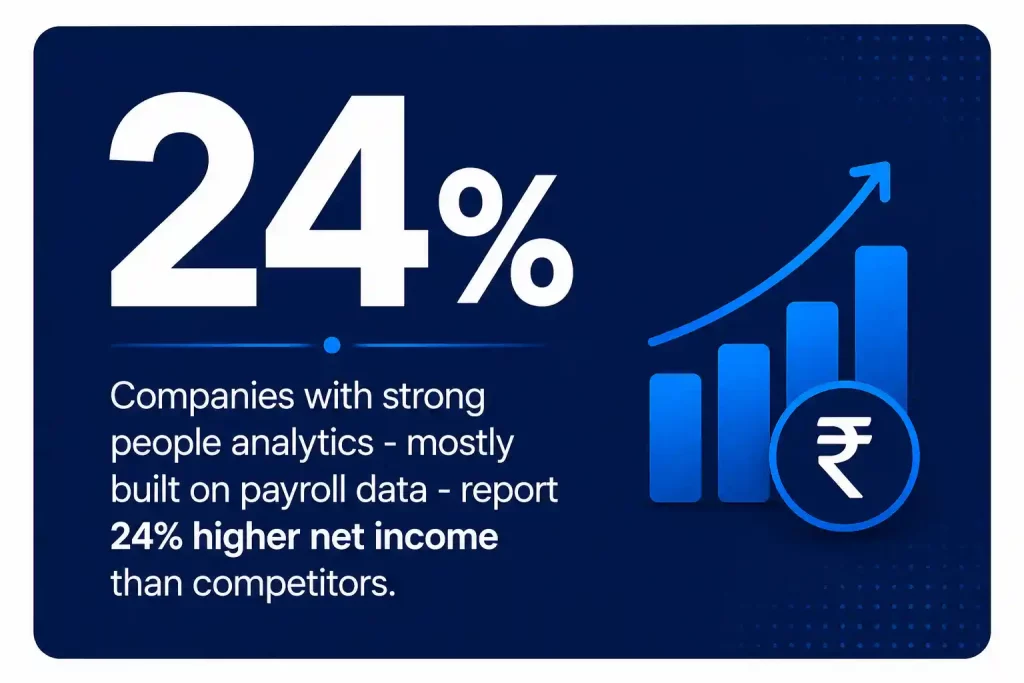
Think about that for a moment. A 24% difference in net income, driven significantly by how well you’re using the data your payroll system already generates.
What Does “Strategic Payroll” Actually Mean?
Strategic payroll isn’t just about making payroll faster or cheaper, even though those are good things. It’s about using payroll as a tool for making decisions that affect talent, money, and growth strategies in real time.
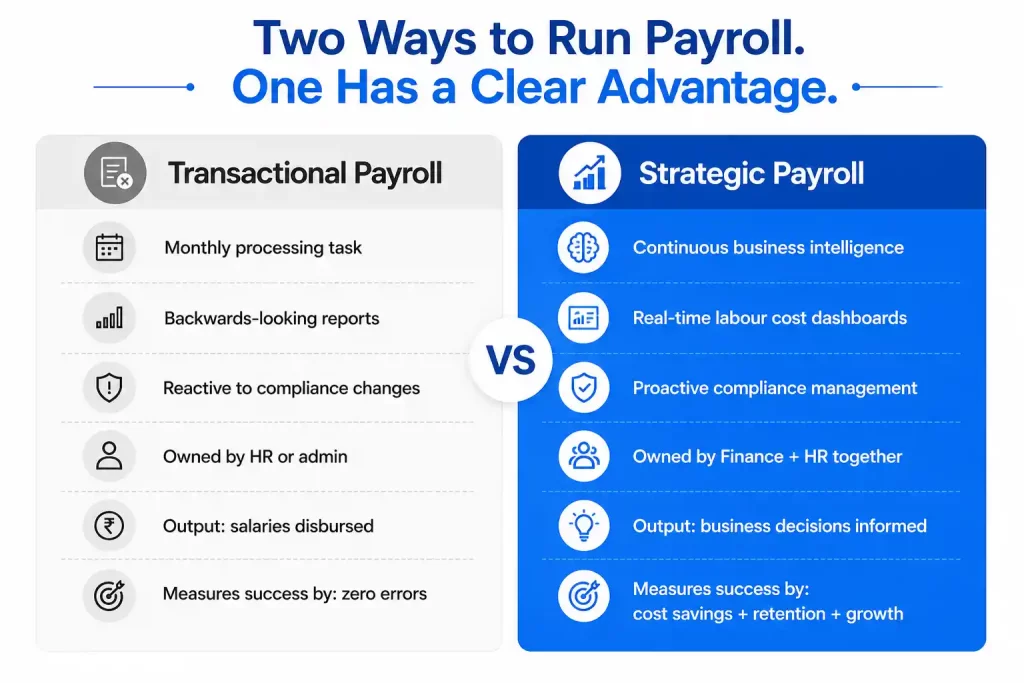
Here’s what it looks like in practice:
1. Real-time labour cost visibility: CFOs and finance teams can now see how much money they are spending on labour in real time, rather than having to wait for month-end reports. They can also see patterns in overtime across departments and make better predictions about future payroll costs. Now, modern payroll software platforms can feed live dashboards that show these insights all the time.
2. Predictive workforce planning: With the right tools, payroll data can tell you when a department is approaching a compensation ceiling, where turnover risk is highest (often signalled by pay stagnation data), or which teams are consistently over-relying on contract labour. As of now, only 36% of payroll teams are using predictive analytics to forecast labour costs, which means the competitive advantage for early adopters is still wide open.
3. Compliance as a strategic hedge: Every mistake on a payroll or failure to follow the rules can cost money and hurt your reputation. As India’s labour laws change and global companies hire people in many states and countries, compliance isn’t just about avoiding fines. It’s about making a business that can grow without breaking the law. CFOs who see compliance as a key part of their business strategy, not just a box to tick, sleep better at night and grow their businesses more confidently.
4. Employee trust as a business asset: This one isn’t given enough credit. The accuracy of payroll has a direct effect on how much employees trust you. A late pay cheque or an unexplained deduction doesn’t just make an employee mad; it also makes them less interested in their work, miss work, and eventually leave. When you add up the costs of hiring, training, and lost productivity, it can cost anywhere from 50% to 200% of a mid-level employee’s annual salary to replace them. When CFOs think about payroll in terms of keeping employees, they start to make very different choices.
The Rise of Payroll Outsourcing Services and Why It’s Not What You Think
One of the most common misconceptions CFOs hold is that outsourcing payroll is a sign of organisational weakness, as though it means the company can’t handle its own operations. In 2026, that framing is outdated.
Payroll outsourcing services are no longer just a fallback for small businesses without internal HR teams. They are, increasingly, a deliberate strategic choice made by mid-market and enterprise organisations that want to redirect internal talent toward higher-value work.
What drives this shift? Several things:
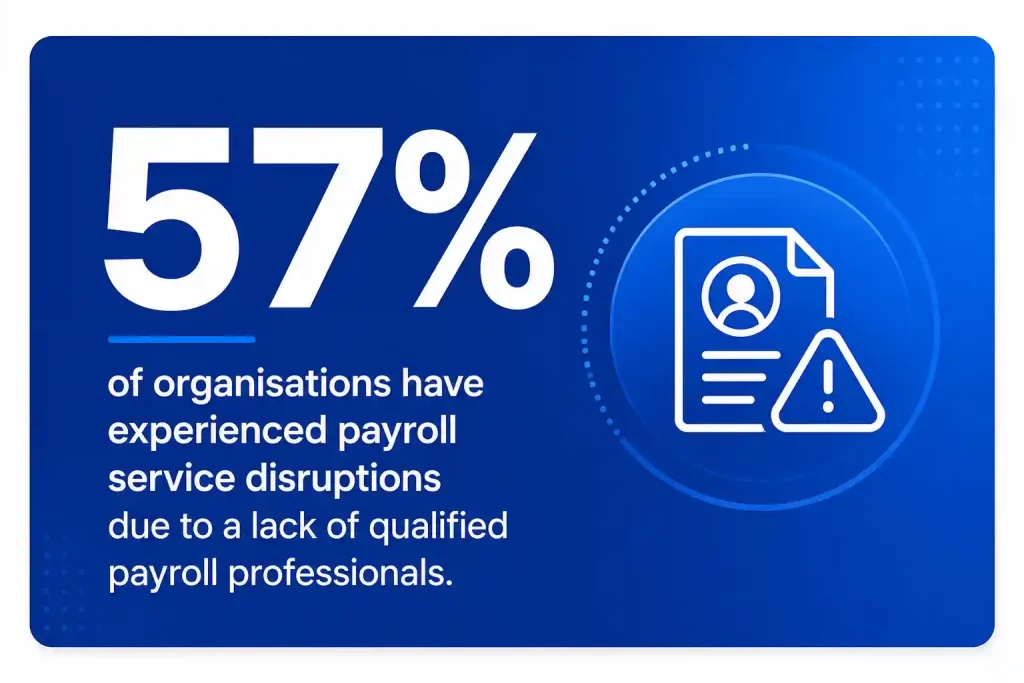
- Skills scarcity: More than half (57%) of organisations have experienced disruptions in payroll services due to a lack of qualified payroll professionals. Outsourcing solves this immediately.
- Compliance complexity: As regulations around pay transparency, labour laws, and taxation grow more complex, particularly for companies operating across states or countries, an outsourced partner who stays updated becomes a risk management asset.
- Cost efficiency: When you factor in the full cost of maintaining an in-house payroll team’s salaries, software licences, compliance training, and infrastructure, outsourcing often comes out ahead. And with automation baked into most modern payroll outsourcing services, error rates drop dramatically.
- Strategic focus: With your HR and finance internal teams free from having to deal with payroll processes, they are able to concentrate on compensation strategies and organisational structuring.
The Technology Revolution Nobody’s Fully Captured Yet
Let’s talk about what’s happening on the technology side, because it’s moving fast and most companies are still catching up.
| Payroll Technology Trend | Current Adoption Rate | Projected Impact by 2026 |
|---|---|---|
| AI-powered payroll automation | ~28% fully automated | Reduce processing time by 25-50% |
| Cloud-based payroll platforms | ~70% of organisations | CAGR of ~10% through 2035 |
| Predictive labour cost analytics | 36% using it actively | 8% higher sales, 24% higher net income |
| Employee Self-Service (ESS) portals | ~55% of employees use them | Up to 40% reduction in admin costs |
| Earned Wage Access (EWA) | ~50% offering them | Measurable boost in employee retention |
| Integrated HR + Payroll + Attendance | Being adopted by 55% | Reduced compliance gaps and reconciliation errors |
The most important insight from this table isn’t any single number; it’s the gap between where companies are and where the technology can take them. AI agents are now capable of automating 40%–60% of routine payroll tasks, such as data entry, tax calculations, and compliance checks. Modern payroll software has evolved from a processing tool into a genuinely intelligent platform.
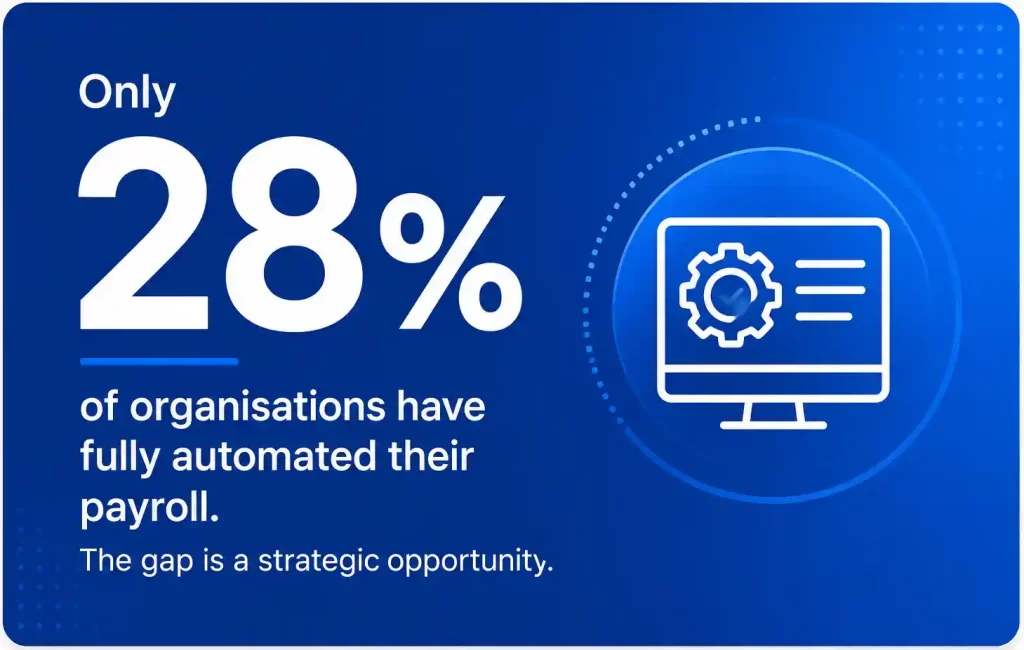
And yet, only 28% of organisations have fully automated their payroll process. That gap is a strategic opportunity.
CFOs who invest in upgrading their payroll software infrastructure in 2026 aren’t just buying efficiency, they’re building a real-time financial intelligence system.
Pay Transparency: The CFO’s New Compliance Frontier
In any strategic payroll discussion, pay transparency should be a separate topic of conversation because it is quickly becoming required.
By June 2026, all EU member states must have strict transparency laws in place. These laws must include job ads that show salary ranges, a ban on asking about salary history, and the right for employees to ask for pay data that compares their pay to others. Fifteen states and more than twenty local governments in the US already require pay transparency, and more are likely to do so soon.
What does this mean for CFOs? It simply means that you can’t make compensation plans in a vacuum anymore. As soon as you make a salary range public, your current employees will hold you accountable by comparing it to what they currently make. This makes a new kind of financial risk: the risk that unfair pay structures will become clear and expensive very quickly.
Research shows that 92.5% of HR leaders say that being open about pay has helped their company’s brand. And companies that embrace it tend to keep more talented employees and get more work done, which are financial benefits, not just cultural ones.
It is more advantageous for CFOs to deal with the issue of salary transparency preemptively by using payroll information to analyze and rectify any problems with compensation prior to regulatory intervention.
Where Indian CFOs Face a Unique Set of Considerations
If you’re in charge of finance at a company that does business in India, you should pay attention to the unique challenges that come with payroll.
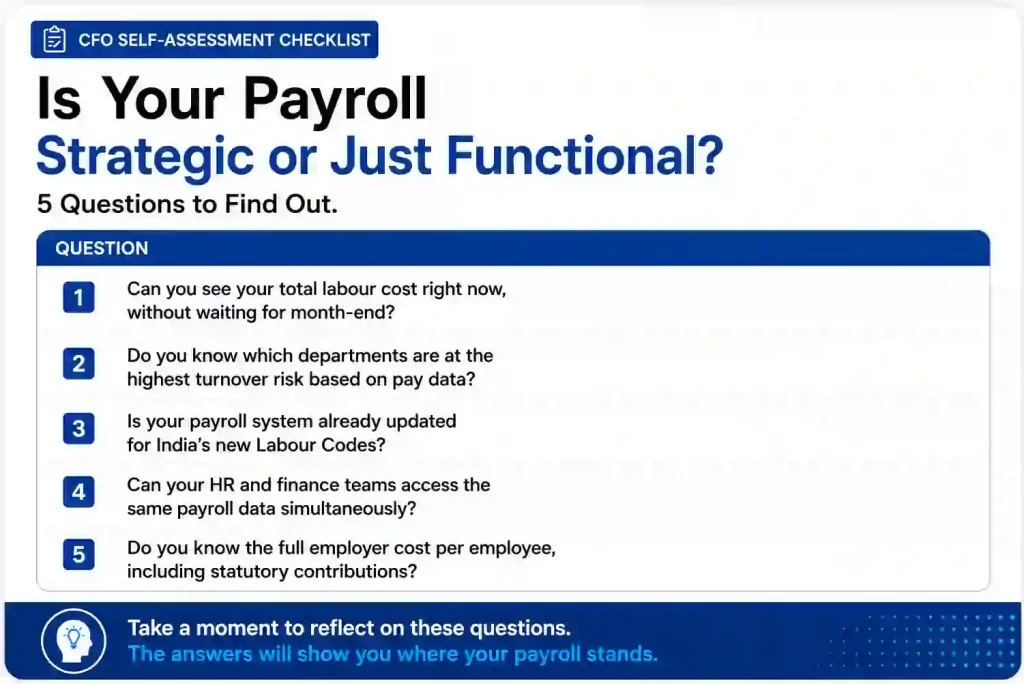
The New Labour Codes in India bring together all of the country’s labour laws into one set. This includes rules about wages, social security, industrial relations, and occupational health. This means that companies will have to change the way they calculate CTC (Cost to Company), PF contributions, and compliance timelines.
Different states have different ways of putting these codes into action, but businesses that don’t proactively make sure their payroll systems follow them are putting themselves at risk.
It’s not just about following the rules anymore; India’s workforce is changing quickly. As more and more young people join the workforce, the need for more flexible pay structures, timely pay cheques, and payroll processes is growing. Companies that change their payroll practices to meet these needs will definitely have an advantage over their competitors when it comes to hiring and keeping good workers. This is especially true in fields like information technology, e-commerce, and manufacturing, where the talent pool is very competitive.
Where TankhaPay Fits Into This Story
For Indian businesses navigating this exact transition, from payroll-as-paperwork to payroll-as-strategy, TankhaPay is worth understanding in depth.
TankhaPay is a modern payroll management system made just for India’s rules and workforce. It directly deals with the complicated compliance issues of the New Labour Codes, automates the calculations for PF, ESIC, professional tax, and TDS, and gives employees self-service options that make HR’s job easier and more transparent.
It does what this article says it should do for CFOs who want real-time salary analytics, compliance dashboards, and integrated attendance and payroll workflows: it changes payroll from a monthly task into a strategic signal that happens all the time.
What sets TankhaPay apart is that it isn’t just a processing tool, it’s designed for the CFO who wants answers:
- Where are my labour costs going?
- Am I compliant?
- Are my employees paid accurately and on time?
- Can I scale this as I hire?
In a market where most payroll solutions are either too basic or too enterprise-heavy, TankhaPay represents a thoughtful middle ground and a practical first step for companies looking to modernise without a 12-month implementation cycle.
The Closing Argument
Here’s the honest truth: payroll will never be the most glamorous topic in a CFO’s portfolio. But in 2026, it might be one of the most consequential ones.
The organisations that will grow with confidence this year are not necessarily the ones with the biggest headcount or the most aggressive expansion plans. They’re the ones that have built the operational infrastructure to support that growth, and payroll is a foundational layer of that infrastructure.
When payroll works well and works smart, everything above it – compensation strategy, workforce planning, compliance, and financial forecasting – become cleaner, faster, and more reliable.
The CFOs who reconsider payroll not as a cost to minimise but as a capability to invest in will, in all likelihood, look back at 2026 as the year they made a quiet but consequential decision.
And the ones who don’t? They’ll still be putting out the same fires.
TankhaPay, developed by Akal Information Systems (est. 2000, CMMI Level 5, ISO 27001), is India’s only payroll platform combining payroll software, managed payroll outsourcing, domestic and international EOR, NATS apprenticeship management, and global talent mobility under one platform. Trusted by 1,000+ enterprise clients including Bank of Baroda and UIDAI.