Measuring the pros and cons of outsourcing payroll isn’t really about which list is longer. Most businesses can find eight reasons to outsource and eight reasons to stay in-house without that comparison telling them anything about their own situation. What actually matters is which of those reasons apply to your specific headcount, industry, and internal capability, and that’s what this guide is built around.
For the full breakdown of what payroll outsourcing means and how it works, see our complete guide to payroll outsourcing. This guide assumes you already understand the basics and focuses specifically on how to weigh the decision for your business.
Payroll outsourcing means sacrificing control for less administrative hassle and more standardization, as well as a reduction in the risks that can be associated with a single point of failure. It usually makes sense once the complexity of the payroll process becomes greater than the benefits of maintaining full in-house control.
Score Your Business Before Reading the Pros and Cons of Payroll Outsourcing
Generic pros-and-cons lists assume every business weighs each factor equally. In practice, five factors do most of the work in this decision. Rate your business honestly on each before deciding how much weight to give the rest of this guide.
How many states do you operate in?
One state: outsourcing’s compliance advantage matters less. Three or more states: Professional Tax, LWF, and shops & establishment rules multiply fast, and this becomes the single biggest argument for outsourcing.
How many people currently own payroll internally?
If it’s one person, you already carry the single-point-of-failure risk that outsourcing is specifically good at removing, regardless of how you feel about the other factors.
Is your headcount growing faster than your HR team?
A payroll system that flows smoothly for 30 people starts failing at 80, not due to any mistakes made along the way but simply because manual systems do not have scalability in relation to increasing complexity.
Do you have a recent compliance error or penalty notice?
This is the criterion that organizations tend to underestimate. It takes only one PF or ESI penalty that will cost more than a whole year’s worth of outsourcing fees for an average-size team, which skews the economic calculus considerably in favour of outsourcing.
How much does your team actually value hands-on control?
This is the single, legitimate point in favour of retaining in-house payroll processing, even where all other criteria favour outsourcing.
If three or more of these point toward outsourcing, the pros in the next section will likely outweigh the cons for your business. If most point toward staying in-house, read the cons section first.

Pros, Weighted by Business Situation
None of these five advantages apply with equal force to every business. Most map to the factors already scored above headcount, state count, and who owns payroll, though the audit-readiness point is really about where the business is headed next, such as a funding round or acquisition, rather than its current setup. Weigh each against your own situation instead of reading straight down the list.
- Administrative efficiencies will be more beneficial to firms that have fewer than 100 employees and do not employ a payroll specialist, since their payroll takes up too much of one individual’s time.
- Compliance efficiencies will be more beneficial to companies that operate in multiple states, since their compliance department will not be able to keep track of everything in each state.
- Reduced single-point-of-failure risk matters regardless of size once payroll knowledge lives in one person’s head. This is the factor most businesses underweigh until that person resigns mid-cycle.
- Access to payroll technology without capital investment matters most for growing businesses that would otherwise need to evaluate, license, and maintain their own platform.
- Auditable standardized procedures are important for businesses which are at a stage where an audit or acquisition is pending because documentation is analyzed much more rigorously than day-to-day operations.
None of these benefits are automatic. They depend on choosing a provider that actually delivers them, which is a separate evaluation from deciding whether outsourcing is right in principle. See why companies choose to outsource payroll for how specific companies have made this call.
Cons, Weighted by Business Situation
The same situational logic applies to the downsides, but reduced control stands apart from the other four. Data security risk, vendor dependence, integration friction, and hidden costs all vary with your specific setup, while loss of control is inherent to the arrangement itself tied only to factor five above, how much your team values hands-on ownership.
- Reduced direct control is the most important for those finance leaders who prefer to have real-time and hands-on control over processes rather than efficient processes. It’s absolutely a valid concern, which cannot be negotiated away.
- Risk of data security exposure is important for those companies that deal with sensitive information related to their employees (executive compensations, payroll for government clients, etc.), where vendors’ levels of security affect you. Make sure to ask for the certificate on SOC 2 or ISO 27001 compliance.
- Vendor dependence is an important aspect for those companies that do not have internal resources to replace vendors quickly in case of poor performance of vendors.
- Integration friction matters most for businesses with an existing HRMS or attendance system that a new vendor’s platform may not connect to cleanly, turning outsourcing into an additional manual step rather than a reduction in one.
- Costs other than the quoted price matter to all organizations, but especially for small organizations with limited budgets since one unexpected cost during an off-cycle process affects them more than larger organizations.
Common Mistakes When Weighing This Decision
These aren’t additional pros or cons, they’re errors in how the comparison itself gets framed, and they cut across the decision: some apply specifically when evaluating a vendor, others specifically when defending the status quo. Most trace back to comparing the wrong numbers or assuming a contract term that was never actually confirmed in writing.
Comparing sticker price instead of total cost
The less expensive price quoted per employee without including the setup, off-cycle process, and report customization could turn out to be more expensive compared to the higher price quoted which includes everything.
Ignoring who actually carries compliance liability
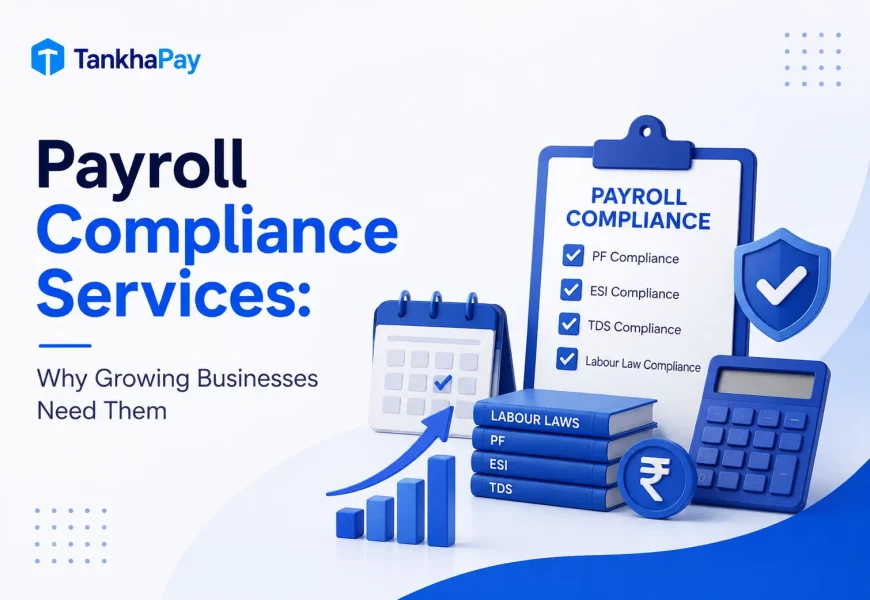
In outsourced arrangements, the legal liability for any errors in filing is not automatically transferred to the outsourcing provider, regardless of any assumptions. This must be stated in the contract.
Treating this as a permanent, all-or-nothing decision
Partial outsourcing, keeping salary processing in-house while outsourcing statutory compliance filing specifically, is a real middle option many businesses skip because they frame the choice as software versus full outsourcing.
Underweighting the switching cost of doing nothing
Staying with a manual process that’s already generating errors or missed deadlines has a real, ongoing cost, even though it doesn’t show up as a single line-item decision the way signing a new vendor contract does.
Industry-Specific Scenarios
The above five-point system is much more readily applied through an example than through the abstract. The following three examples demonstrate that different conclusions will be reached based on number of states, ownership of payroll, and trajectory of growth.
Single-location professional services firm, 40 employees
Payroll complexity is real but low here. The main argument for outsourcing is freeing up the one person currently doing it part-time, not compliance complexity. Partial outsourcing of just the statutory filing may deliver most of the benefit without the full cost.
Manufacturing company with plants in three states, 250 employees
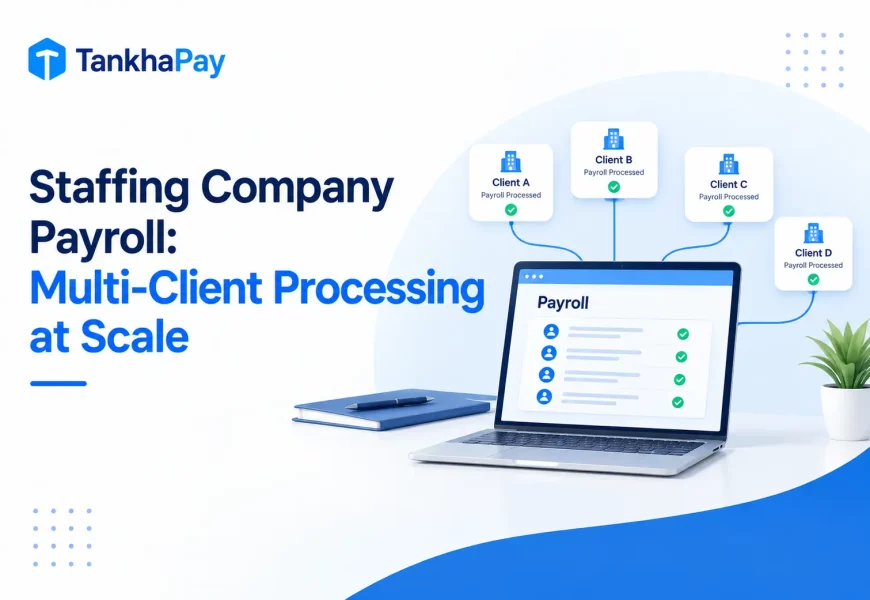
This is close to the clearest case for full outsourcing in this guide. Multi-state Professional Tax and LWF compliance, combined with a mixed workforce of permanent and contract staff, is exactly the complexity outsourcing is built to absorb.
Fast-growing startup, 60 employees today, expecting 150 within a year
The problem in this case is less about current complications and more about not having to recreate the payroll system twice in an 18-month period.
Final Verdict
If your company checks off 3 or more of the factors in favour of outsourcing from the framework outlined above, especially the ones involving multistate work or a recent compliance warning letter, then the pros outlined in this article should certainly weigh in favour of outsourcing for you. For single location businesses that do not feel strongly about controlling the process but rather about saving time, keeping in-house payroll department makes sense.
If outsourcing is the right call for you, the next step is comparing providers. Our Top 10 Payroll Outsourcing Companies in India breaks down pricing, service, and compliance coverage across ten providers.
For the full comparison of in-house versus outsourced payroll across cost structure, technology, and scalability, see In-House Payroll vs. Outsourced Payroll.
Frequently Asked Questions
What are the main pros of outsourcing payroll?
Efficient use of time, increased accuracy of compliance in other states, no single point of failure and ability to get payroll software without any additional financial investments.
What are the main cons of outsourcing payroll?
Decreased level of control, risks connected with data security and dependence on the certification of the vendor, dependence on the vendor and hidden fees.
Does outsourcing payroll actually reduce costs?
This really depends on the existing infrastructure of each organization. In cases where companies have to bear the burden of penalty costs for non-compliance, extra hours spent correcting errors, or even an additional hire to take care of their payroll system, then it will be more cost-effective than outsourcing it. Otherwise, for small-scale payrolls without non-compliance issues, the savings will be less significant.
Is outsourcing payroll safe?
This really depends on how secure the process will be handled by each provider. Make sure they comply with at least the SOC 2 and ISO 27001 requirements regarding security before anything else.
Can a business outsource only part of its payroll?
Yes. The possibility of partial outsourcing whereby some parts of the process will be done in-house while others such as statutory compliance filings will be outsourced is quite common.
When does the decision favour staying in-house?
It will be preferable when the firm has one location, a stable number of employees, and the in-house staff have adequate skills in payroll processing.