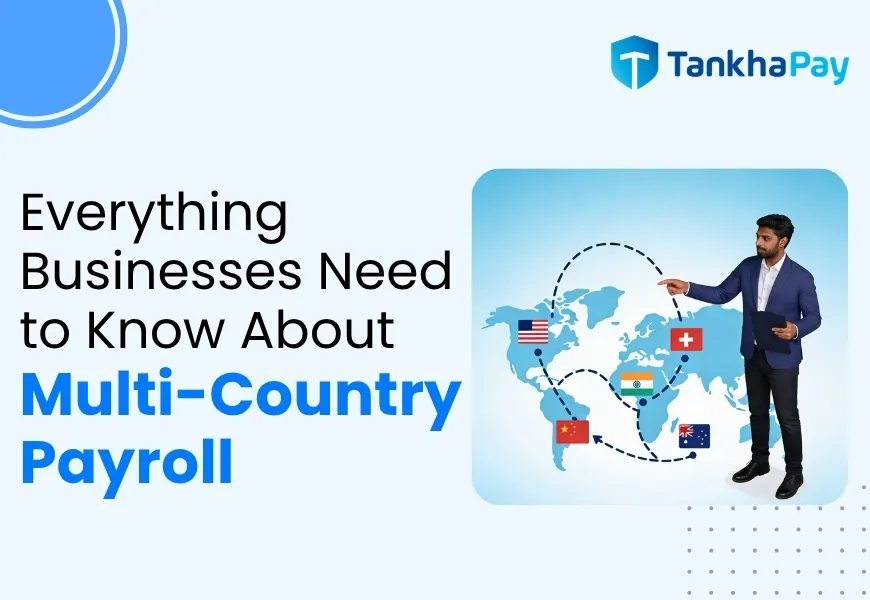
Large multinational companies are no longer the only ones hiring internationally. In order to access global talent pools and enter new markets, startups, mid-sized businesses, and expanding corporations are now creating dispersed teams across multiple nations. Businesses now hire workers practically anywhere in the world thanks to the growth of remote work and digital collaboration.
Even though hiring internationally has gotten easier, one of the trickiest operational problems for businesses is still handling payroll across borders.
Every nation has its own payroll regulations. The location of employees affects employment laws, social security contributions, income taxes, statutory benefits, and reporting deadlines. When businesses must simultaneously comply with multiple regulatory systems, something as basic as processing salaries can become complex.
This is where multi-country payroll becomes essential. It allows organizations to manage payroll for employees across different countries while maintaining compliance with local tax and labour regulations.
In this guide, we’ll explore what multi-country payroll is, why it is important, how businesses manage global payroll operations, and the key challenges organizations face when paying employees internationally.
Fast Facts
- Multi-country payroll is about managing employee payroll across multiple countries while complying with local tax and employment regulations.
- To centralise payroll operations, businesses usually use software or multi-country payroll solutions.
- The global multi-country payroll solutions market was valued at approximately $6.7 billion in 2025 and is expected to reach $9.5 billion by 2029, driven by the rise of global hiring.
- Around 74% of enterprises now employ workers in three or more countries, making global payroll management increasingly important.
- Companies using automated payroll systems report up to 45% fewer compliance errors compared to manual payroll processes.
Multi-Country Payroll Meaning
The process of managing employee payroll across several nations while ensuring compliance with each country’s tax laws, labour regulations, and statutory obligations is known as multi-country payroll.
International payroll must simultaneously account for several regulatory frameworks, whereas domestic payroll operates under a single legal framework. Every nation has a different payroll structure that includes social security contributions, tax brackets, employee benefits, and reporting obligations.
For instance, a business headquartered in one nation may have workers in multiple other nations. Each of those workers must be compensated in accordance with the payroll laws of the nation in which they work.
In managing multi-country payroll, several operational factors are involved. These factors include the following:
- Local tax deductions and statutory contributions
- International salary payment in local currencies
- Country-specific labor regulations
- Payroll reporting and documentation requirements
Without a structured payroll system, businesses can quickly encounter compliance issues, payroll errors, or operational inefficiencies.
What is Multi-Country Payroll Solution?
Multi-country payroll solutions are platforms or services designed to help businesses manage payroll operations across multiple countries through a centralized system.
Instead of managing separate payroll systems in every country or working with multiple local vendors independently, companies can rely on a single platform that integrates global payroll processes.
These solutions combine local compliance knowledge with global payroll control, hence giving the organization control over its payroll while at the same time ensuring compliance with local laws and regulations. A typical solution for multi-country payroll can perform the following functions:
- Automating salary calculations and statutory deductions
- Managing payroll compliance across jurisdictions
- Processing international salary payments
- Consolidating payroll data across countries
- Generating global payroll reports and analytics
For businesses expanding internationally, these solutions simplify payroll operations while reducing compliance risks.
Why Is Multi-Country Payroll Important?
Payroll is one of the most sensitive operational functions in any organization. When businesses expand internationally, the complexity of payroll increases significantly because every country has different employment regulations and tax structures.
Without a structured payroll system, companies may struggle with compliance risks, payroll errors, and operational inefficiencies. Multi-country payroll becomes important because it allows organizations to maintain consistency, transparency, and compliance across their global workforce.
Some of the key reasons businesses rely on multi-country payroll include:
Ensuring legal compliance
Countries have their own set of payroll laws, and these laws are related to income tax, employer contributions, and employee benefits. The implementation of the payroll system helps ensure compliance with the laws.
Reducing payroll errors
International payroll processing requires the inclusion of multiple variables, and the most important ones are the currency conversion rate and the amount deducted as tax. The implementation of the payroll system helps avoid errors.
Improving operational efficiency
Processing the payroll system individually for each country might result in the creation of operational inefficiencies. The implementation of the payroll system helps streamline the operations.
Enhancing employee experience
Employees expect their salaries to be processed accurately and paid on time. Reliable payroll systems improve employee satisfaction and trust.
Supporting global expansion
Organizations looking to expand their operations to other countries need the implementation of the payroll system, as the system helps ensure compliance with the laws.
If you are exploring better payroll management options, also read our guide on best payroll software in India.
Key Components of Multi-Country Payroll
Payroll accuracy and compliance are ensured by a number of interrelated components that are necessary for managing payroll across international borders.
Local compliance management is one of the most important elements. Payroll computations must comply with employment laws, social security contributions, and tax laws unique to each nation. Payroll systems must constantly adjust because governments update these regulations on a regular basis.
International payment management is another crucial element. Companies that pay workers across borders must handle cross-border transfers and exchange rates while processing payments in local currencies.
Typically, a thorough multi-country payroll framework consists of:
- Local tax and statutory deduction management
- Payroll compliance monitoring across jurisdictions
- Multi-currency payroll processing
- Centralized payroll reporting and analytics
- Integration with HR and workforce management systems
When combined, these elements support businesses in meeting international regulatory requirements while maintaining accurate payroll operations.
How to Manage a Multi-Country Payroll
Managing a multi-country payroll process requires a systematic approach involving technology and regulatory compliance.
The first step is understanding the payroll laws of each country where employees are located. Payroll regulations often cover areas such as taxation, employee benefits, termination policies, and reporting requirements.
Organizations must also establish standardized payroll processes. While local laws differ, internal workflows for payroll approvals, reporting, and auditing can be consistent across all regions.
Many companies manage multi-country payroll through a combination of technology and local expertise. Some best practices include:
- Using centralized systems to monitor global payroll operations
- Using local payroll experts who have knowledge of regional compliance issues
- Using global payroll software to automate payroll calculations
- Using payroll systems in conjunction with HR and accounting systems
By combining centralized management with local compliance expertise, organizations can ensure payroll accuracy across multiple jurisdictions.
What Does Multi-Country Payroll Software Do?
Multi-country payroll software acts as the central platform that enables businesses to process payroll for employees working in different countries while maintaining compliance with local regulations.
These systems automate many of the complex processes associated with international payroll management. From the calculation of taxes to the generation of compliance reports, the payroll software helps businesses simplify the process and ensure the accuracy of the payroll operations.
A typical multi-country payroll platform carries out a number of crucial functions. It processes statutory deductions, determines salaries based on national tax laws, and makes sure payroll reports adhere to regional regulations.
The majority of contemporary payroll software also offers centralised dashboards that let businesses examine labour costs and payroll expenditures across various geographical areas.
Multi-country payroll software frequently performs the following tasks:
- Automated payroll calculations based on local tax laws
- Regulatory updates and compliance monitoring
- Payroll processing in multiple currencies
- Payments of salaries across borders
- Payroll analytics and reporting that are centralised
These capabilities help businesses maintain efficient payroll operations while minimizing compliance risks.
Key Features of Multi-Country Payroll Software
Businesses should concentrate on features that support both local compliance and global oversight when assessing a multi-country payroll solution.
A dependable payroll platform should offer a centralised system that enables businesses to keep an eye on payroll operations in several nations while keeping an eye on payroll costs and legal requirements.
Among the most crucial characteristics to search for are the following:
- A centralized global payroll dashboard
- Automatic updates for tax laws and regulatory changes
- Multi-currency payroll processing
- Payroll analytics and global reporting tools
- Employee self-service portals for payslips and tax documents
- Integration with HRMS and accounting software
Challenges of Managing Multi-Country Payroll
Even with advanced payroll systems, managing payroll across multiple countries can be challenging. The complexity of international regulations, financial systems, and workforce distribution can create several operational hurdles.
The complexity of regulations is one of the main obstacles. Payroll laws are subject to frequent changes, and noncompliance with local regulations may result in fines and legal issues.
Data fragmentation presents another difficulty. Inconsistent payroll procedures and dispersed payroll data can result from numerous organisations working with various payroll providers in various nations.
Common challenges faced by companies include:
- Managing changing payroll legislation in various countries
- Managing multiple payroll vendors and solutions
- Global payroll data consolidation
- Handling currency exchange rates and cross-border payments
- Maintaining uniformity in payroll processes across countries
To address these challenges, companies are increasingly adopting centralized payroll solutions coupled with local payroll expertise.
When Should a Business Use Multi-Country Payroll?
Not every company needs a global payroll system from the start. However, once organizations begin hiring employees across multiple countries, managing payroll through isolated systems can quickly become inefficient.
Companies typically consider implementing multi-country payroll when their workforce becomes internationally distributed.
Businesses commonly choose to use multi-country payroll solutions when they:
- Employ people in various countries
- Construct global remote teams
- Expand operations in international markets
- Employ both people and contractors in global markets
- Require reporting solutions for global payroll costs
Implementing a structured global payroll system early helps businesses avoid compliance risks and operational inefficiencies as they grow.
Global Payroll Statistics That Show Why Multi-Country Payroll Matters
The rapid growth of global hiring has transformed payroll management into a strategic function for modern organizations. Several workforce and payroll industry statistics illustrate this shift.
- Companies can now hire people from all over the world because more than 30% of the world’s workers now work in remote or hybrid settings.
- International hiring has gone up by more than 25% in the past few years because of remote work and the need for skilled workers around the world.
- About 68% of companies put centralised payroll visibility at the top of their list of ways to keep an eye on costs and compliance risks.
- Almost 44% of businesses still use separate payroll systems, which shows how important it is to have global payroll platforms that work together.
- As the global workforce grows, the market for multi-country payroll solutions is expected to grow by more than 9% each year until 2029.
Wrapping Up
Payroll management gets much more complicated as businesses grow internationally and create remote teams. In order to make sure that employees are paid correctly and on time, businesses must manage various tax systems, labour laws, and financial regulations.
Multi-country payroll solutions give companies the infrastructure they need to efficiently handle international payroll operations. Organisations can lower operational complexity and increase payroll accuracy by centralising payroll procedures while upholding local compliance.
For businesses creating international teams, multi-country payroll is now more than just a payroll function. It is a crucial operational system that facilitates workforce management, compliance, and global expansion.
As global hiring continues to rise, businesses that adopt structured multi-country payroll systems will be better positioned to manage their international workforce efficiently and confidently.
Frequently Asked Questions
How does multi-country payroll work?
Multi-country payroll works by putting together centralised payroll management with local compliance systems. Companies use global payroll software or payroll providers to figure out how much to pay their employees, file taxes, make payments, and create payroll reports for employees in different countries.
Why do companies need multi-country payroll?
When a company hires people from more than one country, it needs multi-country payroll. The rules for taxes and payroll are different in each country. A global payroll system helps businesses stay in line with the law, cut down on payroll mistakes, and handle payments to workers in other countries more easily.
What are the benefits of multi-country payroll software?
Multi-country payroll software supports businesses in streamlining their global payroll operations. The main benefits are the following:
- Automate payroll calculations
- Comply with local payroll legislation
- Multi-currency payroll disbursements
- Centralize payroll reporting and analytics
- Integrate with HR and financial systems
What challenges do companies face with multi-country payroll?
Companies that handle global payroll often have problems with complicated rules, changing currencies, broken payroll systems, and compliance risks. Centralised payroll platforms can help solve these problems.